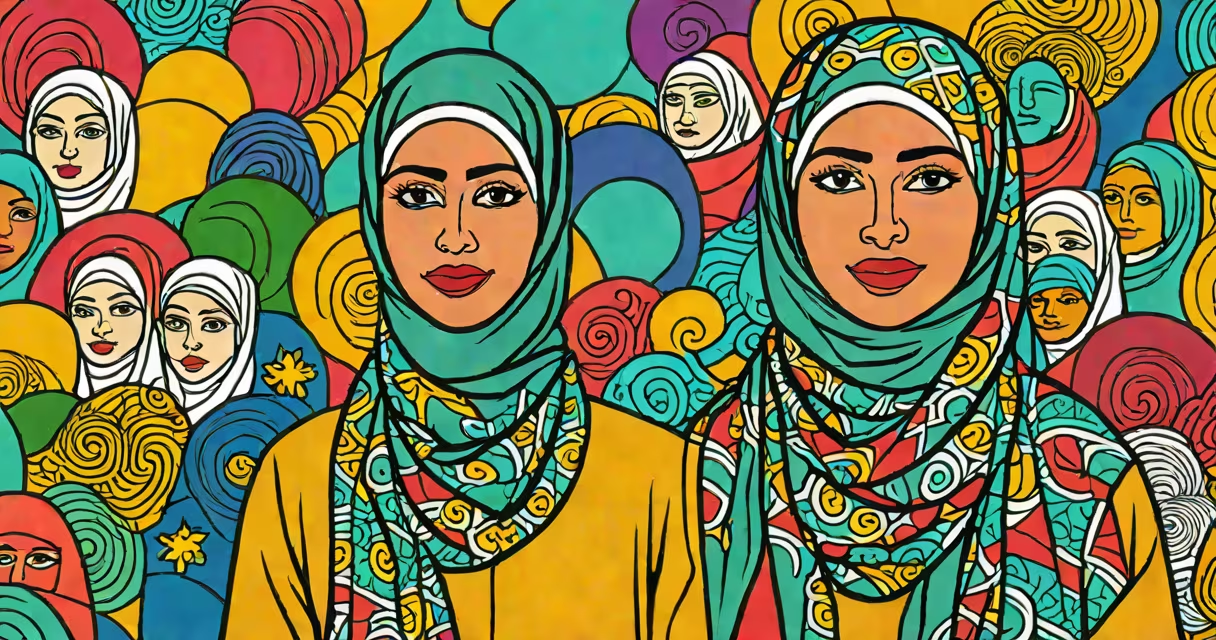
The 3rd gender definition describes gender identities that exist outside the male-female binary, recognized in various cultural, historical, and contemporary contexts. These identities are not a modern invention but have long existed in societies across Asia, the Pacific, and parts of Africa and the Americas.
Unlike sex assigned at birth or legal gender categories, the 3rd gender definition reflects lived experiences and social roles that do not align with binary norms. It includes identities such as hijra in South Asia, Two-Spirit people among many Indigenous nations in North America, and fa'afafine in Samoa. These roles often carry specific spiritual, social, and ceremonial functions within their communities.
According to the World Health Organization, gender identity is a core aspect of human experience, and recognition of non-binary identities is essential for health equity. The American Psychological Association notes that gender exists on a spectrum, and rigid binary systems fail to represent the full range of human expression.
Gender is not solely determined by anatomy or chromosomes. It is shaped by personal experience, social context, and cultural tradition. In many cultures, the 3rd gender definition is not a medical or psychological label but a socially embedded role passed through lineage, ritual, or community consensus.
In India, hijra communities have existed for over 1,000 years. They are recognized in law as a third gender under the National Legal Services Authority v. Union of India (2014) ruling. This decision affirmed that hijras are not "neither male nor female" but a distinct category protected under constitutional rights. Hijras may perform at births and weddings, hold spiritual authority, and live in community-based gharanas (extended families).
Similarly, Two-Spirit people in Native American and First Nations communities are not Western constructs. They are individuals who embody both masculine and feminine spirits, often serving as healers, mediators, or ceremonial leaders. The term "Two-Spirit" was coined in 1990 at a gathering of Indigenous LGBTQ+ people to reclaim identity after centuries of erasure due to colonialism.
There is no single model for the 3rd gender definition. Identities vary widely by region, history, and community. Some are fluid, others fixed; some are religiously ordained, others self-identified.
| Identity | Region/Culture | Key Traits | Recognition Status |
|---|---|---|---|
| Hijra | South Asia (India, Pakistan, Bangladesh) | Often assigned male at birth; may undergo ritual castration; perform at ceremonies | Legally recognized as third gender in India since 2014 |
| Two-Spirit | Indigenous North America | Carries spiritual and ceremonial roles; may identify as non-binary or genderfluid | Recognized in tribal sovereignty; not federally recognized in U.S. law |
| Fa'afafine | Samoan culture (Pacific Islands) | Assigned male at birth; raised in feminine roles; respected in family and community | Widely accepted culturally; not legally recognized as third gender |
| Māhū | Hawaiian culture | Gender-diverse individuals with spiritual and healing roles; historically central to community life | Re-emerging in cultural revitalization efforts; no formal legal status |
A common misconception is that all 3rd gender identities require physical transition or surgery. This is false. Many, like fa'afafine or māhū, are defined by behavior, dress, and social role rather than medical intervention. Their existence challenges the idea that gender must be visible through anatomy.
People often confuse the 3rd gender definition with transgender identity or intersex conditions. While there is overlap, they are distinct concepts. Transgender refers to a mismatch between gender identity and sex assigned at birth. Intersex refers to biological traits that don't fit typical definitions of male or female. The 3rd gender definition is primarily cultural and social, though it may intersect with both.
Another error is assuming that the 3rd gender definition is a Western liberal concept. In reality, many non-Western societies have long-standing traditions of gender diversity. For example, the ancient Indian text Kama Sutra (circa 4th century CE) references third-gender roles, and the Māori people of Aotearoa (New Zealand) have long recognized māhū as part of their social structure.
Even within modern psychology, confusion persists. The Diagnostic and Statistical Manual of Mental Disorders (DSM-5) uses the term "gender dysphoria" to describe distress related to gender incongruence. But this is not the same as being a third gender. Gender dysphoria is a clinical diagnosis; the 3rd gender definition is a social and cultural identity. Confusing the two leads to misrepresentation and harm.
Consider Ayesha, a 32-year-old hijra living in Delhi. She was assigned male at birth and raised as a boy. At age 12, she began identifying as female and was taken into a local gharana. There, she learned rituals, music, and how to perform at events.
She wears a sari and bindi, speaks in a high-pitched register, and is known in her neighborhood for blessing newborns. Her income comes from performances at weddings and religious ceremonies. She lives with five other hijras in a shared home. Her legal ID lists her gender as "third," and she holds a government-issued photo ID with that designation.
Ayesha's life illustrates how the 3rd gender definition operates: not as a medical condition, but as a lived role with social value. She is not seeking to change her body to match her identity; her identity is already affirmed by community and law.
When asked about her gender, she says, "I am not a man. I am not a woman. I am a hijra. That is my truth." Her story shows that the 3rd gender definition is not about fitting into a box-it's about claiming space in a world that often refuses to see you.
The 3rd gender definition is not a deviation from norm. It is a reflection of human diversity. Recognizing it requires moving beyond the idea that gender must be one of two options. The world has always held more than two genders-and continues to do so.