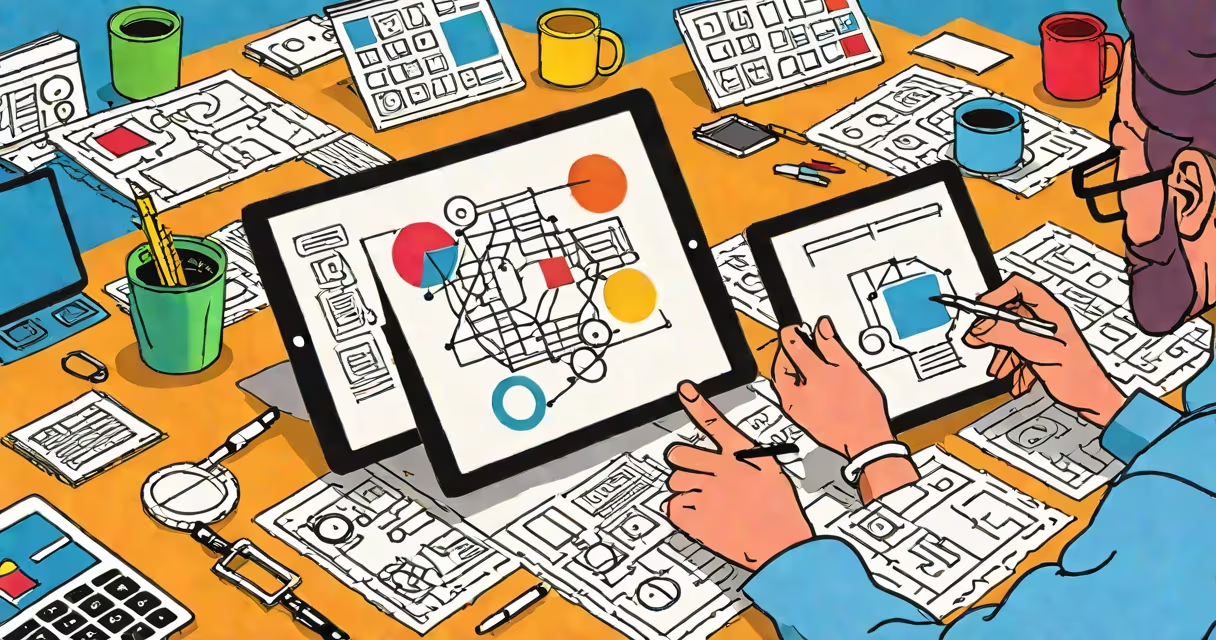
Becoming a UX designer means developing the ability to solve real user problems through research, iterative design, and testing. It's not about making things look pretty-it's about understanding how people interact with digital products and improving those experiences systematically.
UX designers start by observing users in their natural environments. They ask questions like "Where do people struggle?" and "What are they trying to achieve?" These insights drive every decision. A designer might watch someone try to book a flight online, then notice they repeatedly click the wrong button. That behavior reveals a flaw in the interface. Fixing it improves usability and reduces frustration.
The process begins with empathy. Designers conduct interviews, surveys, and usability tests to gather data. They analyze patterns in user behavior and identify pain points. From there, they create low-fidelity sketches-wireframes-that map out layout and function before adding visuals. Once validated, these evolve into interactive prototypes tested with real users. This cycle repeats until the solution meets user needs effectively.
UX design relies on a mix of soft and technical skills. Communication, problem-solving, and collaboration are essential. Designers work closely with developers, product managers, and stakeholders, translating complex ideas into clear workflows.
Key tools include Figma, Adobe XD, and Sketch for creating wireframes and prototypes. These platforms allow teams to collaborate in real time. For research, tools like UserTesting.com and Lookback.io record user sessions. Analytics platforms such as Hotjar show heatmaps of clicks and scrolls, revealing where users focus-or lose interest.
A common misconception is that UX design is purely creative. It's not. It's rooted in evidence. A study by the Nielsen Norman Group found that usability improvements can increase conversion rates by up to 400%. That's not art-it's measurable impact.
| Skill Type | Examples | Why It Matters |
|---|---|---|
| Research | User interviews, task analysis, persona creation | Identifies actual user goals, not assumptions |
| Prototyping | Figma mockups, clickable prototypes | Tests ideas early, avoids costly fixes later |
| Testing | A/B testing, moderated usability sessions | Validates designs with real feedback |
Many think UX design is synonymous with graphic design. It's not. Graphic design focuses on visual appeal-color, typography, imagery. UX design focuses on function and accessibility. A beautiful app that crashes on 30% of devices fails its purpose.
Another myth is that UX designers don't need coding knowledge. While not required, understanding HTML and CSS helps. It enables better collaboration with developers and prevents unrealistic design requests. For example, knowing that certain animations require significant processing power stops a designer from suggesting a 10-second fade effect on a mobile banking app.
There's also confusion between UX and UI. UI (user interface) is the surface-the buttons, icons, menus. UX (user experience) is the process-the sequence of actions a user takes to complete a task. A well-designed UI makes navigation easy. A strong UX ensures the user feels confident and efficient throughout.
In 2022, a team at Instacart analyzed checkout drop-off rates. They found 62% of users abandoned their carts during payment. The team conducted 15 user interviews and discovered that unclear error messages were the main cause. One user said, "When it said 'payment failed,' I didn't know if my card was rejected or if the server was down."
The team redesigned the error state. Instead of generic text, they added specific guidance: "Your card was declined. Try a different card or update your billing info." They also introduced a progress bar showing each step-address, delivery time, payment-and allowed users to return to previous steps easily.
After testing with 30 participants, completion rate rose from 38% to 71%. The change wasn't flashy. It wasn't animated. But it solved a real problem for real people. That's the heart of UX design.
There's no single path. Some enter through degrees in human-computer interaction or cognitive psychology. Others transition from marketing, engineering, or teaching. What matters is building a portfolio that shows problem-solving, not just aesthetics.
Entry-level roles often require 3-5 completed projects demonstrating research, iteration, and testing. Platforms like Dribbble and Behance showcase work, but hiring managers value portfolios hosted on personal websites with clear case studies. Each project should explain the problem, methods used, decisions made, and results achieved.
According to the U.S. Bureau of Labor Statistics, employment for UX designers is projected to grow 23% from 2021 to 2031-much faster than average. Companies across sectors-from healthcare to fintech-are investing in user-centered design to improve retention and reduce support costs.
Becoming a UX designer means shifting from designing for appearance to designing for outcome. It's about asking, "Does this help the user succeed?" rather than "Does this look good?" Success comes from consistent practice, feedback, and a willingness to test assumptions.
Start small. Observe how people use apps. Record your own frustrations. Then redesign one feature. Document the process. Share it. Iterate. Over time, your ability to anticipate user needs grows. That's how real UX professionals emerge-not from talent alone, but from disciplined, user-first thinking.