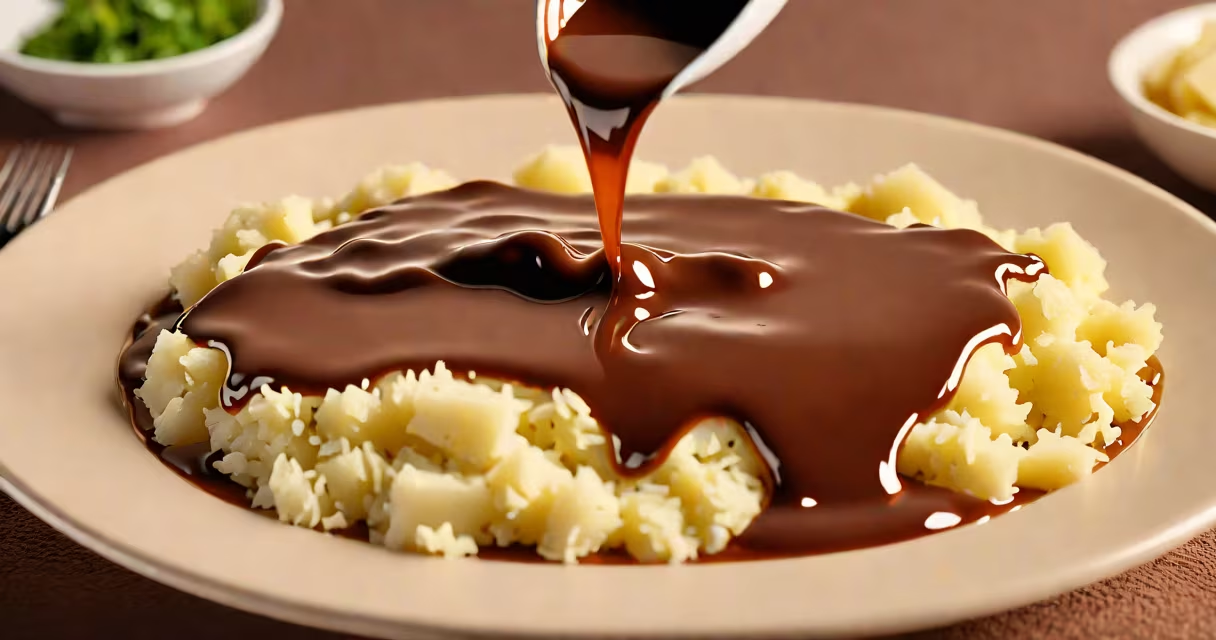
Brown gravy from scratch is a thickened sauce made by combining meat drippings, flour, and broth, cooked until smooth and deeply flavored. It forms the base for many classic dishes and requires no pre-made mixes.
The foundation of brown gravy lies in rendering fat from meat-typically beef, chicken, or turkey-into a pan. This fat, known as drippings, carries the core flavor. Once the drippings are collected, they're combined with flour to form a roux-a cooked mixture that thickens the liquid. Broth-beef, chicken, or vegetable-is then added gradually, bringing the entire blend to a simmer. The result is a glossy, savory sauce with depth and body.
Unlike store-bought versions, which often rely on artificial flavors and preservatives, brown gravy from scratch uses real ingredients and builds complexity through time and technique. A well-made version develops a rich umami taste from the Maillard reaction during browning, which occurs when the roux is cooked long enough to turn golden brown.
Flour acts as a thickener by absorbing liquid and forming a gel-like structure when heated. Without cooking the flour first, the gravy would have a raw, starchy taste. The roux-typically made by heating equal parts fat and flour over medium heat-must be stirred constantly for 2-3 minutes until it turns a light tan color. This step removes the raw flour flavor and begins the process of flavor development.
Adding cold broth slowly prevents lumps. The liquid should be incorporated in small increments while stirring continuously. As the mixture heats, it thickens rapidly. Simmering for 5-10 minutes allows the flavors to meld and the texture to stabilize. Overcooking can cause separation, so maintain a gentle simmer.
A common mistake is adding too much flour too quickly. For every cup of broth, use 1 tablespoon of flour. Excess flour leads to a gummy texture. Another error is skipping the roux entirely and relying solely on cornstarch, which produces a thinner, less complex sauce.
Standard ingredients include:
If you don't have meat drippings, use butter or oil. Butter adds richness but lacks the meaty depth. Oil is neutral and won't contribute flavor. For a dairy-free version, substitute coconut oil or a plant-based butter alternative.
When choosing broth, opt for low-sodium varieties to control salt levels. High-quality stock enhances flavor, but even canned broth works in a pinch. Adding a splash of dry red wine before the broth introduces subtle acidity and complexity-common in French-style gravies.
| Ingredient | Role | Substitution |
|---|---|---|
| Meat drippings | Flavor base and fat for roux | Butter, olive oil, or vegetable oil |
| Flour | Thickening agent via roux | Cornstarch (use half the amount), arrowroot |
| Broth | Liquid base and flavor carrier | Water + bouillon cube, or mushroom broth |
| Red wine | Depth and acidity | Apple cider vinegar or lemon juice |
Brown gravy from scratch is essential in traditional American and British cuisine. It's served with roasted meats, mashed potatoes, stuffing, and vegetables. It appears on holiday tables-Thanksgiving, Christmas, and Easter-as a centerpiece of comfort food.
Restaurants use it to finish sauces, improve soups, and enrich braises. Home cooks value it because it's customizable and free from additives. A single batch can serve four to six people and keeps well in the fridge for up to five days.
One non-obvious fact: the longer you cook the roux, the deeper the flavor-but only up to a point. Cooking beyond a medium brown (about 5 minutes) causes the flour to burn, producing a bitter taste. The ideal roux color is a warm beige, similar to peanut butter.
People often confuse brown gravy with white gravy. White gravy is made with a white roux (flour and milk) and is typically served with biscuits or chicken-fried steak. Brown gravy uses dark roux and broth, not milk.
Another misconception is that it must be made with leftover meat drippings. While those add authenticity, you can make excellent brown gravy from scratch using just butter and broth. The flavor profile changes slightly, but the technique remains valid.
I once made brown gravy from scratch during a family dinner when we ran out of store-bought packets. I used leftover chicken skin rendered into fat, a quarter-cup of flour, and canned low-sodium chicken broth. After 10 minutes of simmering, the gravy had a deep amber hue and a rich, earthy aroma. My aunt said it tasted "like Sunday dinners from childhood." That moment confirmed the power of making something real from basic ingredients.
Ingredients:
Steps:
This yields approximately 2¼ cups of gravy. Serve warm over mashed potatoes or roasted vegetables.
For a richer version, deglaze the pan with 2 tablespoons of dry red wine before adding the broth. Let it reduce by half before incorporating the flour.
When adjusting consistency, remember: thicker gravy requires more roux; thinner gravy needs more broth. Always adjust seasoning at the end-flavors concentrate as the sauce reduces.
Brown gravy from scratch is not just a side dish-it's a skill. It teaches patience, attention to detail, and the value of building flavor from the ground up. impressing guests, mastering this technique ensures a meal that feels intentional and authentic.