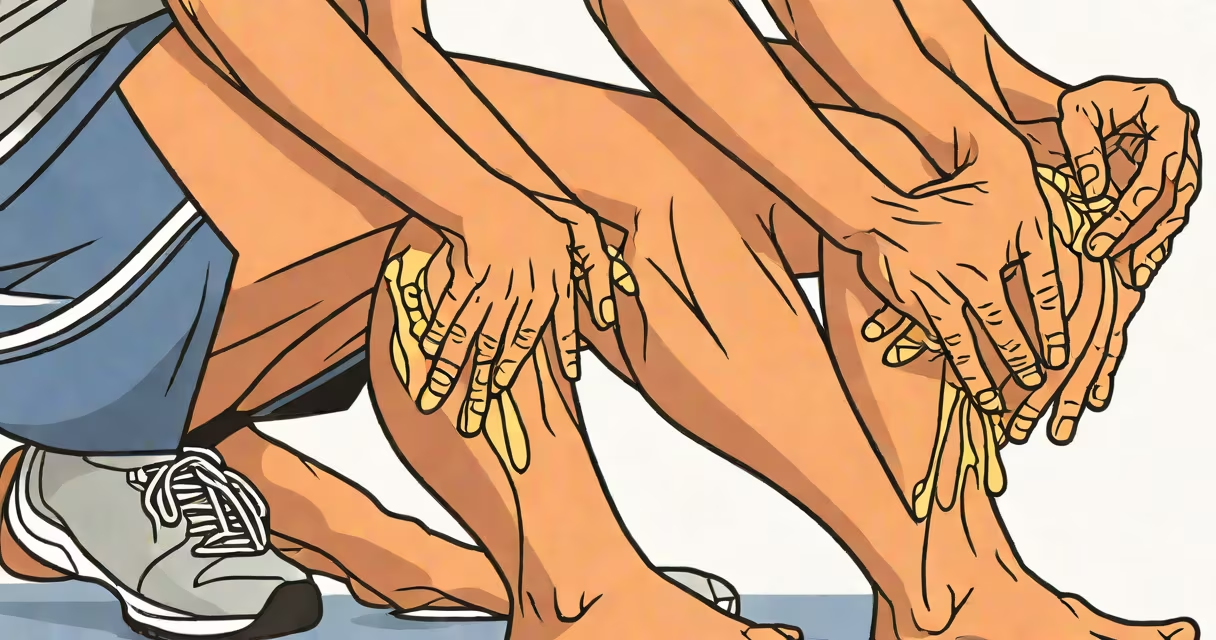
No, you cannot pull a muscle directly in the knee joint itself. The knee is a complex hinge joint formed by the femur, tibia, and patella. Muscles attach to bones around the knee - such as the quadriceps and hamstrings - but do not reside within the joint space. A "pulled muscle" in the knee region typically refers to a strain in one of these surrounding muscles.
The confusion arises because people often describe pain near the knee as a "pulled muscle," especially after sudden movements during sports or heavy lifting. However, true muscle tears occur in the soft tissue adjacent to the joint, not inside it. The knee's stability relies on ligaments (like the ACL and PCL), tendons (such as the patellar tendon), and cartilage - not skeletal muscle.
According to the American Academy of Orthopaedic Surgeons (AAOS), over 60% of knee injuries involve ligaments or tendons, not muscles. True muscle strains near the knee usually affect the quadriceps (front thigh) or hamstrings (back thigh), which cross the knee joint and control leg movement.
A muscle strain occurs when fibers in a muscle tear due to overstretching or sudden force. The quadriceps and hamstrings are most vulnerable because they stabilize the knee during running, jumping, or kicking. A sudden sprint or awkward landing can overstress these muscles, leading to micro-tears and inflammation.
For example, a soccer player who sprints hard and changes direction abruptly may feel a sharp pain in the back of the thigh. This is a hamstring strain - not a "pulled muscle in the knee." The strain is felt near the knee because the hamstrings insert into the tibia just below the joint. Pain radiates downward from the back of the knee, mimicking joint involvement.
Similarly, a runner pushing too hard on hills may develop a quadriceps strain. The muscle tightens during knee extension, and sudden overload can cause a partial tear. Symptoms include localized soreness, weakness, and difficulty straightening the leg. Recovery takes 2-6 weeks depending on severity.
Many people mistake tendon injuries for muscle pulls. The patellar tendon connects the kneecap to the shinbone. Overuse - common in basketball players or jumpers - leads to patellar tendonitis (jumper's knee), which causes pain just below the kneecap. This is not a muscle strain but a tendonopathy.
Another frequent mix-up is iliotibial (IT) band syndrome. The IT band is a thick fascia strip running along the outer thigh from hip to knee. Repetitive motion, like long-distance running, can inflame it. Pain flares on the outer side of the knee, often mislabeled as a "pulled muscle." But the IT band is connective tissue, not muscle.
Table: Common Knee-Related Injuries vs. Muscle Strains
| Injury Type | Location | Real Cause | Typical Symptoms |
|---|---|---|---|
| Quadriceps strain | Front thigh, above knee | Overstretching or sudden contraction | Pain when extending leg, swelling, bruising |
| Hamstring strain | Back thigh, behind knee | Sudden sprint or stretch | Sharp pain, weakness, walking difficulty |
| Patellar tendonitis | Below kneecap | Repetitive jumping or impact | Sharp pain when bending or straightening knee |
| IT band friction syndrome | Outer knee | Repetitive leg motion | Burning pain on outer side of knee |
Not all knee pain requires a doctor. Mild strains may improve with rest, ice, compression, and elevation (RICE) within a few days. But certain signs indicate a more serious issue.
Seek medical evaluation if pain persists beyond 7 days, worsens with weight-bearing, or limits daily activities. Swelling, inability to bear weight, or a popping sensation at the time of injury suggest ligament or tendon damage. An MRI can confirm whether a muscle or tendon is torn.
I once treated a high school track athlete who reported "pulling a muscle in his knee" after a sprint. He had a grade 2 hamstring strain - moderate tearing - confirmed via ultrasound. The pain was centered behind the knee, but the injury originated in the upper thigh. Early diagnosis prevented further damage and allowed a structured rehab plan.
Strengthening the quadriceps and hamstrings reduces strain on the knee. Exercises like leg presses, bridges, and controlled lunges build resilience. Changing warm-ups before activity lower injury risk by increasing blood flow and muscle elasticity.
Recovery from a mild muscle strain takes 1-3 weeks. Gradual return to activity prevents re-injury. Avoid stretching cold muscles. Instead, perform light cardio (e.g., walking) for 5 minutes before stretching.
Understanding the anatomy behind knee pain helps avoid mislabeling injuries. A "pulled muscle in your knee" is a misnomer. The real culprits are nearby muscles, tendons, or ligaments. Accurate diagnosis ensures proper treatment and faster recovery.