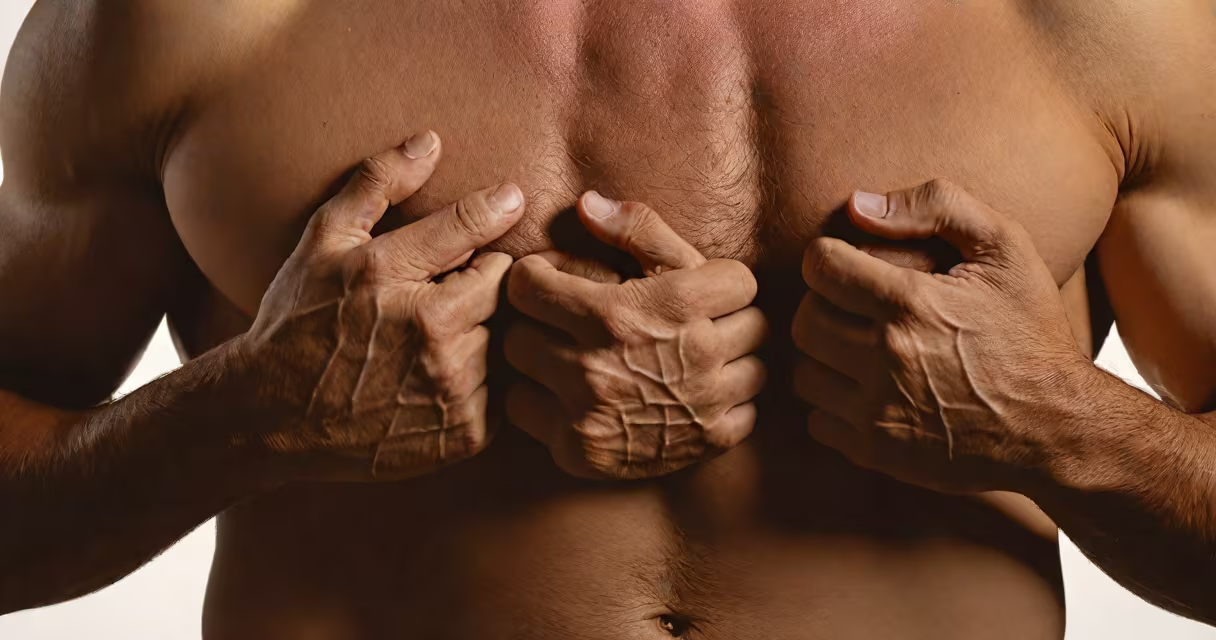
Yes, you can pull a muscle in your chest, most commonly the pectoralis major, through sudden force, heavy lifting, or repetitive strain during exercise. This injury causes sharp pain, weakness, and swelling in the upper chest area.
The pectoralis major is a large, fan-shaped muscle covering the front of the chest wall. It originates from the sternum, clavicle, and upper ribs, then inserts into the humerus bone of the arm. Its primary function is to move the arm across the body, such as during push-ups, bench presses, or throwing motions. When overstretched or overloaded, fibers within the muscle can tear-this is a muscle strain or pull.
According to the American Academy of Orthopaedic Surgeons (AAOS), pectoralis major tears account for less than 1% of all musculoskeletal injuries but are most common in men aged 20-40 who engage in resistance training. The injury typically occurs during eccentric loading-when the muscle lengthens under tension-such as lowering a barbell during a bench press.
A chest muscle pull results from excessive mechanical stress on the pectoralis major. This stress exceeds the muscle's tensile strength, leading to microtears or complete rupture. The severity ranges from Grade 1 (mild strain) to Grade 3 (complete tear).
Common scenarios include:
During a Grade 2 strain, the muscle may partially tear. You'll feel immediate pain, swelling, and bruising that spreads down the upper arm. A complete tear, though rare, presents with a visible deformity-a "dent" near the chest wall-and inability to move the arm across the body.
Medical professionals classify chest muscle pulls using a three-grade system based on tissue damage:
| Grade | Description | Common Symptoms | Recovery Time |
|---|---|---|---|
| 1 | Mild overstretching with minimal fiber damage | Slight discomfort, no loss of strength | 1-2 weeks |
| 2 | Partial tear with moderate pain and swelling | Sharp pain during movement, visible bruising | 3-6 weeks |
| 3 | Complete rupture of the muscle tendon | Severe pain, noticeable indentation, arm cannot be brought across body | 6 months+; often requires surgery |
Grade 3 injuries are uncommon but serious. A 2021 study in the Journal of Shoulder and Elbow Surgery reported that 85% of complete pectoralis major tears required surgical repair to restore function, especially in athletes and manual laborers.
People often mistake a pulled chest muscle for heart-related pain. While both can cause chest tightness, a cardiac event includes symptoms like jaw pain, nausea, sweating, and shortness of breath-signs not associated with muscle strain.
Another frequent error is confusing a chest muscle pull with costochondritis, inflammation of the cartilage connecting ribs to the sternum. Costochondritis causes localized tenderness and pain with deep breathing or coughing, but not with arm movement. Imaging like ultrasound or MRI can differentiate between soft tissue injury and joint inflammation.
Non-obvious fact: A pulled chest muscle can radiate pain to the shoulder or arm-not because nerves are damaged, but due to referred pain patterns. The brachial plexus nerve bundle runs near the pectoral region, and irritation can mimic a pinched nerve in the neck.
In 2022, a 32-year-old male powerlifter attempted a heavy bench press with a 225-pound barbell. He lowered the weight slowly, then pushed up forcefully. At peak contraction, he felt a sharp "pop" in his left chest. Immediate pain, swelling, and bruising developed over the next 24 hours.
He sought medical evaluation. An MRI confirmed a partial tear of the pectoralis major tendon at its insertion point on the humerus. He was diagnosed with a Grade 2 strain. Treatment included 4 weeks of rest, ice, compression, and elevation (RICE), followed by physical therapy focusing on controlled range-of-motion exercises.
After 6 weeks, he resumed light training. Full return to competition took 10 weeks. He later modified his technique-using a spotter and reducing load-after learning that eccentric overload is the most common cause of this injury.
Consult a healthcare provider if you experience:
Immediate care is needed if pain persists beyond two weeks or if you suspect a complete rupture. Early diagnosis improves outcomes and reduces risk of long-term weakness.
Most Grade 1 and 2 chest muscle pulls heal within 3 to 6 weeks with conservative treatment. Avoid activities that stress the muscle until pain-free movement returns.
Prevention strategies include:
For those experiencing recurring strains, consider consulting a physical therapist. A 2020 study in the British Journal of Sports Medicine found that targeted neuromuscular training reduced re-injury rates by 40% in athletes with prior muscle strains.
Recognizing the signs early prevents complications. A pulled chest muscle is treatable, but ignoring it can lead to chronic pain or reduced strength. If you suspect a strain, stop activity, apply cold compresses, and seek evaluation if symptoms persist beyond a few days.