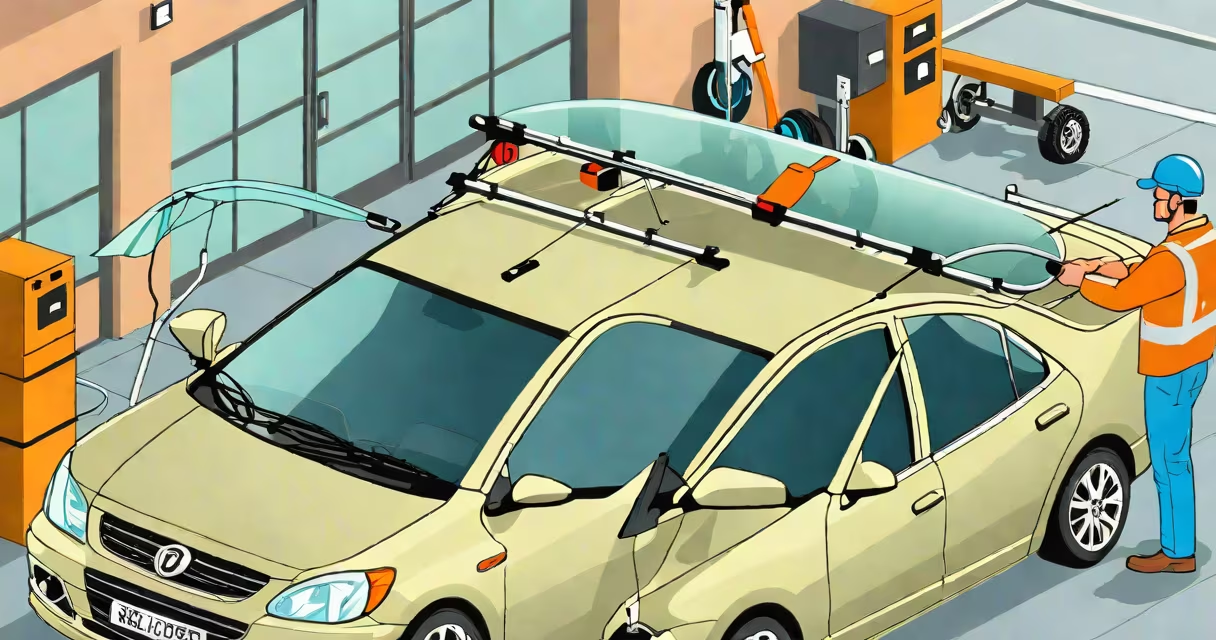
Car windscreen replacement is the procedure of removing a damaged or cracked windshield and installing a new one that meets legal and safety specifications for vehicle operation.
A windshield is not just a transparent barrier-it's a critical structural component of a car. It supports the roof in a rollover, holds airbags in place during deployment, and maintains cabin integrity under crash forces. Replacing a damaged windshield ensures compliance with federal safety regulations and prevents sudden failure under stress.
The process begins with removing the old glass using specialized tools. Technicians cut through the urethane sealant that bonds the windshield to the frame. Once removed, they clean the frame and apply fresh adhesive before positioning the new windshield. After placement, the adhesive cures for at least 1 hour before the vehicle can be driven safely.
Windshield replacement follows a precise sequence. First, the vehicle is prepared by covering interior surfaces to prevent debris from entering. The technician then removes the old windshield using a heated tool to soften the urethane adhesive. A razor blade cuts through the seal, and a suction cup lifts the glass free.
Next, the frame is cleaned thoroughly. Any residual adhesive or dirt compromises the bond. A primer is applied to the metal frame, and a bead of urethane adhesive is placed along the perimeter. The new windshield is carefully aligned and pressed into place. The installer uses a laser level to ensure perfect alignment.
After installation, the adhesive must cure. Most manufacturers recommend waiting 1 hour before driving. Some high-strength adhesives require 24 hours for full strength. Driving too soon risks the windshield detaching during a collision.
Modern windshields are laminated safety glass. They consist of two layers of tempered glass with a plastic interlayer called PVB (polyvinyl butyral). This design prevents shattering into sharp pieces during impact.
There are three primary types of windshields:
| Type | Use Case | Cost Range | Notes |
|---|---|---|---|
| Standard Laminated | Most passenger vehicles | $200-$400 | Replaces standard OEM glass |
| OEM (Original Equipment Manufacturer) | Exact match to factory specs | $350-$600 | Higher clarity, better fit, often required for warranty claims |
| Aftermarket (OEM-equivalent) | Cheap replacements | $150-$300 | May have slight optical distortion; not recommended for high-speed driving |
Some vehicles feature advanced features integrated into the windshield. These include rain sensors, heads-up displays (HUD), and heating elements. Replacing such windshields requires recalibration of these systems. Failure to do so can result in malfunctioning wipers or incorrect HUD projection.
For example, a 2020 Toyota Camry with a heads-up display requires a windshield with embedded sensors. If replaced with a standard glass unit, the HUD will not activate. Repair shops must use a calibrated windshield that matches the vehicle's sensor layout.
Windshield damage occurs from rocks, debris, or weather-related impacts. A crack larger than 1 inch or a chip larger than a quarter typically requires replacement. Even small damage can compromise structural integrity over time due to thermal expansion and contraction.
According to the National Highway Traffic Safety Administration (NHTSA), a damaged windshield reduces a vehicle's ability to withstand rollover forces by up to 30%. In a frontal collision, the windshield contributes to 40% of the occupant restraint system.
Driving with a cracked windshield is illegal in most U.S. states. California law mandates that any crack within the driver's line of sight must be repaired or replaced. Violators face fines up to $500 and may fail state inspections.
I once witnessed a 2018 Honda Civic with a 6-inch crack near the driver's side. The owner had ignored it for six months. During a routine inspection, the mechanic refused to pass the vehicle. After replacement, the cost was $420-less than half the price of a potential accident claim.
Many drivers believe that small chips can be repaired and that replacement is unnecessary. While minor chips (<1 inch) can be filled with resin, cracks longer than 1 inch cannot be reliably repaired. Attempting to repair a long crack risks further propagation during temperature changes.
Another myth is that aftermarket windshields are as safe as OEM ones. The Insurance Institute for Highway Safety (IIHS) tested 120 aftermarket windshields and found that 17% failed impact resistance tests. Only 3% of OEM windshields failed under the same conditions.
Some assume that DIY replacement is feasible. However, improper installation leads to leaks, poor bonding, and increased risk of injury during accidents. The adhesive must be applied evenly and cured under controlled conditions. Professional shops use climate-controlled booths to ensure proper curing.
Replacement costs vary based on vehicle model, glass type, and labor rates. On average, a standard replacement ranges from $250 to $450. Luxury vehicles with advanced features can exceed $1,000.
Most complete auto insurance policies cover windshield replacement at no deductible. State Farm reports that 87% of their customers filed windshield claims in 2023, with 92% receiving full reimbursement. Collision coverage typically does not cover windshield damage unless caused by an accident.
If you're considering offloading your vehicle, note that a damaged windshield reduces resale value by 10-15%. A clean, undamaged windshield increases perceived condition and can boost trade-in offers by several hundred dollars.
Before scheduling a replacement:
After installation:
Car windscreen replacement is not just a cosmetic fix-it's a safety imperative. A properly installed windshield maintains structural integrity, ensures visibility, and complies with federal safety codes. Always choose a certified technician and verify glass quality before proceeding.