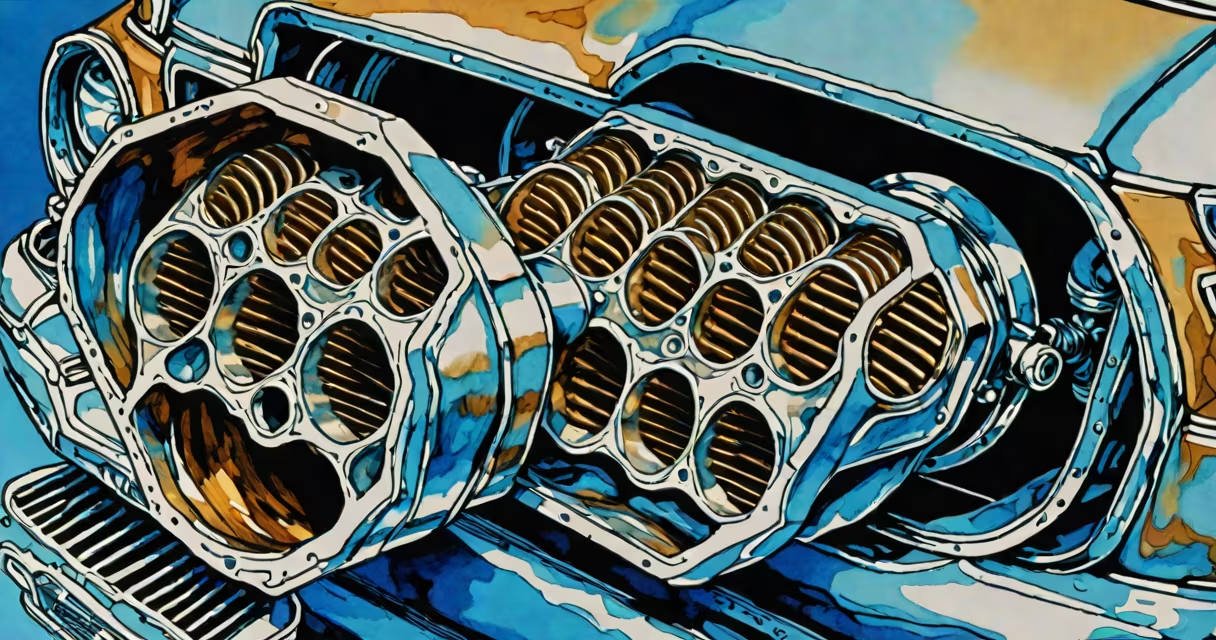
A catalytic converter reduces vehicle emissions by transforming toxic gases-carbon monoxide, nitrogen oxides, and unburned hydrocarbons-into safer compounds like carbon dioxide, nitrogen, and water vapor through chemical reactions on a metal catalyst.
Inside the converter, exhaust gases flow through a ceramic or metallic honeycomb structure coated with precious metals. These metals act as catalysts, enabling reactions without being consumed. The process occurs in two stages: oxidation and reduction. In the oxidation stage, carbon monoxide and hydrocarbons react with oxygen to form carbon dioxide and water. In the reduction stage, nitrogen oxides break down into nitrogen and oxygen. Both processes happen simultaneously within the same unit.
The device operates most efficiently when engine temperatures reach 250°C (482°F) or higher. Below this threshold, conversion efficiency drops. Modern vehicles use oxygen sensors upstream and downstream of the converter to monitor performance and adjust fuel mixtures accordingly. A malfunctioning sensor can trigger a check engine light even if the converter itself is intact.
The catalytic converter contains a monolith-a porous ceramic or metal substrate shaped like a honeycomb. This design maximizes surface area while minimizing pressure drop. The walls of the honeycomb are coated with a washcoat made of aluminum oxide and rare earth oxides, which provides a stable base for the catalyst layer.
Platinum, palladium, and rhodium are the primary catalysts. Platinum and palladium handle oxidation reactions; rhodium facilitates the reduction of nitrogen oxides. These metals are expensive-platinum alone costs around $1,000 per ounce as of 2023, according to the U.S. Geological Survey. Their scarcity drives recycling efforts; nearly 90% of used converters in the U.S. are processed to recover these materials.
Some newer models use alternative materials like cerium-zirconia composites to improve thermal stability and reduce reliance on scarce metals. However, these alternatives still require trace amounts of platinum-group elements to achieve acceptable conversion rates.
When a car engine burns gasoline, it produces exhaust containing CO, NOx, and unburned hydrocarbons. At idle, CO levels can exceed 10% by volume. Without a catalytic converter, such emissions would contribute heavily to smog and respiratory illness. With the converter active, CO levels drop below 0.5%, NOx below 0.05%, and hydrocarbons below 0.1%-levels set by U.S. EPA standards.
For example, a 2020 Honda Civic with a properly functioning catalytic converter emits approximately 0.01 grams of CO per mile, compared to 1.2 grams without it. Over 15,000 miles, that difference equates to 178 fewer pounds of carbon monoxide released into the atmosphere. This level of reduction is required under the Clean Air Act and enforced via periodic emissions testing in states like California and New York.
Engine tuning affects converter performance. Rich fuel mixtures (excess fuel) produce high CO and hydrocarbon levels, overwhelming the oxidizer. Lean mixtures (too little fuel) increase NOx formation. The ideal air-fuel ratio is 14.7:1-the stoichiometric point. Deviations beyond ±5% reduce efficiency and risk overheating the catalyst, leading to melting or cracking of the ceramic core.
Catalytic converters do not remove particulate matter. They address gaseous pollutants only. Diesel engines use diesel particulate filters (DPFs) for soot removal. Mixing these systems is common in modern heavy-duty trucks, but they serve different functions.
Another misconception is that catalytic converters generate power. They consume no energy directly-they rely solely on heat from exhaust gases. However, their presence increases backpressure slightly. A clogged converter can reduce engine power by up to 15% in extreme cases, affecting acceleration and fuel economy.
The converter does not "clean" exhaust-it transforms it. The output is still hot and contains CO₂, which contributes to climate change. But CO₂ is far less toxic than CO or NOx. The EPA estimates that replacing a failed converter in a passenger vehicle reduces annual greenhouse gas equivalents by roughly 1,200 pounds of CO₂e.
Over time, the catalyst degrades due to thermal stress, contamination, or physical damage. Lead in old gasoline permanently poisons the catalyst-this is why leaded fuel was banned in the U.S. after 1996. Even small amounts of lead can render a converter ineffective.
Other contaminants include silicon (from coolant leaks), phosphorus (from oil burning), and sulfur (from low-quality fuel). These elements coat the catalyst surface, blocking active sites. A 2019 study by the Society of Automotive Engineers found that silicon poisoning reduced conversion efficiency by 60% after just 10,000 miles in test vehicles.
Physical failure includes cracked substrates from impact or thermal shock. A rattling sound under the car often indicates internal damage. Once compromised, the converter cannot maintain proper reaction conditions. The vehicle may fail emissions tests, lose power, or emit visible smoke.
In 2022, a technician diagnosed a 2015 Ford Fusion with a P0420 code-indicating low efficiency in the catalytic converter. The car had 112,000 miles and passed previous emissions tests. After checking for exhaust leaks and confirming proper oxygen sensor function, the technician measured raw exhaust gases before and after the converter.
Before the converter: CO = 1.8%, HC = 0.4%, NOx = 0.12%. After: CO = 1.1%, HC = 0.35%, NOx = 0.09%. Conversion efficiency dropped to 39%-well below the 70% minimum required by EPA standards. The technician replaced the converter, which cost $420 including labor. Post-replacement readings showed CO = 0.03%, HC = 0.01%, NOx = 0.005%-within legal limits.
This case illustrates that performance declines gradually. Drivers often don't notice until the vehicle fails inspection or shows symptoms like hesitation during acceleration. Regular maintenance and timely repairs prevent larger issues.
The catalytic converter sits between the exhaust manifold and the muffler. Its location ensures it receives hot exhaust gases quickly after engine startup. Early placement improves warm-up time, which is critical because cold converters operate at less than 10% efficiency.
Modern vehicles position the converter close to the engine, sometimes with a heat shield to protect nearby components. Some hybrid models use electric heating elements to pre-warm the converter during cold starts, reducing initial emissions by up to 40%.
A failing converter leads to increased emissions, poor fuel economy, and potential engine damage. If the catalyst melts or blocks the flow, exhaust backs up into the engine, causing misfires and overheating. In severe cases, the exhaust system can rupture.
Common signs include a sulfur smell (rotten eggs), reduced acceleration, and illuminated check engine lights. The P0420 code appears when the downstream oxygen sensor detects higher-than-expected oxygen levels, indicating the converter is no longer removing CO and hydrocarbons effectively.
Use only unleaded gasoline. Avoid prolonged idling, which promotes carbon buildup. Fix engine misfires promptly-unburned fuel entering the converter can cause overheating and melt the substrate. Keep the air filter clean and replace spark plugs on schedule.
Regular inspections during routine service help catch issues early. A mechanic can perform a visual check for cracks, dents, or rust. They can also run a scan tool to read live data from the oxygen sensors and confirm converter efficiency.
Replacing a catalytic converter requires certification in many states. In California, only EPA-approved units with a valid CARB Executive Order number can be installed. Using non-compliant parts voids warranties and results in fines.
Understanding how a catalytic converter works reveals its role not just in compliance, but in public health. By turning hazardous fumes into harmless gases, it protects air quality and reduces urban smog. Its effectiveness depends on proper installation, regular maintenance, and responsible driving habits.