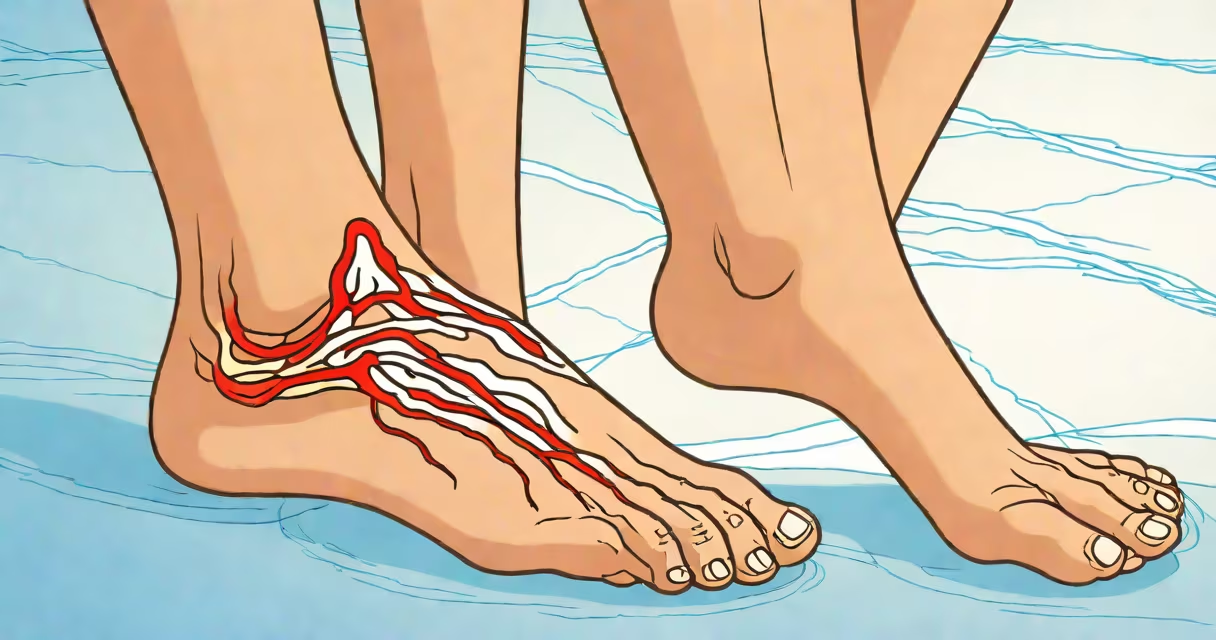
Edema in the ankles results from excess fluid accumulating in tissues below the skin, often due to underlying medical conditions affecting circulation, heart function, or kidney health. This fluid buildup causes visible swelling, tightness, and sometimes pain.
Ankle edema is a symptom, not a diagnosis. It occurs when capillaries leak fluid into surrounding tissue faster than the lymphatic system can remove it. Common triggers include prolonged standing, salt intake, medications, and chronic diseases. Identifying the root cause is essential for effective treatment.
Fluid moves between blood vessels and tissues through a balance of hydrostatic and oncotic pressures. When this balance shifts, fluid escapes capillaries and collects in the interstitial space. In the lower legs, gravity pulls fluid downward, making ankles especially prone to pooling.
Normal capillary filtration allows small amounts of fluid to exit during blood flow. Lymphatic vessels normally drain this fluid. But when pressure increases in veins or when protein levels drop in blood, fluid leakage exceeds drainage capacity. This imbalance leads to visible swelling.
A 2021 study published in *The American Journal of Medicine* found that venous insufficiency accounts for nearly 60% of non-pitting edema cases in adults over 50. Pitting edema-where pressing the skin leaves a temporary dent-is more commonly linked to heart failure, kidney disease, or liver cirrhosis.
Several systems contribute to ankle swelling. The most frequent causes involve cardiovascular, renal, or metabolic dysfunction.
| System | Common Cause | Key Mechanism | Prevalence |
|---|---|---|---|
| Cardiovascular | Heart failure | Reduced cardiac output increases venous pressure, forcing fluid out of vessels | ~40% of chronic edema cases |
| Renal | Chronic kidney disease | Impaired sodium and water excretion leads to volume overload | ~25% of patients with stage 3+ CKD develop edema |
| Endocrine/Metabolic | Hypothyroidism | Slowed metabolism reduces fluid clearance and increases capillary permeability | ~10% of hypothyroid patients show mild edema |
| Medications | Calcium channel blockers, NSAIDs | Alter vascular tone or reduce kidney perfusion | Up to 15% of users report ankle swelling |
One non-obvious factor is medication-induced edema. A 2020 review in *JAMA Internal Medicine* noted that drugs like amlodipine (used for hypertension) increase capillary pressure and promote fluid leakage. Patients may not associate their swollen ankles with a prescribed pill unless informed.
Pitting versus non-pitting edema matters. Pitting edema leaves a visible dent when pressed and typically indicates systemic fluid overload. Non-pitting edema feels firm and doesn't indent; it often signals lymphatic obstruction or tissue fibrosis.
For example, a patient with advanced lymphedema from filariasis (a parasitic infection) develops non-pitting swelling in the lower limbs. This differs from heart failure-related edema, which usually starts in the ankles and spreads upward with gravity.
Another distinction: unilateral (one-sided) swelling suggests localized injury, deep vein thrombosis (DVT), or infection. Bilateral swelling points toward systemic causes. A 2022 study in *Circulation* showed that bilateral ankle edema had a 78% positive predictive value for heart failure when combined with shortness of breath and elevated BNP levels.
Many assume that swelling in the ankles is harmless or simply due to "bad shoes" or "standing too long." While these can contribute temporarily, persistent or worsening edema requires evaluation.
One misconception is that edema only happens in older adults. In reality, young people with untreated diabetes or autoimmune disorders like lupus can develop severe peripheral edema. A 2019 case series in *The New England Journal of Medicine* described a 24-year-old woman with systemic lupus erythematosus who presented with bilateral ankle swelling and was later diagnosed with lupus nephritis.
Red flags include sudden onset, rapid progression, pain, redness, warmth, or fever. These suggest infection, DVT, or acute inflammatory conditions. If swelling appears overnight or worsens within hours, seek urgent care.
Consider a 65-year-old man with a history of hypertension and type 2 diabetes. He reports bilateral ankle swelling that worsened over two weeks. He walks 30 minutes daily but hasn't changed his diet or medications.
On exam, he has pitting edema up to the shins, mild dyspnea on exertion, and an elevated jugular venous pressure. His BNP level is 650 pg/mL (normal <100), indicating heart strain. Echocardiogram shows reduced ejection fraction (35%).
Diagnosis: congestive heart failure secondary to ischemic cardiomyopathy. Treatment includes diuretics, ACE inhibitors, and sodium restriction. Swelling resolved within five days.
This case illustrates that ankle edema is rarely isolated. It reflects systemic physiology. Ignoring it risks missing life-threatening conditions.
Swelling lasting more than three days, worsening over time, or accompanied by chest pain, shortness of breath, or weight gain (>2 kg in 3 days) warrants prompt evaluation. So does sudden asymmetry or skin changes like discoloration or ulcers.
For those managing diabetes, monitoring for edema is critical. High blood glucose damages capillaries and nerves, impairing fluid regulation. A 2023 study in *Diabetes Care* found that diabetic patients with peripheral edema were twice as likely to develop foot ulcers within six months compared to those without swelling.
Recognizing the cause of edema in ankles begins with awareness. Persistent swelling is not just discomfort-it's a signal. Addressing it early prevents complications and improves quality of life.