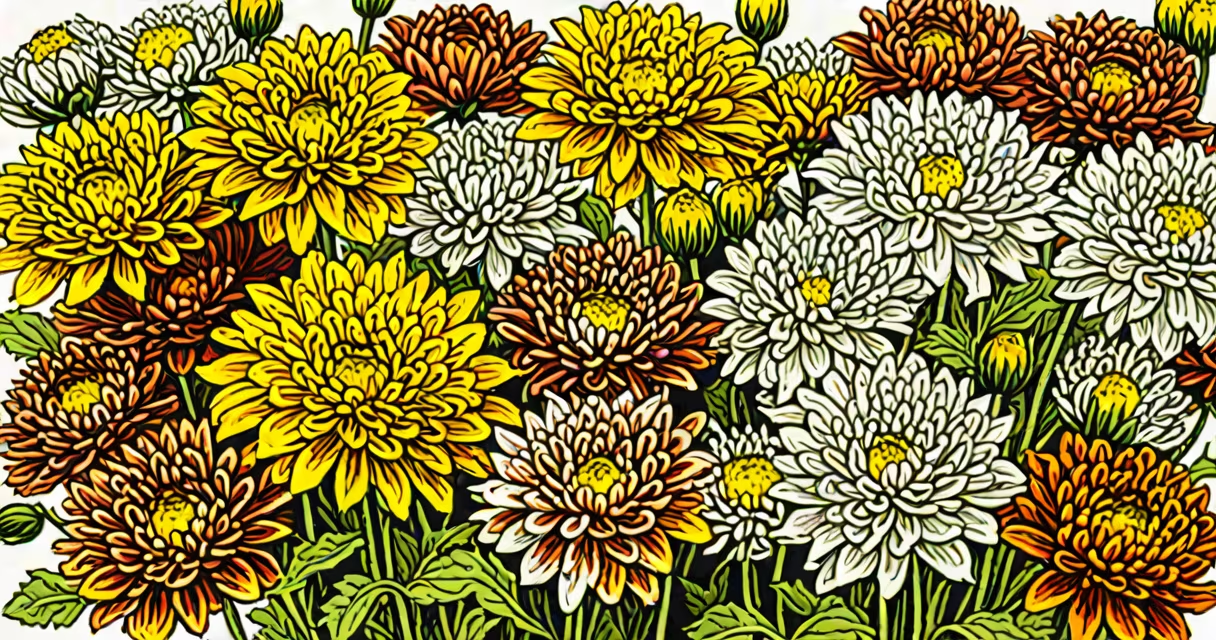
Chrysanthemum flower varieties are diverse cultivars of the genus Chrysanthemum, primarily grown for their showy, long-lasting blooms in late summer and fall. They include large decorative types, small pompons, and hardy garden mums adapted to cold climates.
These flowering plants belong to the Asteraceae family and originated in East Asia, particularly China and Japan. Over centuries, selective breeding produced hundreds of distinct forms based on petal shape, bloom size, color, and growth habit. Modern varieties are categorized into formal and informal groups, each suited to different uses-from cut flowers to field borders.
Chrysanthemum flower varieties grow best in full sun with well-drained soil and moderate watering. Most are herbaceous perennials in USDA zones 5-9, though many are treated as annuals in colder regions. They bloom from late August through October, making them iconic symbols of autumn in temperate gardens.
Each chrysanthemum variety develops from a single plant's genetic makeup, determining its flower form, color intensity, and blooming time. The central disc florets produce pollen, while the surrounding ray florets create the visible petals. These structures grow in radial symmetry around the central disk, forming the familiar daisy-like appearance.
Breeding focuses on traits like double petal layers, compact growth, and resistance to mildew. For example, 'Dwarf Mums' have dense foliage and small blooms ideal for container gardening, while 'Decorative Mums' feature large, ruffled heads up to 6 inches wide. Some varieties are bred specifically for longevity in vases-lasting up to 14 days when properly cared for.
Flower color results from pigments called anthocyanins. Red hues come from cyanidin derivatives; yellow tones stem from flavonols. White and cream shades occur when pigments are absent. Breeders can cross lines to produce rare combinations like bi-color or gradient blooms, such as 'Peach Fizz,' which shifts from soft pink to gold at the edges.
Chrysanthemum flower varieties are grouped by flower form, with eight primary categories recognized by the Royal Horticultural Society. The most popular types include:
| Type | Bloom Size | Petal Shape | Best Use |
|---|---|---|---|
| Decorative | 3-6 inches | Ruffled, flat | Floral arrangements, garden displays |
| Pompon | 1-2 inches | Round, tightly packed | Container planting, borders |
| Intermediate | 2-4 inches | Wavy, slightly curled | Garden beds, mass plantings |
| Single | 2-3 inches | Flat, open center | Wildflower-style gardens |
Among the most widely cultivated are 'Crisp' series mums, known for their crisp white petals and strong stems. 'Misty Morning' features pale lavender blooms with a golden center, thriving in partial shade. 'Red Dragon' produces deep maroon flowers with a bold, upright habit-ideal for adding drama to fall landscapes.
A lesser-known fact: some chrysanthemum flower varieties are photoperiodic, meaning they only bloom when daylight drops below 12 hours. This trait makes them sensitive to artificial light at night, which can delay or prevent flowering. Gardeners in urban areas must shield mums from porch lights or streetlamps during early fall.
Gardeners use chrysanthemum flower varieties for seasonal color in public parks, private yards, and floral exhibitions. In Japan, the chrysanthemum is the imperial emblem, and national festivals feature elaborate displays of 'Kiku' cultivars. The Tokyo International Chrysanthemum Show attracts over 100,000 visitors annually, showcasing rare varieties like 'Shirakami,' a snow-white bloom with a delicate fragrance.
Commercial growers cultivate chrysanthemums for the cut flower market. In the U.S., California and Washington lead production, supplying over 70% of domestic demand. The 'Nankin' variety, with its bright orange-yellow flowers, is especially popular for Thanksgiving and Halloween events.
Indoors, chrysanthemum flower varieties serve as ornamental houseplants. 'Golden Gem' thrives in bright windowsills and blooms for up to six weeks with minimal care. Its compact size and low maintenance make it a favorite among apartment dwellers.
Many people confuse chrysanthemum flower varieties with related species like the African daisy (Osteospermum) or the shasta daisy (Leucanthemum). Unlike these, true chrysanthemums have compound leaves and grow from underground rhizomes. Their blooms also last longer after cutting-up to two weeks in water versus five days for shasta daisies.
Another frequent error: assuming all mums are hardy. While some garden mums survive winter in zone 5, many hybrid varieties sold in stores are not cold-tolerant. A 2022 study by the University of Minnesota Extension found that 68% of store-bought mums died after one winter in northern Minnesota due to poor root establishment.
When selecting chrysanthemum flower varieties, avoid those labeled "hardy" unless specified for your climate zone. Always check the plant tag for USDA hardiness ratings. For example, 'Alpine' mums are rated for zone 4 and can withstand temperatures as low as -30°F, while 'Sunset Glow' is only suitable for zones 6-9.
Consider a homeowner in Portland, Oregon (USDA zone 8b), planning a fall border. They want long-blooming, low-maintenance plants with rich color. After researching chrysanthemum flower varieties, they choose:
They plant the mums in early September, spacing them 18 inches apart. Watering is reduced after the first month. By mid-October, the garden displays layered color and texture, attracting pollinators like bees and butterflies. The plants remain vibrant until frost, lasting nearly four months.
As a personal note, I once planted 'Black Beauty' in a raised bed with poor drainage. Despite regular watering, the roots rotted within three weeks. Switching to a well-aerated mix with perlite improved survival rates. This taught me that soil quality matters as much as variety selection.
Understanding chrysanthemum flower varieties helps avoid common pitfalls and ensures successful cultivation. Whether for decoration, symbolism, or seasonal interest, choosing the right type makes a measurable difference in garden performance.