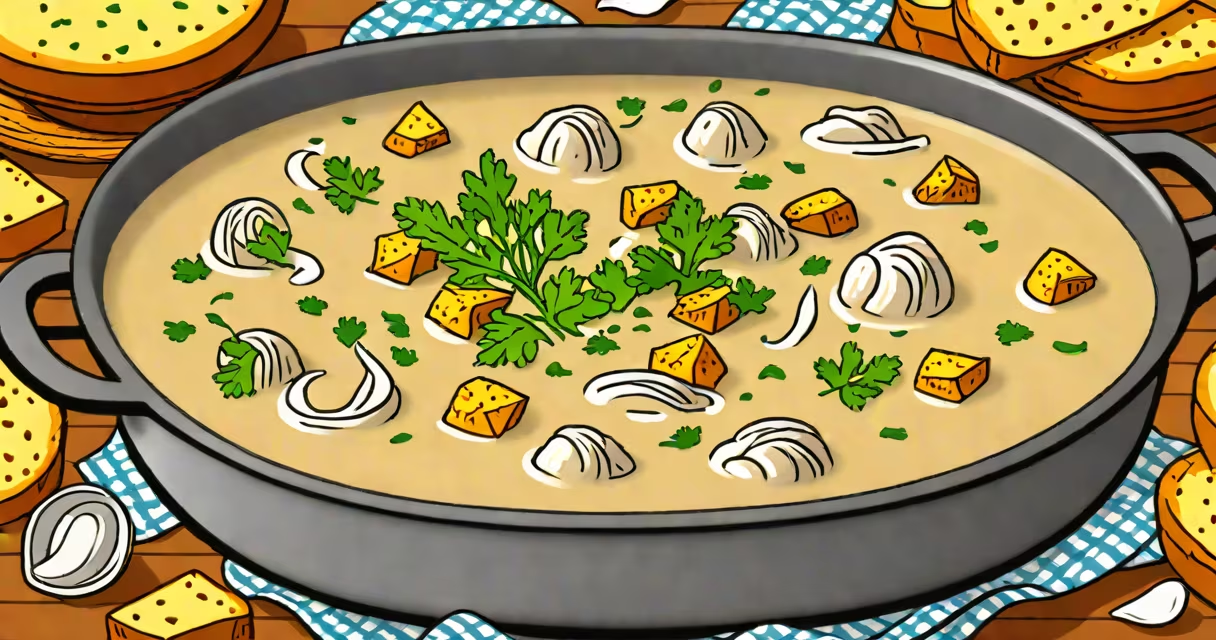
A traditional New England clam chowder soup recipe uses potatoes, clams, bacon, onions, celery, butter, and heavy cream to create a thick, savory broth. It's served in a bowl with oyster crackers and is a staple of coastal American cuisine.
The foundation of a proper clam chowder lies in building flavor through layers. Start by sautéing diced onions and celery in butter until soft. Add chopped potatoes and cook for five minutes to begin breaking down their starches. This step creates a natural thickener without relying on flour or cornstarch.
Next, add the clams-either canned or fresh-along with their liquid. Simmer gently for 15 minutes to meld flavors. Stir in heavy cream and a splash of milk to achieve the signature richness. Season with salt, pepper, and a pinch of thyme. Serve hot with a side of oyster crackers.
Clam chowder relies on fat, starch, and slow simmering to develop depth. Butter and bacon render fat that carries flavor into the broth. Potatoes release amylose, a starch that thickens the soup naturally. Clam liquor adds umami and briny complexity. Heavy cream contributes body and mouthfeel without overpowering the seafood.
Do not boil the soup after adding cream. High heat causes curdling. Keep the temperature just below boiling to preserve texture. A common mistake is using too much cream-1 cup per 4 servings is sufficient. More than that makes the soup greasy and masks the delicate taste of the clams.
For authenticity, use canned clams (such as Red Boat or Bumble Bee) unless you're near a coast with access to fresh littlenecks. Fresh clams require shucking and longer cooking times. Canned clams provide consistent results and are widely available.
Traditional New England clam chowder includes only a few core components. The following table outlines essential elements and common deviations:
| Ingredient | Role | Common Substitutions |
|---|---|---|
| Butter | Fat base, flavor carrier | Use olive oil for vegan version |
| Potatoes (Yukon Gold) | Natural thickener, texture | Waxy potatoes like red bliss work but don't break down as well |
| Canned clams (2 cans) | Protein, umami, broth base | Use fresh clams (6-8 per person) if available |
| Heavy cream (1 cup) | Richness, body | Half-and-half for lighter texture; omit for dairy-free |
| Bacon (4 slices) | Savory depth, crisp texture | Smoked paprika + vegetable oil for vegetarian option |
Some regions serve Manhattan clam chowder, which uses tomato-based broth. That version is red, chunky, and often includes bell peppers. It's not the same as New England chowder, which is white and creamy. Confusing the two is a frequent error among home cooks.
Another misconception: clam chowder must include onions and celery. While they're standard, some regional versions skip them. The original recipe from Boston's Faneuil Hall market in the 1800s included only clams, potatoes, and milk. Onions were added later due to availability and preference.
Clam chowder is a winter comfort food in New England. It's served at family dinners, lobster bake events, and seaside restaurants. Its high fat and carbohydrate content provide sustained energy during cold months.
It's also a cultural touchstone. The dish appears in literature such as *The Old Man and the Sea* by Ernest Hemingway, where the protagonist eats it after returning from fishing. In film, it features in *The Perfect Storm* (2000), where crew members share a bowl while waiting out a storm.
Commercial brands like Campbell's offer canned versions. But they contain less than 10% actual clams and rely on artificial flavoring. A true homemade version uses real ingredients and takes 45 minutes to prepare.
Overcooking the potatoes leads to mushiness. Cut them into ¾-inch cubes and test with a fork after 15 minutes of simmering. They should yield easily but still hold shape.
Using low-fat cream results in a thin, watery soup. Heavy cream (36-40% fat) is necessary for the correct consistency. Half-and-half won't provide enough body.
Adding cream too early causes separation. Wait until the soup is nearly done, then stir in cream off the heat. Let it sit for 5 minutes before serving to stabilize.
One non-obvious fact: the best clam chowder uses both clam meat and clam juice. The juice contains dissolved proteins and minerals that improve flavor. Never discard it-use it as part of the liquid base.
Here's a working example using 4 servings:
I made this version last winter during a snowstorm. The house filled with the smell of simmering onions and bacon. My daughter asked for seconds. I didn't have to explain why-it was clear from her smile.
When you follow this clam chowder soup recipe, you're not just making a meal-you're preparing a tradition. The ingredients are simple, but the result is deeply satisfying. It's a dish that honors time, place, and careful attention.