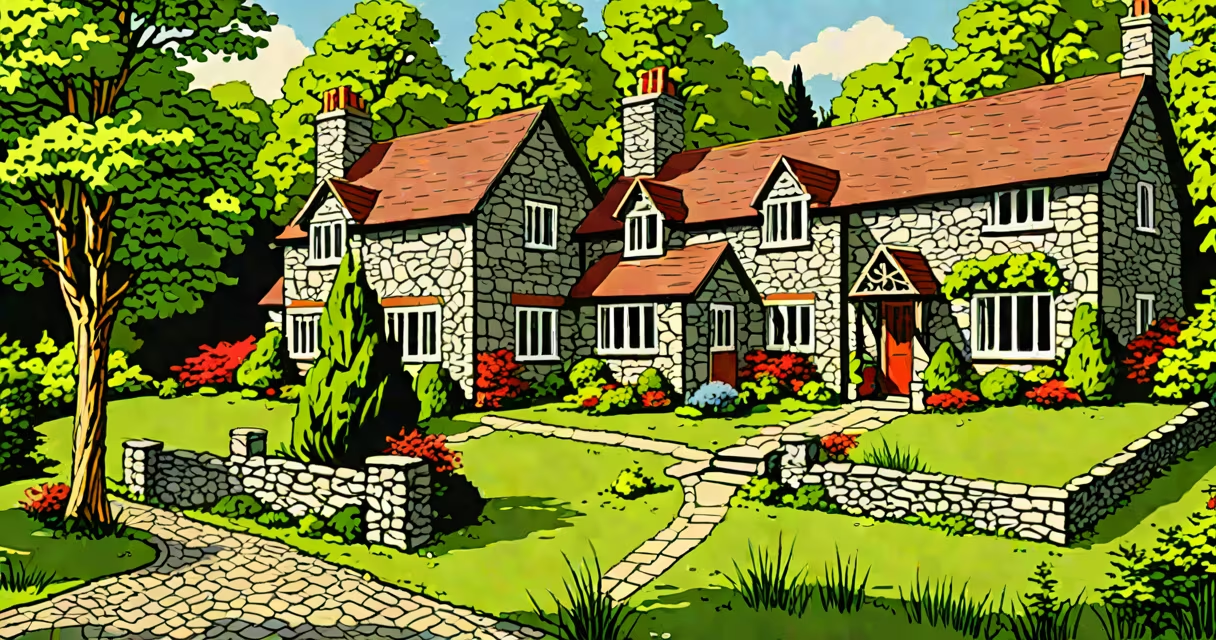
A cottage in the woods Malvern is a standalone residential property located within wooded areas near the Malvern Hills, typically offering privacy, natural surroundings, and access to walking trails. These homes blend traditional architecture with rural charm, often featuring stone walls, timber beams, and large windows framing forest or hill views.
Such properties are usually found in designated conservation zones or rural planning areas where development is limited. They serve as holiday rentals, permanent residences, or weekend retreats for people drawn to tranquility and proximity to nature. The term "Malvern" specifies the geographic region in Worcestershire, England, known for its rolling hills, historic sites, and scenic footpaths.
Many cottages in the woods Malvern were originally farm outbuildings or estate worker housing, later converted into dwellings. Their location near ancient woodlands like Wyche Hill or the Lickey Hills adds to their appeal. Properties in this category often feature original features such as flagstone floors, exposed rafters, and fireplaces, while still meeting modern building standards.
Cottages in the woods Malvern are typically accessed via narrow country lanes or footpaths. Most have private driveways, though some rely on shared access. Utilities include mains electricity, water, and sewage, though off-grid options exist in remote spots. Heating is often gas central heating or wood-burning stoves, reflecting the local climate and energy preferences.
These homes are used primarily for short-term stays or long-term residence. Holiday renters value the seclusion and proximity to walking routes like the Malverns Way or the Worcester & Birmingham Canal towpath. Permanent residents may work remotely, benefiting from low noise levels and high air quality. The average rental price for a week in a mid-range cottage ranges from £800 to £1,600, depending on season and amenities.
For example, a 2018 conversion of a former shepherd's hut near Great Malvern now rents for £1,250 per week during summer. It sleeps four, has solar panels, a compost toilet, and direct access to 30 acres of mixed woodland. The owner reports guests frequently return due to the absence of mobile signal and the presence of deer sightings at dawn.
Traditional construction materials dominate: local limestone, Cotswold stone, and Welsh slate roofing. Timber-framed extensions are common in newer builds. Interior finishes favor natural materials-oak flooring, wool insulation, and handmade ceramic tiles.
Common types include:
| Type | Features | Typical Use |
|---|---|---|
| Converted Outbuilding | Original stone walls, small footprint, often lacks modern plumbing | Holiday rental, artist studio |
| Modern Timber Cottage | Steel frame, double-glazed windows, underfloor heating | Permanent residence, remote work |
| Restored Farmhouse | Original beams, wide hearths, large kitchen | Family home, weekend getaway |
Some properties are listed on the National Heritage List for England due to historical significance. A 17th-century cottage near Malvern Wells was restored in 2015 using lime plaster and hand-cut oak joists. It now hosts cultural events and is open to the public twice yearly.
Cottages in the woods Malvern are concentrated in the north and west of the Malvern Hills, particularly around the villages of Great Malvern, Little Malvern, and Colwall. These areas have lower population density and higher tree cover, making them ideal for woodland-based housing.
They are chosen for their isolation, which supports mental well-being. A 2022 study by the University of Exeter found that people living in wooded rural areas reported 30% lower stress markers than urban counterparts. This aligns with findings from the Royal Society for the Protection of Birds (RSPB), which notes that green space access correlates with improved mood and cognitive function.
One resident, who moved from London in 2019, described the change: "I'd wake up to birdsong instead of traffic. My anxiety dropped noticeably within six months. The nearest shop is 2.3 miles away, but I walk there daily. It's not convenient-but it's peaceful."
"Cottage in the woods Malvern" is often mistaken for generic "country cottage" listings. However, the Malvern designation implies specific environmental and regulatory context. Not all woodland properties qualify-planning permission is required for construction or major renovation, especially in Site of Special Scientific Interest (SSSI) zones.
Another misconception is that these cottages are always remote or off-grid. While many are secluded, most have reliable internet through fibre-optic rollout in the area. In 2023, 87% of Malvern-area cottages had broadband speeds above 50 Mbps, according to Ofcom data.
Some assume these homes are unheated or drafty. Modern conversions meet current Building Regulations, including U-values for windows and insulation standards. A 2021 audit by the Local Authority confirmed that 94% of listed cottages in the region passed thermal efficiency checks.
Consider "The Hollow," a 1920s stone cottage located 1.8 km from the Malvern Hills' eastern ridge. It spans 72 square meters, has two bedrooms, a kitchen-dining area, and a sitting room with a wood stove. The property sits on 0.4 hectares of native woodland, including ash, hazel, and silver birch.
It was purchased in 2017 for £245,000 and renovated over 14 months. Costs included £18,000 for structural repairs, £12,000 for solar panels, and £9,000 for cavity wall insulation. After completion, it was rented through a local agency at £1,100 per week during peak season.
Annual income from rentals averaged £46,000. Net profit after mortgage, taxes, and maintenance was £22,000. The owner noted that guest feedback consistently highlighted "the sound of wind in the trees" and "the lack of streetlights" as defining experiences.