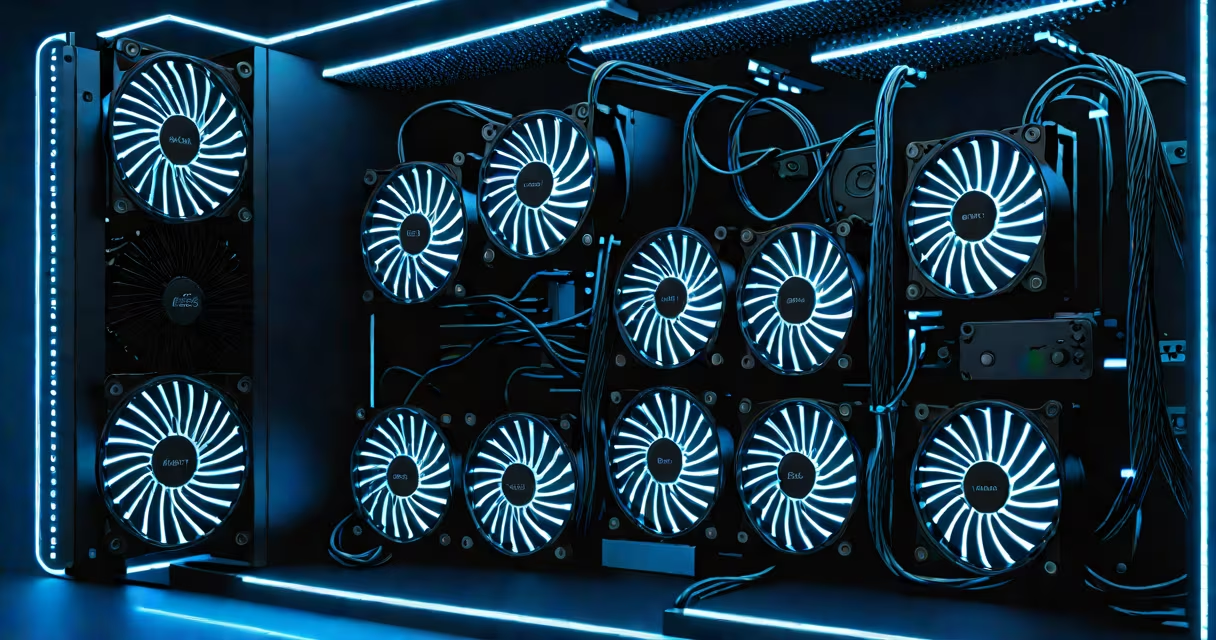
Crypto mining bros are individuals deeply involved in cryptocurrency mining who cultivate a distinct online identity centered around high-end hardware setups, real-time earnings tracking, and a culture of performance optimization. They prioritize system efficiency, overclocking, and energy cost analysis, often sharing detailed builds and mining profitability reports on forums and social media.
This group emerged alongside the rise of Bitcoin and Ethereum mining in the early 2010s. As blockchain networks required increasing computational power, dedicated hardware became essential. Mining bros adapted by building custom rigs using multiple graphics processing units (GPUs), optimizing cooling systems, and monitoring electricity rates to maximize returns. Their lifestyle reflects a blend of technical expertise, financial motivation, and digital community engagement.
Unlike casual users of cryptocurrency, crypto mining bros engage in active participation in the underlying network infrastructure. They maintain mining pools, manage hashing power distribution, and respond quickly to changes in difficulty algorithms. Their decisions affect network security and transaction throughput, making them integral to decentralized systems.
These individuals run specialized software such as CGMiner, HiveOS, or NiceHash to connect their hardware to blockchain networks. They configure settings based on current network difficulty, coin rewards, and local electricity costs. A typical setup includes six to twelve high-end GPUs, a useful CPU, ample RAM, and redundant power supplies.
For example, a mining bro in Texas might run a rig with eight NVIDIA RTX 4090s, consuming 6,000 watts at peak load. Using a $0.08/kWh electricity rate, they calculate daily earnings from Ethereum PoW (before the merge) at approximately $120. They adjust mining algorithms weekly based on profitability shifts across coins like Ravencoin, Zcash, or Monero.
They track metrics through dashboards like MinerStat or WhatToMine, which estimate returns based on real-time network data. These tools factor in hash rate, pool fees, and exchange rates. A single drop in price below $1,800 for Ethereum can trigger a switch to more profitable altcoins, demonstrating their responsiveness to market dynamics.
Most crypto mining bros use GPU-based mining due to its accessibility and flexibility. ASIC miners exist for Bitcoin, but they're expensive and less adaptable. The table below compares common hardware configurations:
| Setup Type | GPU Count | Power Draw (W) | Hash Rate (MH/s) | Use Case |
|---|---|---|---|---|
| Single-Rig Home Build | 4-6 | 2,000-3,500 | 150-300 | Low-scale personal mining |
| Mid-Scale Rack System | 12-16 | 6,000-8,000 | 600-1,200 | Garage or basement operations |
| Commercial Data Center | 100+ | 50,000+ | 10,000+ | Profit-driven enterprises |
Many mining bros repurpose old gaming PCs or buy used GPUs from auction sites. A single RTX 3090 can achieve ~120 MH/s on Ethereum Classic mining. This level of performance makes older models viable for profit, especially when electricity is cheap.
A non-obvious fact: most mining bros don't actually hold onto mined coins long-term. According to a 2023 Chainalysis report, 78% of mining profits are converted to fiat within 30 days. This behavior reflects a focus on cash flow rather than asset accumulation, distinguishing them from long-term investors.
Crypto mining bros are often conflated with cryptocurrency traders or investors. While both participate in digital finance, mining bros contribute computational resources to secure networks. Traders speculate on price movements; mining bros earn through block rewards and transaction fees.
Another confusion arises around environmental impact. Critics claim mining consumes excessive energy. However, a 2022 Cambridge Centre for Alternative Finance study found that 58% of global mining activity runs on renewable energy, including hydroelectric plants in Iceland and solar farms in Morocco. Many mining bros actively seek green energy sources to reduce carbon footprint and lower operating costs.
Some assume mining bros operate in isolation. In reality, they form tight-knit communities. Reddit's r/ethmining and Discord servers host live streams of mining sessions, troubleshooting threads, and hardware swap events. One mining bro I met in a Dallas co-working space built his rig using parts sourced from four different states, coordinating with others via a shared spreadsheet to track GPU availability.
Mining bros influence network decentralization. High concentration of hashrate in a few regions can lead to centralization risks. For example, China once hosted over 65% of Bitcoin mining capacity before regulatory crackdowns. After 2021, many mining bros relocated operations to North America and Europe, reshaping global mining geography.
Legal risks exist too. In 2022, a U.S. court ruled that unlicensed mining operations violating local electrical codes could face fines up to $5,000 per violation. Some mining bros have been cited for exceeding residential power limits or installing unauthorized electrical lines.
Despite these challenges, the culture persists. The demand for GPUs remains high. According to Jon Peddie Research, GPU shipments to mining-focused markets rose 34% year-over-year in Q1 2023. This sustained interest drives innovation in cooling solutions, power management, and automated mining software.
Crypto mining bros represent a unique intersection of engineering, economics, and digital culture. Their actions shape blockchain networks, influence energy usage patterns, and reflect broader trends in decentralized technology adoption. Their identity is not defined by wealth or fame, but by hands-on involvement in maintaining the infrastructure of emerging digital economies.
Understanding crypto mining bros requires seeing beyond the hype. They are not just hobbyists or gamblers-they are operators, engineers, and contributors to a distributed system that functions only because of their persistent effort.