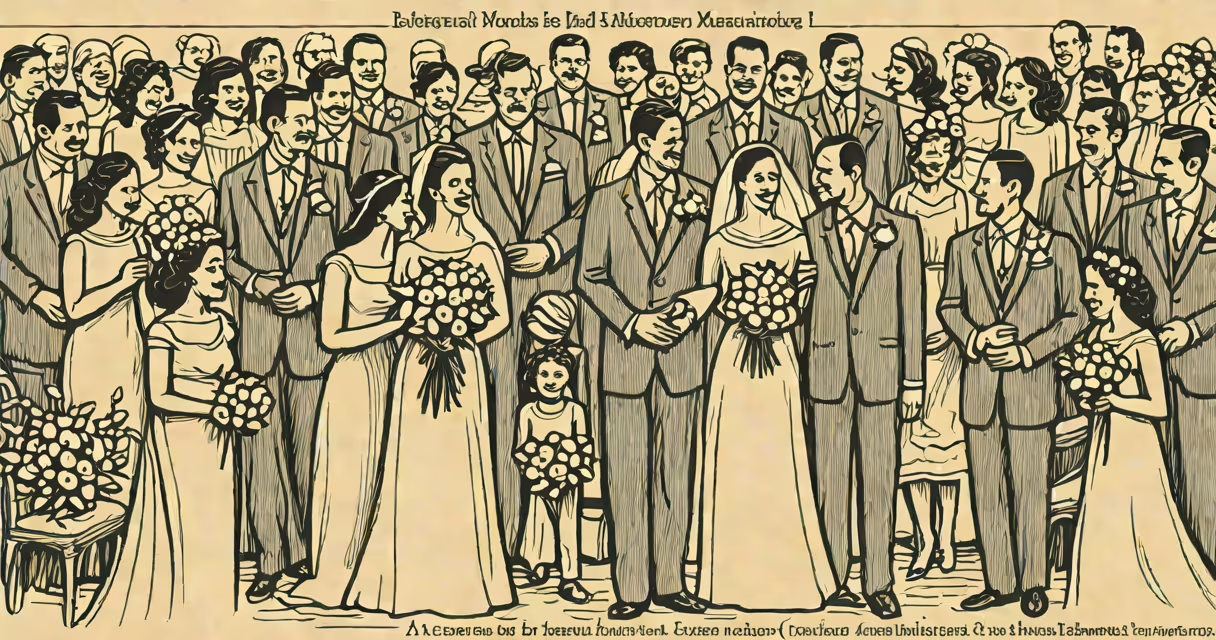
Different words for marriage refer to specific terms used across legal, religious, literary, and cultural contexts to describe the formal union of two people, often involving vows, contracts, or rituals. These terms vary in tone, formality, and historical origin, reflecting how societies define and celebrate committed partnerships.
Marriage is not a single concept with one label. Across languages and centuries, people have used dozens of precise terms to describe the act, state, or ceremony of joining in partnership. Some terms emphasize legal binding, others focus on spiritual commitment, and a few show emotional or social bonds. Understanding these differences helps clarify intent in documents, literature, and conversations.
For example, "matrimony" appears in British legal texts and religious services, while "nuptials" is common in wedding invitations and media. "Union" is preferred in progressive or secular settings, and "joining" may appear in informal or personal narratives. Each term carries subtle weight based on context and audience.
Each term functions within a specific linguistic or institutional structure. Legal documents often use "marriage" or "matrimony" because they denote a formal, state-recognized contract. Religious ceremonies may use "betrothal," "covenant," or "sanctified union" to reflect divine or sacred intent. Literary or poetic references lean toward "union," "bond," or "yoke" to evoke metaphorical depth.
When drafting a prenuptial agreement, "marriage" is standard. In a church ceremony, "sacred matrimony" signals theological significance. A poet might write, "They entered into a quiet union," implying intimacy over ritual. The choice of word shapes perception-whether the relationship is seen as contractual, spiritual, or emotional.
Even in everyday speech, variation exists. Someone might say, "We're getting married" in casual conversation, but refer to the event as "our nuptials" in a letter to family. This flexibility allows speakers to adjust tone and meaning without changing the underlying reality.
Terms for marriage fall into clear categories based on function and context. Below is a breakdown of major types with representative examples:
| Type | Examples | Use Context |
|---|---|---|
| Legal/Official | marriage, matrimony, civil union | government records, court filings, licenses |
| Religious/Spiritual | covenant, sacrament, holy union | church services, prayers, liturgy |
| Ceremonial/Event-Focused | nuptials, wedding, ceremony | invitations, speeches, media coverage |
| Emotional/Conceptual | union, bond, partnership | personal essays, poetry, counseling |
| Historical/Literary | espousal, alliance, yoking | Shakespearean drama, old English texts |
Some terms are region-specific. "Matrimony" remains common in UK legal documents but less so in American usage. "Nuptials" is widely understood but rarely used in official forms. "Covenant" appears frequently in Christian and Jewish traditions but is rare in secular legal settings.
A lesser-known fact: "espousal" was historically used in medieval England to describe the engagement phase before the actual wedding. It referred to the formal promise to marry, not the ceremony itself. This distinction shows how language evolved to separate intent from execution.
People often treat "marriage" and "wedding" as interchangeable. They are not. "Marriage" is the ongoing state of being legally or socially joined. "Wedding" is the event-the ceremony that marks the beginning of marriage. Saying "I'm getting married tomorrow" refers to the wedding day. Saying "we've been married five years" refers to the duration of the marital state.
Another frequent error is using "union" to imply marriage without specifying. While "union" can mean marriage, it's also used for labor organizations, political alliances, or even software licensing. In isolation, "union" lacks clarity unless context makes the meaning obvious.
"Matrimony" is sometimes misused in casual speech. It sounds formal and old-fashioned. Using it in a text message or social media post can come across as ironic or overly dramatic. It's better suited for written documents, speeches, or artistic expression.
I once attended a small wedding in rural Vermont where the officiant used "sacred covenant" instead of "marriage." The couple later told me they chose the term because it reflected their shared belief in mutual responsibility beyond legal obligations. That moment showed how language can carry deeper meaning when selected intentionally.
Consider this scenario: a couple files for divorce in California. The petition uses "marriage" as the legal basis. The judge's ruling cites "matrimony" to describe the status under state law. The couple's friends refer to the event as "their nuptials" in a group chat. One writes, "It's been six years since our union began."
Each term fits its role. "Marriage" appears in the court document because it's the recognized legal term. "Matrimony" is used in the judgment for consistency with precedent. "Nuptials" fits the celebratory tone of the message. "Union" reflects the enduring nature of the relationship.
Another example: a novel set in 19th-century England describes a woman's "espousal" to a man she barely knows. The term indicates a formal betrothal, not a completed marriage. Later, when the couple lives together, the narrator calls it "a union formed out of duty." The shift in language tracks the evolution from arranged promise to lived reality.
Understanding these distinctions prevents miscommunication. In healthcare, a patient's marital status is recorded as "married," not "wed." In immigration applications, "spouse" is required, not "partner" unless specified. Precise language matters in systems where accuracy affects rights and benefits.
Different words for marriage include terms like "nuptials," "matrimony," "union," "covenant," and "espousal," each serving a distinct purpose in legal, cultural, or personal contexts. Choosing the right term ensures clarity, respect, and precision in communication.