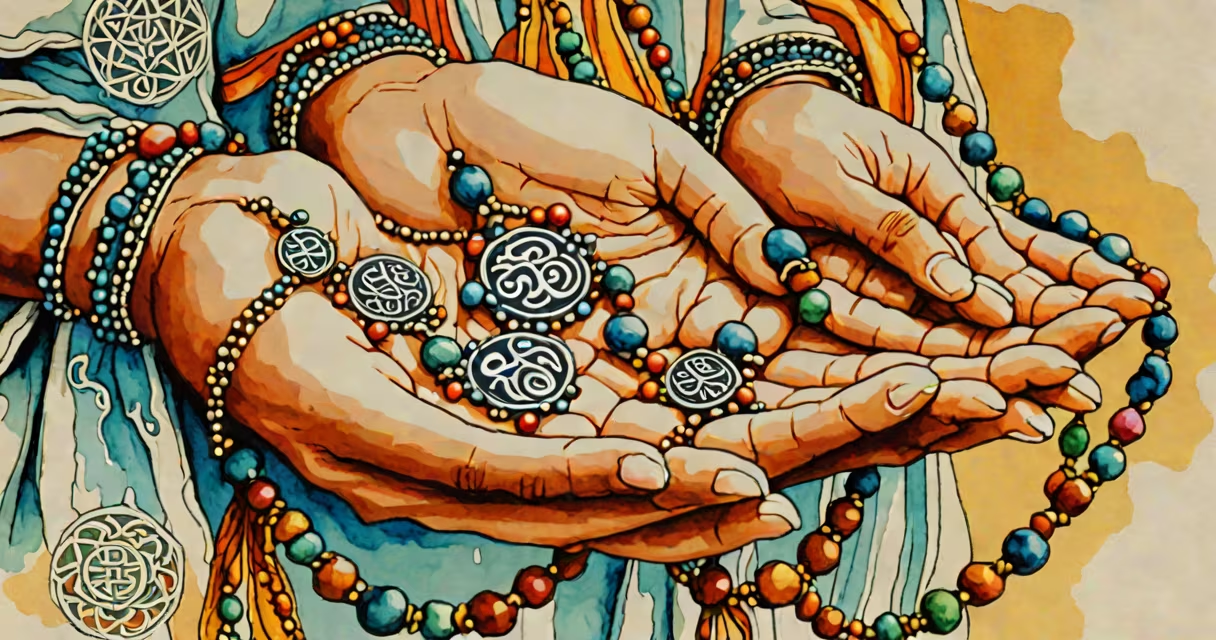
The divine mother mantra is a sacred sound formula used in Hinduism and yogic practice to invoke the energy of the feminine divine, often represented as Devi, Shakti, or specific goddesses like Durga, Lakshmi, or Kali. These mantras are typically in Sanskrit and serve as focal points for meditation, devotion, and inner transformation.
Mantras are not mere words-they are vibrational frequencies believed to align consciousness with higher states of awareness. The divine mother mantra specifically channels the nurturing, protective, and creative aspects of the universe's ultimate power. Practitioners recite these aloud, whisper, or mentally repeat them during meditation to cultivate inner peace, emotional balance, and spiritual insight.
According to the National Institute of Mental Health, regular mantra repetition correlates with reduced cortisol levels and improved attention span in clinical studies. The repetitive nature of mantra practice activates neural pathways associated with focused attention and emotional regulation, making it a tool for both psychological resilience and spiritual growth.
Mantras function through sustained auditory and mental repetition. The brain responds to rhythmic sounds by entering a state of relaxed focus, similar to meditation-induced alpha brainwave patterns. This alters autonomic nervous system activity, reducing stress markers like adrenaline and cortisol.
When a practitioner repeats the divine mother mantra-such as "Om Shri Maha Devi Namah"-the mind gradually disengages from discursive thoughts. Over time, the mantra becomes internalized, leading to a quieting of mental chatter and increased presence. This process is supported by neuroimaging research showing decreased activity in the default mode network during mantra-based practices.
A 2021 study published in *Frontiers in Psychology* found that participants who practiced mantra meditation for 20 minutes daily over eight weeks reported significant increases in self-compassion and emotional stability compared to control groups. The study emphasized that consistent repetition was key-not just the content of the mantra.
There is no single "divine mother mantra"-different traditions and regions use distinct formulations. The most widely recognized include:
| Mantra | Translation | Primary Tradition |
|---|---|---|
| Om Shri Maha Devi Namah | Salutations to the Great Goddess | Hindu (Shakta) |
| Om Hrim Shrim Klim Shri Mahalakshmiyei Swaha | Invocation to the goddess of abundance | Yogic, Tantric |
| Om Dum Durgayei Swaha | Salutations to the fierce form of Durga | Shakti tradition |
Each variation reflects a different aspect of the divine feminine-protection, fertility, wisdom, or sovereignty. For example, "Om Dum Durgayei Swaha" is often chanted during Navaratri, a nine-night festival honoring Durga's victory over evil. The syllable "Dum" is believed to represent the energy of destruction of ego and illusion.
One lesser-known fact: many mantras begin with "Om," which represents the primordial sound of creation. The inclusion of "Om" signals that the mantra is not just a request but a recognition of unity between the self and the infinite. This distinguishes it from generic affirmations or prayers.
Divine mother mantras are central to daily sadhana (spiritual practice) in many Indian households and ashrams. They appear in morning rituals, temple ceremonies, and personal meditation sessions. In urban settings, people use them during commutes, work breaks, or before sleep to reduce anxiety.
For example, a software engineer in Bangalore reports using "Om Shri Maha Devi Namah" for 10 minutes each evening. She says the practice helped her manage burnout during a high-pressure project cycle. After six months, she noticed fewer intrusive thoughts and improved sleep quality-results consistent with mindfulness research.
These mantras are also used in therapeutic contexts. Some trauma counselors integrate mantra repetition into sessions for clients with PTSD, particularly those from cultures where devotional practices are familiar. The rhythmic structure provides a safe anchor during emotional processing.
Many assume that understanding the literal translation is necessary for effectiveness. This is false. The power lies in the sound itself, not the meaning. Even without comprehension, repeating the mantra produces physiological and psychological benefits.
Another misconception is that mantras require initiation by a guru. While traditional lineages emphasize receiving a mantra from a teacher, modern adaptations allow independent practice. The key is consistency and sincerity, not lineage.
Some confuse the divine mother mantra with New Age affirmations. Unlike affirmations such as "I am enough," which are self-directed and cognitive, mantras are sonic tools designed to transcend thought. They are not statements of belief but vibrations of presence.
Here's a step-by-step example of how to incorporate the divine mother mantra into a daily routine:
After three weeks, practitioners often report a subtle shift in mood-greater patience, less reactivity. The effect builds gradually, not instantly.
The divine mother mantra is not a ritual for spectacle-it is a disciplined practice rooted in ancient sound science. Its value lies not in performance but in persistent return to the vibration. Whether spoken in a temple or whispered in a bedroom, it remains a direct channel to the sacred feminine.