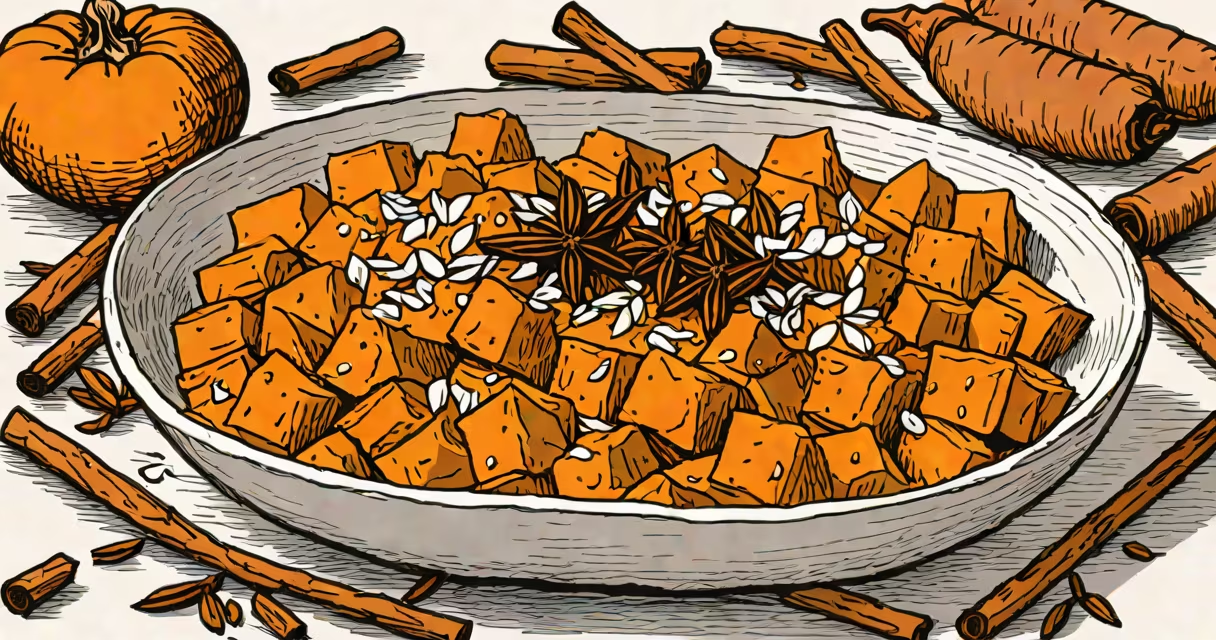
Doce de batata doce is a dense, spiced sweet made by boiling and slowly reducing sweet potatoes with sugar, water, and spices like cinnamon and cloves. It's a traditional dessert in Brazil and parts of Latin America, often served during holidays or as a gift.
This confection resembles a thick jam or fudge, with a deep amber color and a soft, chewy texture. It's typically prepared in large batches using stovetop pots, then stored in glass jars. The flavor is rich and warm, dominated by caramelized sweetness and subtle spice notes.
Doce de batata doce is not a quick recipe. It requires slow cooking over low heat for 2 to 3 hours, stirring frequently to prevent burning. The mixture reduces, turning from a watery boil into a thick paste. Once cooled, it firms up and holds its shape when cut.
The transformation happens through evaporation and sugar crystallization. As the mixture simmers, water evaporates, concentrating the sugars and starches in the sweet potatoes. The high sugar content acts as a preservative, allowing the doce to last weeks without refrigeration.
Stirring is essential. Without constant attention, the mixture burns on the bottom. A wooden spoon or spatula is standard. The consistency changes from runny to sticky to firm. The test for doneness is the "wrinkle test": when a small amount is dropped on a cold plate, it wrinkles slightly when pushed with a finger.
For safety, the pot must be monitored closely. High heat causes scorching; low heat ensures even reduction. Some cooks add a splash of lemon juice to balance sweetness and prevent crystallization, though this is optional.
The core ingredients are sweet potatoes, sugar, water, and spices. Sweet potatoes are typically the orange-fleshed variety (like 'Garnet' or 'Jewel'), which have high starch and natural sugar content. They're peeled, cubed, and boiled until soft before being simmered with sugar.
| Ingredient | Typical Amount (for 2 kg sweet potatoes) | Purpose |
|---|---|---|
| Sweet potatoes (orange flesh) | 2 kg | Base for texture and natural sweetness |
| Granulated sugar | 1.5 kg | Preservative and primary sweetener |
| Water | 1 liter | Initial cooking medium, later evaporates |
| Cinnamon stick | 1 large | Flavor base, removed before serving |
| Whole cloves | 6-8 | Warm spice layer, removed before serving |
Some recipes include a pinch of salt to improve flavor contrast. Others add a drop of vanilla extract for depth. But the core remains simple: sweet potatoes, sugar, time, and heat.
Doce de batata doce is most common in Brazil, especially in the Northeast region, where sweet potatoes are widely grown. It appears during festivals like Festa Junina, Christmas, and New Year celebrations. Families make it in bulk to share with neighbors or give as gifts.
It's served in small cubes, often on a plate with fresh cheese or alongside coffee. In some homes, it's eaten with bread or used as a filling in pastries. Its long shelf life makes it practical for holiday gifting.
A non-obvious fact: despite its name, doce de batata doce is not made with yams. True yams are rarely used in Brazilian desserts. The confusion arises because both are tubers with similar appearance and texture, but sweet potatoes (Ipomoea batatas) are botanically distinct and more commonly used in this dish.
People often mistake doce de batata doce for doce de abóbora (pumpkin jam) or doce de banana. While all are fruit-based sweets, they differ in base ingredient, texture, and regional use. Doce de abóbora uses pumpkin, which yields a lighter, softer texture. Doce de banana relies on ripe bananas and sets more like jelly.
Another error is using too much sugar. A 2:1 ratio of sweet potatoes to sugar is standard. Excess sugar leads to overly hard, crystallized pieces. Under-sugar results in a runny, perishable product. The ideal balance preserves the texture and extends shelf life.
I once made doce de batata doce for a family gathering in Rio de Janeiro. I used local sweet potatoes and a copper pot. After two hours of stirring, the mixture turned glossy and thick. I poured it into sterilized jars and sealed them with wax paper. Guests ate it with quark cheese and hot tea. The flavor was deep, earthy, and warmly spiced-exactly as my grandmother made it.
Doce de batata doce is more than a dessert. It's a tradition rooted in seasonal harvests and communal effort. The process takes time, but the result is a lasting treat that connects people across generations. For those exploring Brazilian cuisine, trying this recipe offers insight into regional food culture and preservation techniques.