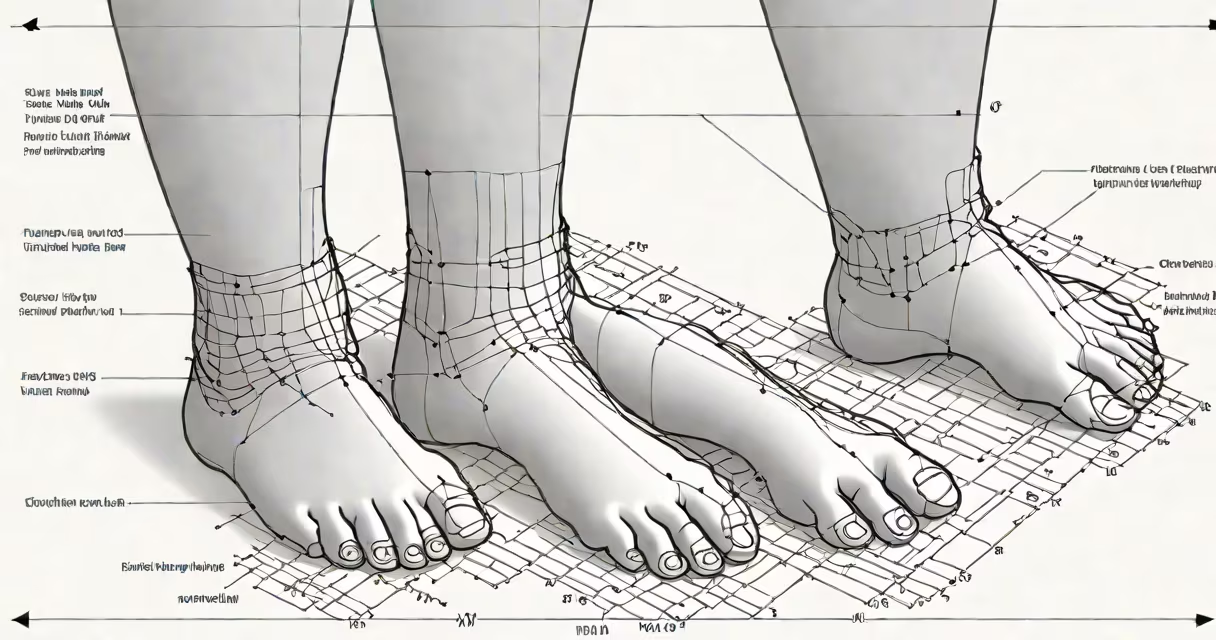
The feeling of swollen feet refers to a sensation of puffiness, tightness, or heaviness in the feet and ankles, typically caused by excess fluid accumulation in tissues. This condition may occur suddenly or develop gradually and is often accompanied by visible swelling or discomfort. It's a common symptom with multiple underlying causes, ranging from benign lifestyle factors to serious medical conditions.
Swelling occurs when fluid leaks from blood vessels into surrounding tissues. The body normally regulates fluid balance through the kidneys, veins, and lymphatic system. When this system fails-due to pressure, injury, or disease-fluid pools in the feet and ankles because gravity pulls it downward. Nerves in the skin and connective tissue detect this pressure and send signals to the brain, creating the subjective sensation of fullness or tightness.
For example, someone who stands for eight hours straight during a retail job may feel their shoes too tight by late afternoon. This is not necessarily visible swelling but a neurological response to increased pressure in the feet. The sensation usually resolves with rest and elevation.
According to the American Academy of Orthopaedic Surgeons (AAOS), chronic swelling can lead to skin changes like discoloration or thickening, especially if left untreated. Early recognition helps prevent long-term damage.
Swelling results from either localized or systemic causes. Localized causes include injury, infection, or poor footwear. Systemic causes involve internal organ function, such as heart failure, kidney disease, or liver cirrhosis.
Common triggers include:
Edema, the medical term for abnormal fluid buildup, is classified as pitting or non-pitting. Pitting edema leaves an indentation when pressed and indicates fluid overload. Non-pitting edema feels firm and doesn't dent-often linked to lymphatic blockage or hypothyroidism.
Healthcare providers assess the feeling of swollen feet during physical exams to determine whether the cause is mild or life-threatening. For instance, sudden bilateral swelling with shortness of breath may signal heart failure. A single swollen foot with redness and warmth suggests DVT, which requires immediate treatment to prevent pulmonary embolism.
A 2021 study published in Clinical Journal of the American Society of Nephrology found that 62% of patients with stage 3 chronic kidney disease reported leg and foot swelling. This highlights the importance of monitoring swelling as a sign of worsening renal function.
Red flags include:
If any of these appear, seek care promptly. Ignoring symptoms increases risk of complications like skin ulcers or blood clots.
The feeling of swollen feet is often mistaken for fatigue, poor circulation, or normal aging. However, these are distinct. Fatigue causes tiredness, not pressure or puffiness. Poor circulation may cause coldness or numbness, not swelling. Aging leads to reduced muscle tone, not fluid retention.
One common error is assuming swelling is harmless. A 2019 report from the National Institute of Diabetes and Digestive and Kidney Diseases (NIDDK) noted that nearly 40% of people with early-stage heart failure initially present with ankle swelling, not chest pain or shortness of breath.
Consider a 54-year-old woman who notices her wedding ring fits tighter after a long flight. She experiences mild swelling in both feet but no pain. Elevating her legs for 30 minutes reduces the sensation. This is likely orthostatic edema-fluid pooling due to immobility-and resolves quickly with movement.
In contrast, a 68-year-old man with a history of hypertension reports waking up with swollen feet and difficulty walking. He also feels short of breath lying flat. His doctor diagnoses heart failure based on echocardiogram findings and elevated BNP levels. After starting diuretics, his swelling improves within five days.
Another case: a 32-year-old nurse develops sudden swelling in her right foot after a long shift. The area is warm, tender, and slightly red. An ultrasound confirms DVT. Anticoagulant therapy prevents clot extension. This illustrates how unilateral swelling demands urgent evaluation.
Many assume swelling must be visible to be real. But swelling can exist without visual change. A 2020 study in Journal of Vascular Surgery showed that 38% of patients with early-stage venous insufficiency had no visible swelling but reported a heavy, achy feeling in their legs. These individuals were misdiagnosed until Doppler ultrasound revealed valve dysfunction.
This underscores that the "feeling" of swollen feet is not purely physical-it includes perception. Some people report swelling even when imaging shows no fluid. This is not imagined. Central nervous system processing can amplify sensations, especially in those with anxiety or chronic pain syndromes.
If swelling persists beyond 48 hours after rest, or returns frequently, consult a healthcare provider. Initial evaluation may include blood tests (e.g., creatinine, albumin), urine analysis for protein, and imaging like ultrasound or MRI.
Simple steps to reduce swelling include:
For persistent cases, see a specialist. A podiatrist can assess biomechanical issues. A nephrologist evaluates kidney-related swelling. A vascular surgeon manages DVT or varicose veins.