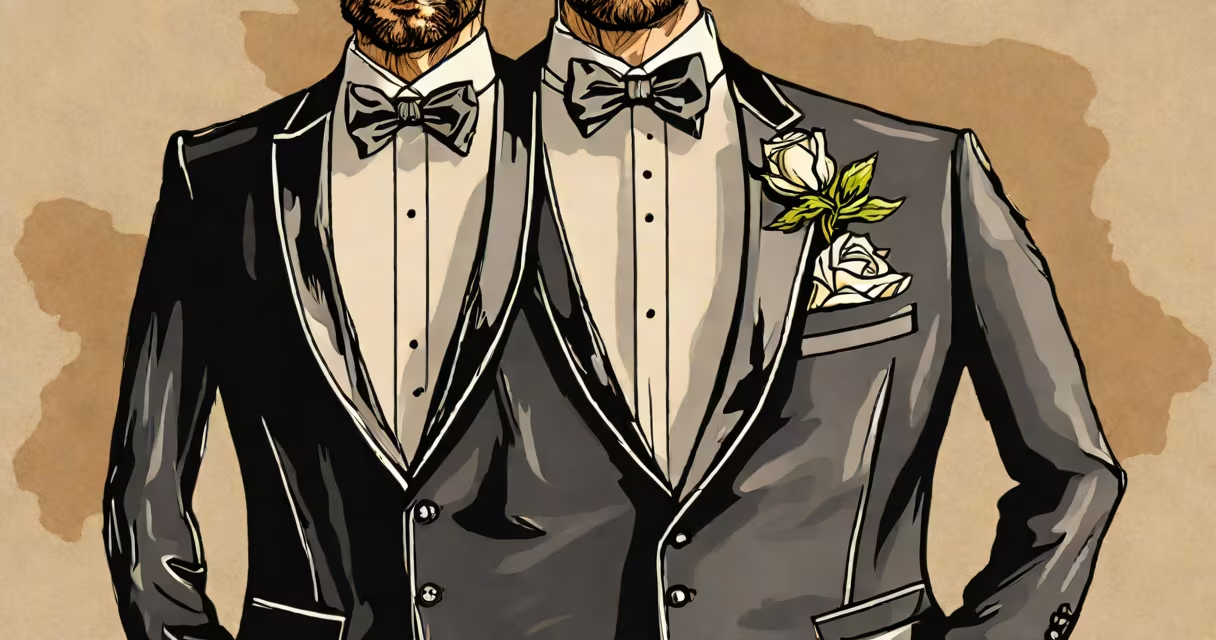
Formal clothes for men are structured, tailored garments worn to mark significant events such as weddings, galas, and graduations. They typically consist of a suit or tuxedo, dress shirt, tie, and dress shoes, chosen for their precision in cut, fabric quality, and color restraint.
The foundation of formal wear is the suit or tuxedo. A standard suit features a single-breasted jacket with a flat front, notch lapel, and matching trousers. A tuxedo-also called a dinner jacket-has a shawl or peaked lapel, satin trim on the lapels, and often a cummerbund or waistcoat. Both are usually worn with a dress shirt featuring a spread or cutaway collar and a silk or satin tie.
Men's formal attire has evolved from 19th-century court dress into today's standardized codes. Black remains the dominant color for evening formalwear, while navy and charcoal gray are acceptable for daytime events. Fabric choices include wool, worsted, and silk blends, selected based on climate and occasion formality.
Formal clothes for men follow a hierarchy of formality. The most formal is black tie, requiring a tuxedo, black bow tie, and black patent leather shoes. White tie is rarer, calling for a tailcoat, white waistcoat, and wingtip collar. For less formal events, a dark suit with a necktie suffices.
Fit is critical. Jackets should sit at the natural waistline, with sleeves ending at the wrist bone. Trousers should have a slight break at the shoe, not pool at the ankle. A well-fitted suit avoids excess fabric, which can make the wearer appear bulky or outdated.
Modern tailoring allows for adjustments. Many retailers offer made-to-measure services, where measurements are taken and garments are constructed to individual proportions. This reduces the need for alterations and improves comfort during long events.
Formal clothes for men come in distinct categories based on purpose and formality. The table below outlines the core types:
| Type | Occasion | Lapel Style | Shirt & Tie | Footwear |
|---|---|---|---|---|
| Black Tie | Evening events, weddings | Satin-trimmed shawl or peak | White dress shirt, bow tie | Black patent leather shoes |
| Business Formal | Corporate events, interviews | Notch or peak | Button-down or spread collar, necktie | Black or brown oxfords |
| Daytime Formal | Weddings, funerals | Notch or flat | White or light blue shirt, silk tie | Black or brown loafers |
Materials vary by season and region. Wool is standard for winter due to warmth and drape. Linen or cotton blends are preferred in summer for breathability. High-end options include mohair for texture and durability, and silk for lapel trim in tuxedos.
A lesser-known fact: the width of a tie matters. A 3-inch-wide tie is standard for business formal. Wider ties (3.5 inches) suit tuxedos and add visual balance. Narrow ties (2.5 inches) are too casual for formal settings.
Many assume formal clothes for men are interchangeable. A tuxedo is not a suit. While both are tailored, tuxedos have satin lapels, a different trouser finish (cuffed or plain), and require specific accessories like a cummerbund or waistcoat. Wearing a tuxedo without these elements breaks formality codes.
Another error is mixing fabrics. Wearing a wool suit with a linen tie creates a visual mismatch. All components should share a similar weight and sheen. For example, a silk tie pairs best with a wool suit, not cotton.
I once attended a high school graduation where a guest wore a navy suit with a red tie and brown shoes. The event was formal, and the mismatch stood out. The correct choice would have been a black or dark gray suit, a solid-colored tie, and black shoes.
Formal clothes for men are required at weddings, award ceremonies, and university commencements. For weddings, the groom and groomsmen wear coordinated outfits. Guests follow the host's dress code: black tie, formal, or semi-formal.
For job interviews in finance, law, or corporate leadership, a dark suit with a conservative tie signals professionalism. A study by Harvard Business Review found that interviewees wearing formal attire were perceived as more competent and trustworthy than those in business casual.
When selecting formal clothes for men, consider the venue. Indoor events allow for heavier fabrics. Outdoor or warm-weather events benefit from lighter materials. Always check the invitation or event guidelines for specified colors or styles.
Formal clothes for men are not about fashion trends. They are about respect, context, and presentation. A well-chosen outfit communicates attention to detail and cultural awareness. When worn correctly, they improve presence without drawing focus to themselves.