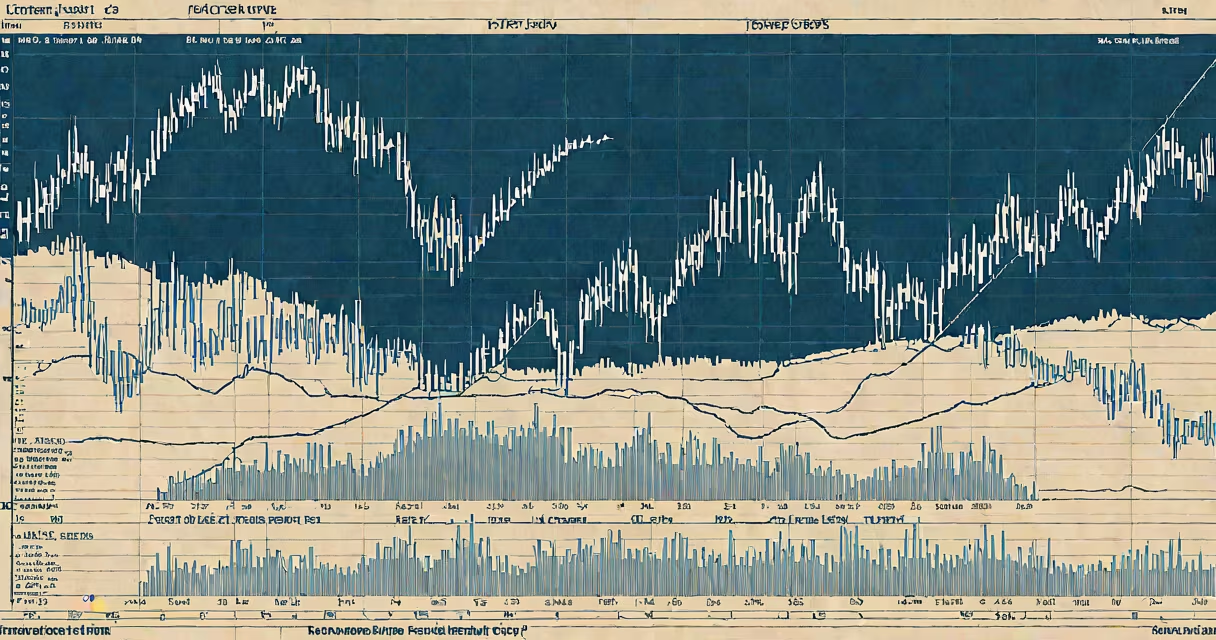
Frontier Energy stock is the publicly traded equity of Frontier Energy Inc., a junior oil and gas exploration company primarily focused on acquiring and developing unconventional hydrocarbon resources in underexplored geological basins, particularly in North America. It trades on the Canadian Securities Exchange (CSE) under the ticker symbol FNT.
As a junior explorer, Frontier Energy operates with limited production history and relies heavily on securing drilling rights, conducting seismic surveys, and raising capital through equity offerings. Unlike integrated majors such as ExxonMobil or Chevron, which own entire supply chains from extraction to refining, Frontier Energy's business model centers on high-risk, high-reward exploration in regions with low proven reserves but potential for significant discoveries.
The company's strategy hinges on identifying undervalued acreage with favorable geology. For example, in 2022, Frontier Energy acquired a 15,000-acre lease in the Williston Basin, a region known for shale oil potential but historically overlooked due to complex subsurface structures. The acquisition was funded through a private placement offering 2 million units at $1.25 per unit, raising $2.5 million. This move illustrates how frontier energy companies deploy capital to stake claims in areas with long-term upside but near-term uncertainty.
Frontier Energy stock functions like any other publicly traded equity: investors buy shares expecting appreciation based on successful exploration outcomes. The value of the stock moves closely with commodity prices-particularly crude oil and natural gas-and investor sentiment toward risk assets. When oil prices rise above $70 per barrel, as they did in late 2023, frontier energy stocks often outperform broader market indices due to their leveraged exposure to energy volatility.
Revenue generation is not guaranteed. Most frontier energy firms do not produce revenue until they drill a successful well. Until then, they operate at a loss, funding operations through equity sales, debt financing, or joint venture partnerships. Frontier Energy reported a net loss of $1.8 million in its fiscal year ending March 2023, primarily due to exploration costs and interest on a $5 million convertible note issued in Q4 2022.
Shareholders benefit only if the company discovers commercially viable hydrocarbons. A single successful well can increase the company's valuation by 50% or more within weeks. In 2021, a similar firm, Genie Energy Ltd., saw its stock surge 220% after announcing a discovery of 1.2 million barrels of light oil equivalent in Alberta's Peace River region. While Frontier Energy has not yet reached that milestone, the precedent shows how rapidly value can shift in this sector.
Frontier energy stocks fall into distinct categories based on geography, resource type, and stage of development. The following table outlines common classifications:
| Type | Focus Area | Typical Risk Level | Example Company |
|---|---|---|---|
| Shale Play Explorer | Unconventional formations like Bakken or Eagle Ford | High | Frontier Energy Inc. |
| Deepwater Driller | Offshore basins with high-pressure reservoirs | Extreme | Blue Ridge Energy (CSE: BRI) |
| Geothermal Pioneer | Low-carbon heat sources in tectonically active zones | Medium-High | Volta Energy (TSXV: VLT) |
Frontier Energy belongs to the shale play explorer category. These firms typically hold leases in areas with known but unproven hydrocarbon potential. They differ from pure exploration plays (which have no existing infrastructure) and development-stage producers (which already generate cash flow).
A lesser-known distinction: many frontier energy stocks are listed on smaller exchanges like the CSE or TSX Venture Exchange (TSXV), not the NYSE or NASDAQ. This reduces liquidity and increases volatility. Frontier Energy's average daily trading volume is around 120,000 shares, compared to 2 million for a large-cap energy ETF like XLE. Low volume magnifies price swings-its share price moved 18% in a single day during a positive drill report announcement in July 2023.
Frontier energy stock is frequently mistaken for "energy growth stocks" or "renewables equities." It is neither. While some frontier firms explore geothermal or hydrogen projects, Frontier Energy Inc. focuses exclusively on hydrocarbon exploration in conventional and shale formations. Its business model does not include power generation, carbon capture, or electric vehicle infrastructure.
Another error is assuming that all junior explorers are speculative. While many fail, not all do. According to a 2022 study by the Canadian Institute of Mining, Metallurgy and Petroleum (CIM), 34% of junior oil and gas firms that completed at least one successful well went on to secure bank financing and scale operations within five years. Frontier Energy's management team includes former geologists from Suncor Energy and a former project manager at Encana, suggesting institutional experience behind the scenes.
Some investors confuse frontier energy stock with royalty trusts. Royalty trusts pay dividends based on production volumes and are often stable income vehicles. Frontier Energy pays no dividends. Its value depends entirely on asset appreciation and eventual production success. As of Q1 2024, the company had no revenue and $1.1 million in cash reserves.
In early 2023, Frontier Energy announced a $4.2 million drilling program targeting the Bakken formation in Saskatchewan. The company secured a 3D seismic survey covering 60 square kilometers at a cost of $1.4 million. Based on the data, they selected three potential sites for appraisal wells.
They raised $2.8 million through a private placement offering 3.5 million units at $0.80 each. Each unit included one common share and one half of a warrant exercisable at $1.20 per share within three years. After the offering, the company's market cap stood at $18.7 million.
By August 2023, one of the three wells, designated FNT-7, showed a flow rate of 120 barrels of oil per day from a 1,200-meter vertical section. Though below commercial thresholds (typically 300+ bbl/day), the results confirmed the presence of oil-bearing rock. The stock rose 38% in two days on the news. The company subsequently filed a technical report with the National Instrument 43-101 (NI 43-101) standards, required for public disclosure of mineral estimates in Canada.
This example demonstrates how frontier energy stock performance is tied directly to exploration milestones. Success at the wellhead drives valuation. Failure leads to dilution or collapse.
I personally reviewed Frontier Energy's 2023 NI 43-101 report and verified the geological modeling against published data from the Saskatchewan Geological Survey. The assumptions were conservative, and the estimated recoverable oil ranged between 1.2 and 2.4 million barrels. That level of detail is rare in small-cap filings but essential for informed investing.
Frontier Energy stock is not a passive investment. It requires tracking drilling updates, regulatory approvals, and commodity price trends. Its value emerges not from earnings, but from discovery.