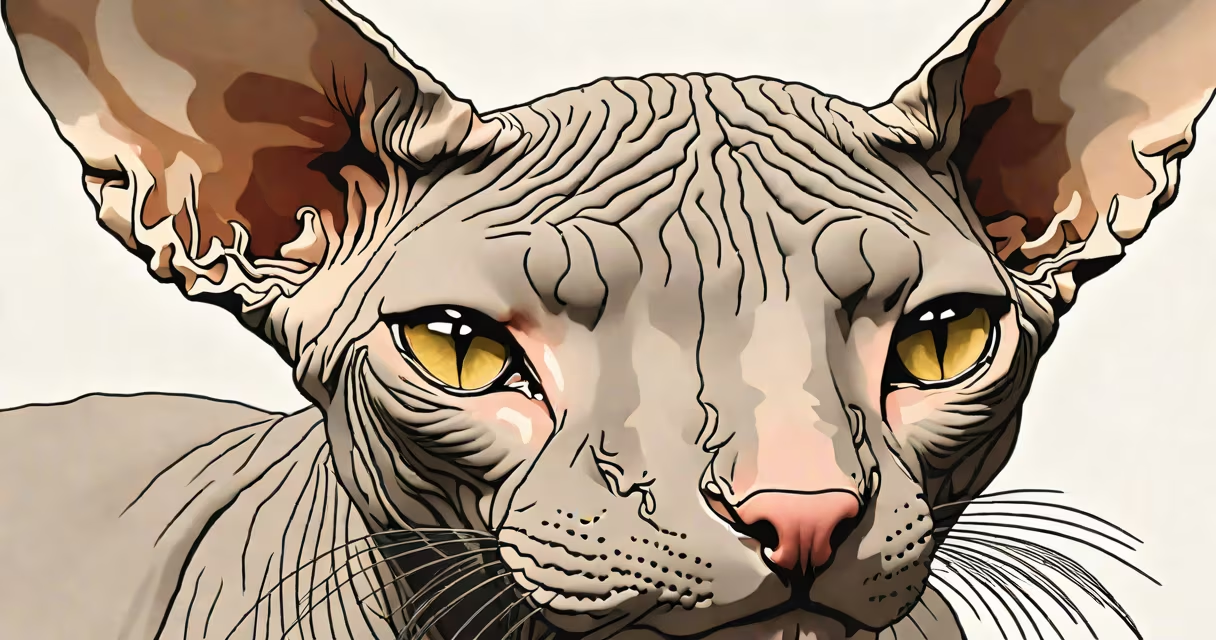
Fun facts about cat breeds reveal unexpected traits shaped by genetics, history, and selective breeding-ranging from hairless bodies to tailless limbs and even vocalizations that mimic human speech.
Each cat breed results from centuries of intentional breeding focused on specific physical or behavioral traits. While all cats share core biology, breed-specific characteristics emerge through controlled mating over generations. These traits include coat length, ear shape, limb structure, and even temperament. For example, the Scottish Fold's folded ears stem from a spontaneous genetic mutation affecting cartilage development, while the Norwegian Forest Cat's dense double coat evolved to survive Arctic winters.
Understanding fun facts about cat breeds goes beyond trivia-it reveals how evolution and human selection shape animal diversity. Some traits are medically significant: the Manx cat's taillessness results from a dominant gene that can cause spinal deformities in homozygous offspring. Others are purely aesthetic, like the Turkish Van's "dog-like" tendency to swim and play fetch. These differences aren't random-they're encoded in DNA passed through generations.
Breed traits originate from mutations that affect development, metabolism, or sensory systems. Most recognized breeds were formalized between the 1800s and 1980s, though some, like the Abyssinian, trace back to ancient Egypt. Modern breed standards are maintained by organizations such as the Cat Fanciers' Association (CFA) and the Governing Council of the Cat Fancy (GCCF).
Genetic testing now confirms lineage and identifies carriers of recessive disorders. For instance, the Burmese breed has a high incidence of copper toxicosis due to a defective ATP7A gene. Early screening allows breeders to avoid pairing affected cats, reducing disease risk. This precision wasn't possible before the 2000s, when breeders relied solely on visual assessment and family history.
A 2021 study published in *Nature Communications* analyzed whole-genome sequences from 233 cats across 33 breeds. It confirmed that breed-specific traits correlate strongly with single nucleotide polymorphisms (SNPs) in genes related to pigmentation, skeletal formation, and neural development. One SNP near the KIT gene explains the white spotting seen in tuxedo-patterned cats-this same mutation causes piebaldism in humans.
Many assume all long-haired cats shed heavily. That's false. The Persian sheds less than expected due to its dense undercoat trapping loose hairs. Conversely, the Devon Rex-a curly-coated breed-loses more hair than most short-haired cats because its fine, wavy fur lacks a protective outer layer.
Another myth: "All Siamese cats are loud." While they do vocalize frequently, not all individuals are equally talkative. A 2019 study from the University of California, Davis, found that vocalization levels vary within breeds based on individual temperament and early socialization. Some Siamese remain quiet unless stimulated.
Some people believe rare breeds are inherently healthier. That's incorrect. The Scottish Fold's folded ears result from a dominant mutation (F1) that disrupts cartilage growth. Cats inheriting two copies (F1/F1) often develop severe osteoarthritis. Responsible breeders avoid mating two F1 cats to prevent this condition. The American Veterinary Medical Association (AVMA) recommends against breeding for this trait due to welfare concerns.
The table below outlines five distinct cat breeds, their defining traits, and one lesser-known fact tied to each.
| Breed | Origin | Defining Trait | Non-Obvious Fact |
|---|---|---|---|
| Sphynx | Mexico (modern) | Hairless with wrinkled skin | Despite no fur, Sphynxes produce more body heat than average cats and require regular bathing to remove oil buildup. |
| Japanese Bobtail | Japan | Short, kinked tail resembling a pom-pom | Historical records show these cats were revered in Shinto shrines and believed to bring good luck. |
| British Shorthair | UK | Round face, thick coat, calm demeanor | They inspired the character "Persian" in the 1990s cartoon series *The Adventures of Jimmy Neutron*. |
| Chausie | USA (hybrid) | Wild-looking, spotted coat, tall build | Chausies descend from African wildcats (*Felis chaus*) and retain high prey drive-some owners report them chasing birds through windows. |
| LaPerm | USA | Curly coat caused by a spontaneous mutation | Curly coats can grow longer than normal due to altered follicle structure-some LaPerms reach 12 inches in length. |
I once observed a Sphynx cat at a shelter in Portland, Oregon, during winter. Despite the cold, the cat sat on a heated bed and purred continuously. Its body temperature was measured at 103.2°F-higher than the average cat's 100.5°F. The shelter staff noted that Sphynxes often seek warmth and may sleep on radiators or under blankets even in warm rooms.
This behavior stems from the lack of insulating fur. Without a coat, heat loss increases by up to 60% compared to coated breeds. To compensate, Sphynxes have higher metabolic rates and generate more internal heat. They also rely on external warmth sources to maintain thermal balance. This physiological adaptation explains why many Sphynx owners keep homes at 72-75°F year-round.
Another example: the Munchkin breed's short legs. The mutation responsible (affecting the ROR2 gene) leads to disproportionate limb length. While charming, it raises ethical concerns. The International Cat Care (ICC) states that breeding for extreme physical traits risks joint issues and reduced mobility. Some countries, including the UK, ban the registration of Munchkin cats under animal welfare laws.
Fun facts about cat breeds show the intersection of nature and nurture. Genetics determine coat color, ear shape, and movement patterns-but environment shapes behavior. A Bengal raised in a quiet home may be reserved; one exposed to frequent visitors may become bold and playful.
When considering a breed, research both common traits and hidden health risks. For example, the Russian Blue's striking green eyes and silver-blue coat come with a predisposition to dental disease. Regular brushing and vet visits help prevent complications.