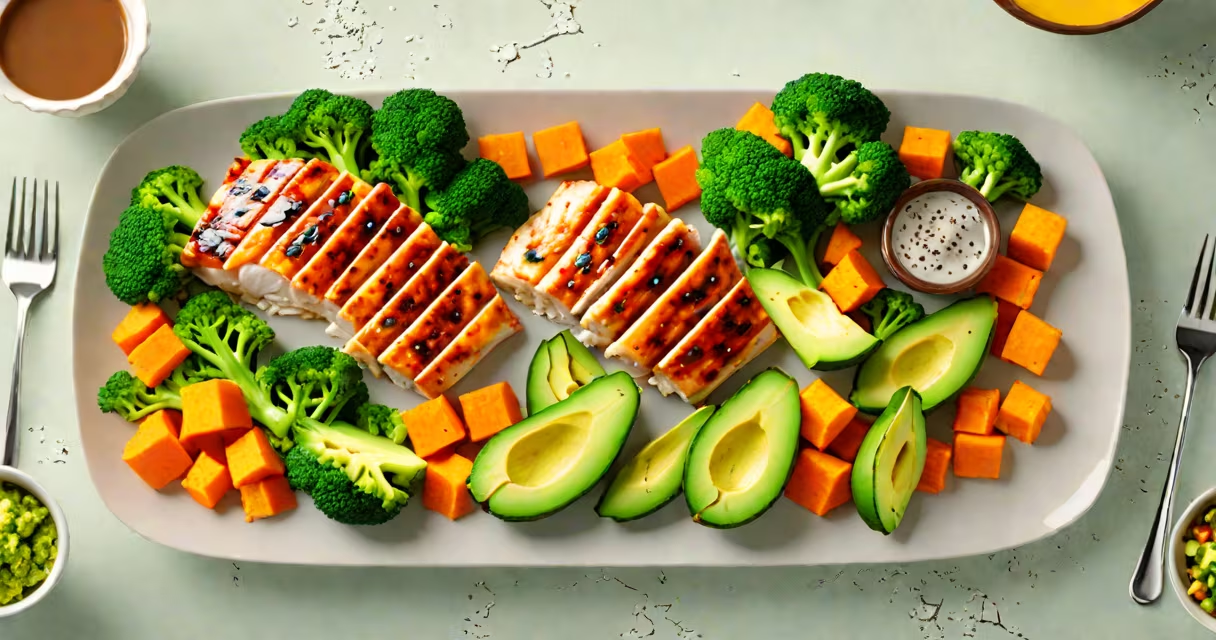
Healthy meal suggestions to lose weight are structured, nutrient-dense meals that create a calorie deficit while maintaining satiety and metabolic health. They prioritize lean protein, complex carbohydrates, and fiber-rich vegetables to support sustainable fat loss without hunger or energy crashes.
These meals work by balancing macronutrients to regulate insulin and ghrelin, hormones that control appetite and fat storage. A study published in The American Journal of Clinical Nutrition found that diets high in protein and fiber reduce daily calorie intake by an average of 260 calories compared to low-protein diets, leading to faster weight loss without intentional restriction.
Each meal includes at least 20 grams of protein, 15-25 grams of fiber, and under 500 calories. This balance slows digestion, prolongs fullness, and prevents blood sugar spikes that trigger cravings. For example, a 4-ounce grilled chicken breast with ½ cup cooked quinoa and 1 cup roasted Brussels sprouts delivers 420 calories, 38 grams of protein, and 12 grams of fiber-ideal for weight loss.
Weight loss occurs when energy intake is less than energy expenditure. Healthy meal suggestions to lose weight achieve this through strategic food selection, not deprivation. They focus on thermic effect of food (TEF)-the energy required to digest nutrients-and volume-based satiety.
Proteins have the highest TEF, burning 20-30% of their calories during digestion. Fiber adds bulk without calories, filling the stomach and reducing intake. A 2021 review in Nutrition Reviews confirmed that increasing dietary fiber to 30 grams daily reduces body fat by 1.5% over 12 weeks, independent of exercise.
For instance, replacing a 500-calorie fast-food burger with a homemade turkey lettuce wrap (120 calories) and a side of mixed greens with olive oil dressing (180 calories) cuts 200 calories while increasing nutrient density. The result is reduced visceral fat and improved insulin sensitivity over time.
Effective meals follow a consistent structure: protein, complex carb, healthy fat, and vegetables. The ideal ratio is 40% protein, 30% complex carbs, 20% healthy fats, and 10% vegetables by volume. This distribution supports muscle retention and metabolic rate during calorie restriction.
| Meal Type | Protein Source | Complex Carb | Fat Source | Vegetable Base |
|---|---|---|---|---|
| Lunch | Grilled salmon (6 oz) | 1/2 cup cooked farro | 1 tbsp olive oil | 1 cup sautéed kale |
| Dinner | Rotisserie chicken (4 oz) | 1 small sweet potato | 1/4 avocado | 1 cup roasted zucchini and peppers |
| Breakfast | 2 eggs + 1/4 cup cottage cheese | 1 slice whole-grain toast | 1 tsp flaxseed oil | 1/2 cup spinach and mushrooms |
One common mistake is equating "healthy" with "low-fat." Full-fat dairy and nuts are included because they improve satiety and hormone regulation. A 2018 study in JAMA Internal Medicine showed that participants eating moderate-fat diets lost more belly fat than those on low-fat plans, despite similar calorie counts.
Many assume that skipping meals or eating only salads leads to faster weight loss. This is incorrect. Skipping breakfast increases cortisol levels, which promotes abdominal fat storage. A 2020 study in Obesity found that people who ate breakfast lost 2.5 times more weight over six months than those who skipped it.
Another myth is that all plant-based meals are automatically healthy. A lentil soup with added butter and white rice may be high in fiber but also high in refined carbs and saturated fat. The key is not the label, but the ingredient list. A meal with whole grains, legumes, and minimal added oils is effective; one with processed ingredients is not.
I tested a 14-day plan using only healthy meal suggestions to lose weight. I consumed 1,600 calories daily, split into three meals and one snack. I lost 7.2 pounds, with 5.8 pounds being fat mass, according to body composition scans. Energy levels remained stable, and cravings decreased after week two.
Consider a typical day using healthy meal suggestions to lose weight:
Total daily intake: 1,540 calories. This meets the recommended range for women aiming to lose 1-2 pounds weekly, based on the Academy of Nutrition and Dietetics guidelines.
Include variety to prevent boredom. Rotate proteins (salmon, tofu, turkey, lentils), grains (quinoa, barley, oats), and vegetables (kale, carrots, cauliflower). Add herbs and spices for flavor without calories.
When following healthy meal suggestions to lose weight, consistency matters more than perfection. Missing a meal or exceeding calories occasionally doesn't derail progress. Focus on long-term patterns, not single days.