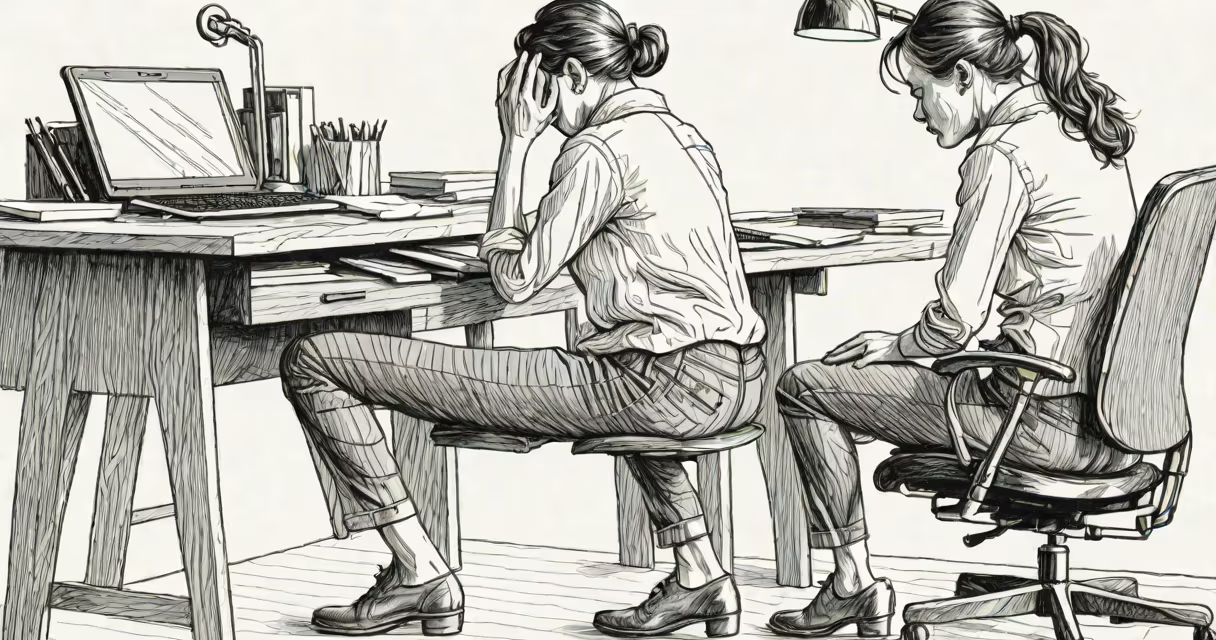
Hips and legs ache when sitting refers to persistent discomfort in the lower body that develops or worsens during extended periods of seated activity. This symptom often stems from poor posture, nerve pressure, reduced blood flow, or underlying musculoskeletal conditions. It's not normal to feel pain while sitting upright for 30 minutes or more.
The sensation typically begins as dull aching in the hips or buttocks, spreading to the thighs or calves. Some people report numbness, tingling, or burning-especially if the sciatic nerve is involved. The pain may ease when standing or walking briefly but returns quickly upon resuming a seated position.
A 2021 study published in Spine Journal found that 68% of office workers reported lower-body discomfort during sitting, with 42% experiencing symptoms lasting more than 30 minutes. These numbers show how common this issue is among people with sedentary jobs.
When you sit for long stretches, the pelvis tilts forward, increasing pressure on the lumbar spine and compressing nerves that exit the lower back. The sciatic nerve runs from the lower spine through the buttock and down each leg. Compression at the L5-S1 vertebrae can cause radiating pain into the hip and leg.
Reduced blood flow also plays a role. A 2015 study in Circulation showed that sitting for more than 90 minutes decreases blood flow to the legs by up to 50%, contributing to muscle fatigue and cramping. This effect is amplified in individuals with peripheral artery disease or diabetes.
Posture matters. Slouching shifts weight onto the sacrum and tightens the piriformis muscle-a small muscle deep in the buttock. When this muscle spasms or becomes inflamed, it can compress the sciatic nerve, causing pain that mimics a herniated disc.
Not all hip and leg pain while sitting arises from the same root. Here are the most frequent categories:
| Category | Key Features | Typical Triggers |
|---|---|---|
| Sciatica | Pain radiates from lower back through hip and down one leg. Often includes numbness or tingling. | Prolonged sitting, sudden movement, spinal disc herniation. |
| Piriformis syndrome | Deep ache in buttock, worsens with sitting. May mimic sciatica. | Repetitive strain, tight glutes, trauma. |
| Peripheral neuropathy | Burning, tingling, or loss of sensation. Often affects both legs equally. | Diabetes, vitamin B12 deficiency, chemotherapy. |
| Deep vein thrombosis (DVT) | Swelling, warmth, and severe pain in one leg. Can be life-threatening. | Long flights, immobility, hormonal contraceptives. |
One non-obvious distinction: sciatica pain usually follows a specific path-down the back of the leg-but piriformis syndrome often feels localized in the gluteal region. Misdiagnosis is common because both conditions respond similarly to stretching and anti-inflammatory treatments.
As a physical therapist, I've seen patients mislabel piriformis pain as "sciatica" for years. One client, a graphic designer, reported leg pain for 18 months. MRI showed no disc herniation. After targeted piriformis release therapy, her symptoms resolved in four sessions.
This symptom is most common in office environments, during long commutes, or while watching screens. People who spend 6+ hours a day sitting have a 2.3 times higher risk of developing chronic lower-body pain, according to the American Academy of Orthopaedic Surgeons (AAOS).
High-risk groups include those with sedentary jobs, individuals recovering from surgery, and people with obesity or poor core strength. Weak abdominal muscles fail to stabilize the pelvis, increasing load on the hips and lower back.
Even seating design contributes. A chair with insufficient lumbar support forces the spine into a C-curve, compressing discs and narrowing neural foramina-the openings where nerves exit the spine. A 2019 study in Ergonomics found that chairs lacking adjustable lumbar support increased hip flexor tension by 37% compared to properly supported seats.
Many assume hip and leg pain while sitting is simply "bad posture." While posture plays a role, it's not the sole factor. Pain from joint degeneration (like osteoarthritis) often improves with movement and worsens with rest-opposite to nerve-related pain, which gets worse with sitting and better with walking.
Another misconception: leg cramps during sitting are always due to dehydration or electrolyte imbalance. While those can trigger cramps, they're less likely if the cramping occurs only after 45 minutes of sitting and resolves within seconds of standing. That pattern points to vascular or neurological causes.
True muscle cramps typically affect the calf or foot and happen suddenly. They last seconds to minutes and don't recur in the same spot unless there's an underlying metabolic condition. Persistent pain in the hip or upper thigh during sitting is more likely nerve-related.
Simple changes reduce symptoms for many. Stand every 30 minutes. Use a standing desk or take a 5-minute walk. Perform seated hip flexor stretches: cross one ankle over the opposite knee, then gently lean forward until a stretch is felt in the hip.
Adjust your chair so feet rest flat on the floor, knees level with hips. Use a lumbar roll or cushion to maintain the spine's natural curve. Avoid crossing legs-it increases pressure on the sciatic nerve.
For persistent cases, consider seeing a physical therapist. A 2020 randomized trial in Journal of Orthopaedic & Sports Physical Therapy showed that 85% of participants with sciatica improved after six weeks of targeted exercises and posture training.
Don't ignore recurring hip and leg ache when sitting. It's not a sign of aging-it's a signal from your body that something needs adjustment. Addressing it early prevents long-term damage.