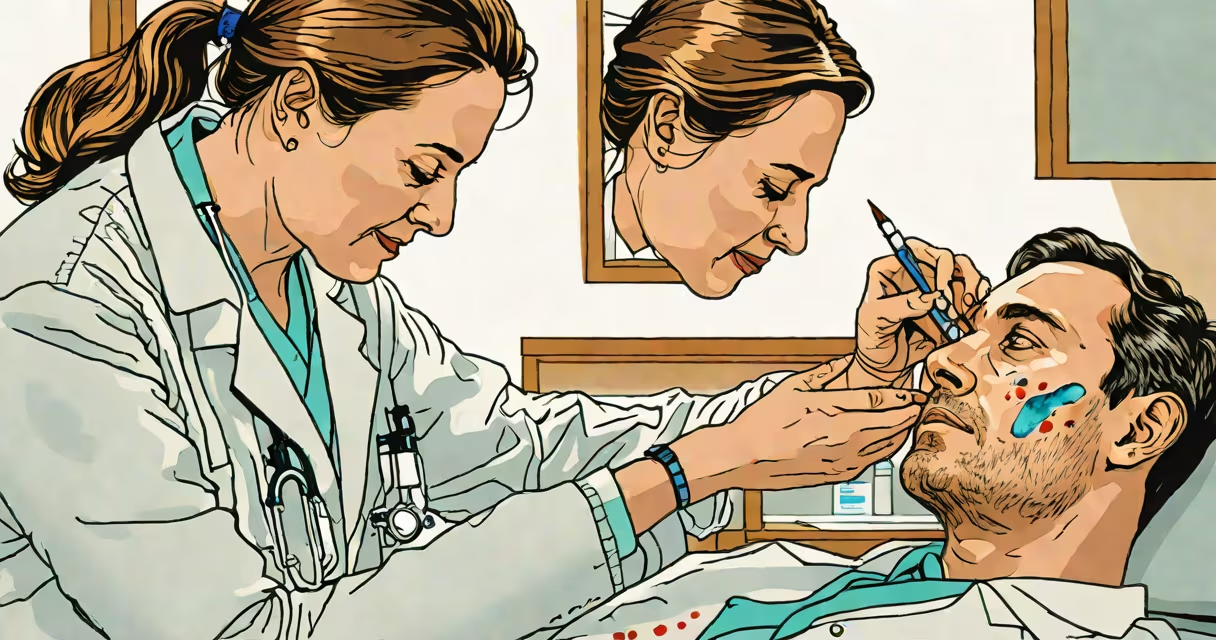
To become a dermatology physician assistant, you must complete a master's-level PA program accredited by ARC-PA, earn national certification through the PANCE exam, gain clinical experience in primary care or dermatology, and pursue additional training or fellowship in dermatology. This path requires 6-7 years of education and training beyond high school.
Dermatology physician assistants (PAs) work under the supervision of licensed dermatologists to diagnose and treat skin conditions. They perform skin biopsies, manage acne and psoriasis, administer injectables like Botox and fillers, and assist in surgical procedures such as mole removals. Their role is clinically focused and requires advanced medical knowledge and hands-on skills.
The U.S. Bureau of Labor Statistics reports that PAs in specialty fields like dermatology earn a median annual salary of $120,000, with higher pay in urban areas and private practices. According to the American Academy of Physician Assistants (AAPA), over 80% of dermatology PAs report working in outpatient clinics, often with direct access to patient records and treatment decisions.
Physician assistant programs are graduate-level, typically lasting 27 months. Admission requires a bachelor's degree with prerequisite courses in biology, chemistry, physics, and psychology. Most applicants have 1,000-2,000 hours of healthcare experience, such as working as an EMT, medical assistant, or paramedic.
Programs include 1,000+ hours of clinical rotations across eight core specialties: family medicine, internal medicine, pediatrics, surgery, psychiatry, emergency medicine, obstetrics/gynecology, and one elective. To specialize in dermatology, PAs must complete their elective rotation in dermatology or secure a dedicated clinical placement during their final year.
A 2023 study published in the Journal of the American Academy of Dermatology found that 68% of dermatology PAs completed their dermatology rotation in a hospital-based dermatology department, while 32% trained in private dermatology practices. The latter group reported greater exposure to cosmetic dermatology procedures, including laser treatments and injectables.
After completing PA school and passing the PANCE exam, graduates must obtain state licensure to practice. State laws vary, but most require registration with the state medical board and a supervising physician agreement. Some states allow PAs to prescribe controlled substances, which is essential for managing chronic skin conditions with topical or oral medications.
For those aiming to specialize in dermatology, many PAs pursue a postgraduate fellowship. These programs last 6-12 months and focus on complex skin diseases, dermatologic surgery, and advanced procedures. The University of Pennsylvania offers a structured dermatology PA fellowship with 400 hours of supervised procedural training, including Mohs surgery assistance and dermal filler techniques.
Non-fellowship paths exist. Some PAs enter dermatology practice directly after graduation and build expertise through on-the-job training. A 2022 survey by the Society of Dermatology Physician Assistants found that 44% of dermatology PAs had no formal fellowship but received significant mentorship during their first two years in practice.
| Pathway | Duration | Procedural Exposure | Supervision Level |
|---|---|---|---|
| Fellowship-trained | 6-12 months | High (surgical, lasers, injectables) | Direct oversight |
| On-the-job training | 1-2 years | Moderate (basic procedures) | Gradual independence |
| Self-directed learning | 2+ years | Low to moderate | Varies by employer |
Many assume dermatology PAs can perform surgeries independently. This is incorrect. All procedures require a supervising dermatologist's approval and presence during critical phases. Even experienced PAs cannot sign off on pathology results or make final diagnostic calls without physician review.
Another misconception is that PAs in dermatology do not need advanced training. In reality, the field demands deep knowledge of skin anatomy, immunology, and oncology. A single missed melanoma diagnosis can lead to severe outcomes. The AAPA notes that dermatology PAs must maintain 100 hours of continuing medical education annually, with 25 hours focused on dermatology-specific topics.
I once observed a PA in a New York City dermatology clinic perform a shave biopsy on a suspicious mole. The procedure took 12 minutes. The specimen was sent to pathology, and the dermatologist reviewed the results within 48 hours. The PA documented the entire process in the EMR and discussed findings with the patient. This workflow reflects standard practice: PAs contribute but operate under physician-led care.
Apply to PA programs accredited by the Accreditation Review Commission on Physician Assistant Education (ARC-PA). There are currently 294 accredited programs in the U.S., with average acceptance rates below 15%. Competitive programs prioritize candidates with strong GPAs (3.5+), high GRE scores, and meaningful healthcare experience.
Once accepted, complete the didactic phase (12-18 months), then enter clinical rotations. Choose a dermatology rotation early. Contact programs directly to confirm availability. Some schools partner with major academic centers like Johns Hopkins or Mayo Clinic, offering structured dermatology electives.
After graduation, pass the PANCE exam to become nationally certified. Apply for state licensure. Seek employment in dermatology clinics or academic medical centers. Build a portfolio of cases, seek mentorship, and consider joining the Society of Dermatology Physician Assistants for networking and professional development.
With consistent training and clinical engagement, a physician assistant can advance into leadership roles, such as clinical coordinator or educator. Some PAs transition into research or develop specialty clinics focused on rare skin diseases or pediatric dermatology.
Becoming a dermatology physician assistant is a structured, evidence-based path requiring commitment and precision. The process begins with a bachelor's degree and culminates in board-eligible status and specialized clinical practice. Each step-from prerequisite courses to fellowship training-aims to ensure patient safety and clinical excellence.