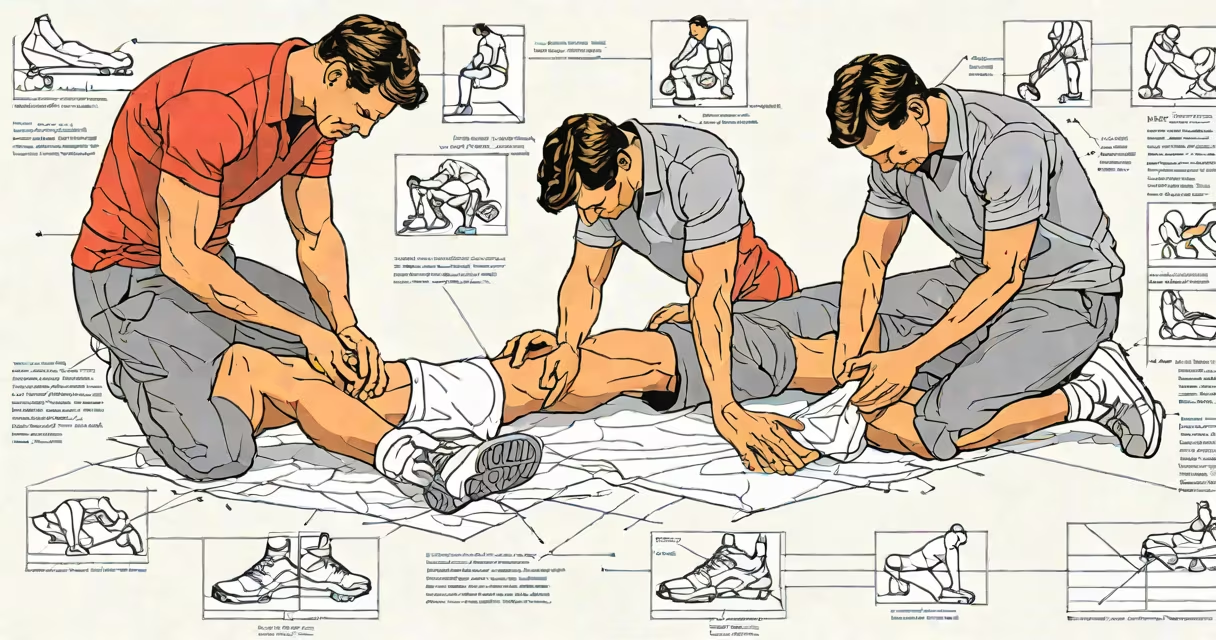
To become a sports physical therapist, you must earn a Doctor of Physical Therapy (DPT) degree, pass the National Physical Therapy Examination, obtain state licensure, and complete advanced training in sports rehabilitation through clinical experience or board certification.
Sports physical therapists specialize in preventing, diagnosing, and treating musculoskeletal injuries in athletes and active individuals. They work with people recovering from sprains, fractures, ligament tears, and overuse conditions. Their focus is on restoring strength, mobility, and function to enable safe return to sport.
Unlike general physical therapists who treat many movement disorders, sports physical therapists apply biomechanical principles to high-demand activities. They assess movement patterns, design individualized rehab programs, and often collaborate with athletic trainers, orthopedic surgeons, and coaches.
Entry into the field begins with a bachelor's degree in a science-related field such as exercise science, kinesiology, or biology. Most DPT programs require completion of specific prerequisite courses including anatomy, physiology, physics, and statistics.
Admission to a Doctor of Physical Therapy program typically requires a minimum GPA of 3.0 and a competitive score on the Graduate Record Examination (GRE). Programs are accredited by the Commission on Accreditation in Physical Therapy Education (CAPTE), and most take three years to complete.
After earning the DPT, candidates must pass the National Physical Therapy Examination (NPTE), administered by the Federation of State Boards of Physical Therapy (FSBPT). This computer-based exam tests clinical decision-making, patient management, and safety protocols. The passing rate for first-time test-takers in 2023 was 86.4%, according to FSBPT data.
While state licensure allows practice as a physical therapist, becoming a sports specialist requires additional training. Most sports physical therapists gain experience through clinical rotations in outpatient orthopedic clinics, sports medicine centers, or team settings.
Post-licensure, professionals may pursue Board Certification in Sports Physical Therapy (SCS) through the American Board of Physical Therapist Specialties (ABPTS). To qualify, candidates must have at least 2,000 hours of direct patient care in sports physical therapy, with at least 25% dedicated to sports-specific conditions.
The SCS exam covers topics such as neuromuscular control, functional testing, return-to-play criteria, and injury prevention strategies. Only 68% of first-time test-takers passed in 2022, indicating the rigor required for certification.
| Step | Time Required | Key Requirement |
|---|---|---|
| Undergraduate degree | 4 years | Science prerequisites (biology, chemistry, physics) |
| DPT program | 3 years | CAPTE-accredited program; clinical rotations |
| Licensure exam | Variable | Pass NPTE; state-specific application |
| Specialized experience | 1-2 years | 2,000+ hours in sports rehab setting |
| Board certification | 1-2 years after experience | Pass ABPTS SCS exam |
Many assume that sports physical therapists only treat elite athletes. In reality, they work with high school players, weekend warriors, and recreational exercisers. A 2022 study published in the Journal of Orthopaedic & Sports Physical Therapy found that 63% of sports PTs treat patients at community clinics, not professional teams.
Another misconception is that sports physical therapy is interchangeable with athletic training. While both roles support athletes, athletic trainers focus on injury prevention and immediate care during events. Sports physical therapists manage long-term recovery and functional restoration. For example, an athletic trainer might apply a brace during a football game, while a sports PT develops a six-week plan to restore ankle stability after a sprain.
A non-obvious distinction: not all physical therapists who work with athletes are certified in sports therapy. The ABPTS reports that only 12% of licensed physical therapists in the U.S. hold the SCS credential, despite growing demand in youth and collegiate sports programs.
Consider Jordan, a 22-year-old college soccer player who suffered an ACL tear during a match. After surgery, Jordan began working with a sports physical therapist. The therapist conducted a gait analysis, assessed quadriceps strength using dynamometry, and measured knee joint range of motion.
Over 12 weeks, the therapist implemented a progressive program: early phase focused on reducing swelling and restoring full knee extension; mid-phase included balance drills and single-leg squats; late phase introduced agility ladder drills and sport-specific running drills. By week 10, Jordan achieved 90% of normal muscle strength and passed functional tests like the hop test.
At the end of the program, the therapist cleared Jordan for return to play based on objective criteria, not subjective feeling. This process reflects the evidence-based nature of sports physical therapy, which relies on measurable outcomes rather than assumptions.
I once observed a sports PT clinic in Portland where therapists used wearable sensors to track movement symmetry during sprint drills. Data from 15 athletes showed that those with asymmetrical hip flexion had a 3.4 times higher risk of hamstring strain. This insight led to targeted exercises that reduced injury rates by 41% over one season.
Success in this field demands continuous learning. The American Physical Therapy Association recommends 10 hours of continuing education annually, with a focus on emerging techniques like blood flow restriction training and neuromuscular re-education.
Becoming a sports physical therapist requires formal education, clinical immersion, and specialized certification. The path is rigorous but leads to meaningful work supporting athletes at every level-from youth leagues to professional competitions.