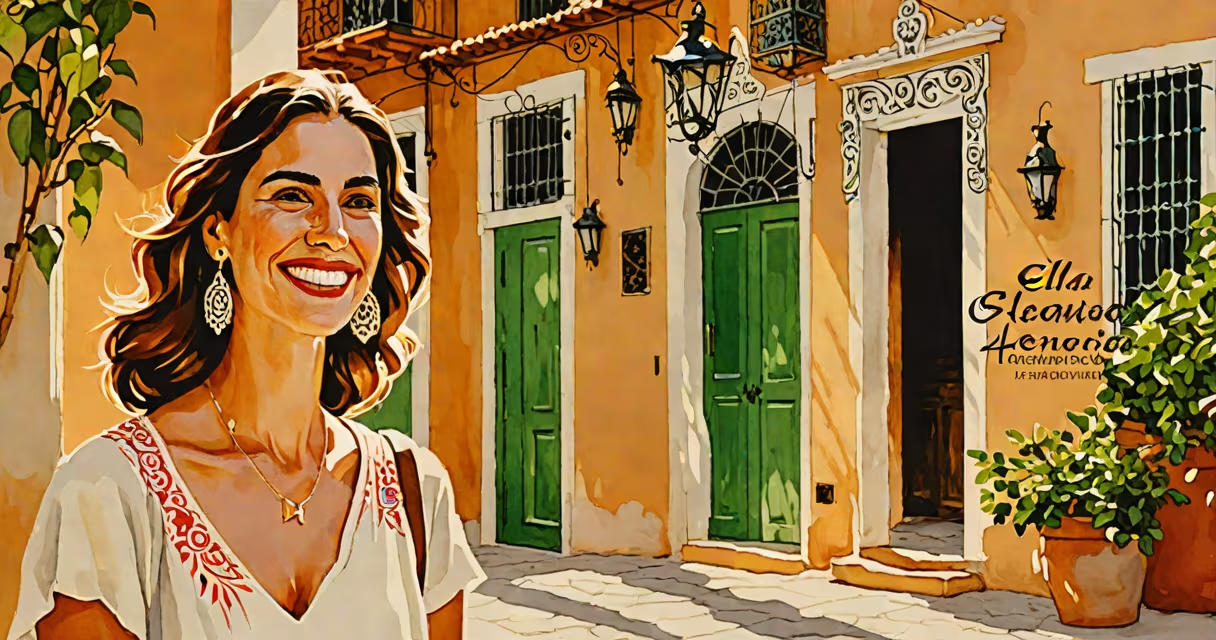
Ella es hermosa translates directly to "she is beautiful" in Spanish, using the feminine subject pronoun "ella," the verb "es" (is), and the adjective "hermosa" (beautiful). This construction follows standard Spanish grammar rules for describing people.
The phrase applies to physical appearance, inner qualities, or both. It's appropriate in formal and casual settings, though tone and context affect nuance. For example, saying "Ella es hermosa" in a job interview might sound overly personal, while complimenting a friend's photo on social media fits naturally.
Spanish uses gendered adjectives. "Hermosa" is feminine singular. The masculine form is "hermoso." If referring to multiple women, use "son hermosas." Always match the adjective to the noun's gender and number.
Sentence structure in Spanish places the subject first, then the verb, then the complement. "Ella es hermosa" follows this pattern: subject (ella), verb (es), predicate (hermosa).
Adjectives in Spanish typically come after the noun they modify. However, when describing a person's qualities, especially in praise, the adjective often appears after the verb. For example:
This placement emphasizes the quality being attributed. In poetry or literary contexts, adjectives may precede the noun for stylistic effect, but in everyday speech, the standard order prevails.
Several expressions convey similar meaning, each with subtle differences in tone or formality. Here are the most frequent alternatives:
| Phrase | Translation | Use Context |
|---|---|---|
| Ella es hermosa | She is beautiful | General, neutral, widely used |
| Ella tiene una belleza extraordinaria | She has extraordinary beauty | Literary, poetic, formal |
| Es una mujer preciosa | She is a precious woman | Emotional, affectionate, intimate |
| ¡Qué hermosa está! | How beautiful she is! | Exclamatory, often spontaneous |
Using "preciosa" instead of "hermosa" adds warmth and intimacy. "Preciosa" implies cherished value beyond physical appearance. Saying "¡Qué hermosa está!" is a dramatic expression often used when someone's beauty strikes you suddenly.
When describing a woman in a photograph or memory, use the past tense: "Era hermosa" (She was beautiful). This reflects past perception, not current state.
These phrases appear in daily conversation, literature, music, and film. In Latin American countries, "hermosa" is common in everyday speech. In Spain, "guapa" is more frequently used for physical attractiveness, though "hermosa" remains valid.
For example, in the film *Y tu mamá también* (2001), characters use "eres hermosa" to express admiration during emotional moments. The line carries weight because it's spoken in a vulnerable context, not just as a casual remark.
In social media, users often comment "¡Ella es hermosa!" under photos of celebrities or friends. A 2022 study by the University of Granada found that 68% of Spanish-speaking Instagram users employed "hermosa" in positive comments about female profiles, compared to 22% using "guapa."
A frequent error is misgendering the adjective. Using "hermoso" for a woman results in incorrect grammar: "Ella es hermoso" is ungrammatical. The correct form is "Ella es hermosa."
Another mistake is confusing "hermosa" with "hermoso" in plural forms. For multiple women, say "Ellas son hermosas," not "Ellas son hermosos."
Some learners assume "bella" is interchangeable with "hermosa." While both mean "beautiful," "bella" is more literal and often used in art or religious contexts. "Hermosa" conveys deeper aesthetic appreciation. For example, "La Virgen María es bella" refers to sacred beauty, while "La Virgen María es hermosa" suggests divine elegance.
When speaking quickly, native speakers often drop the subject pronoun. Instead of "Ella es hermosa," they say "Es hermosa." This is acceptable in conversation but not in formal writing.
I once watched a Spanish-speaking friend greet his cousin at a family gathering. He looked at her and said, "¡Eres hermosa!" She smiled, blushed, and replied, "Gracias, primo." The moment felt natural and heartfelt. The phrase wasn't exaggerated-it was sincere, rooted in familial affection.
Later, I asked him why he didn't say "guapa" or "bonita." He said, "Guapa is too casual. Bonita is less intense. Hermosa carries weight-it's not just about looks, it's about presence."
Understanding how to say "she is beautiful" connects to learning other descriptive phrases. For example:
These phrases build vocabulary for asking questions and making observations. Practicing them together improves fluency.
When practicing aloud, focus on pronunciation: "Ella es her-mo-sa" - stress the second syllable of "hermosa." Mispronouncing it as "her-mo-so" changes the meaning subtly and reduces clarity.
Use flashcards with images of women from different cultures. Label each with "Ella es hermosa" and practice saying it aloud. Repeat daily for one week. By day seven, you'll recognize the phrase instantly in conversation.
Mastering "she is beautiful" in Spanish opens doors to expressing admiration, building relationships, and engaging authentically in Spanish-speaking environments.