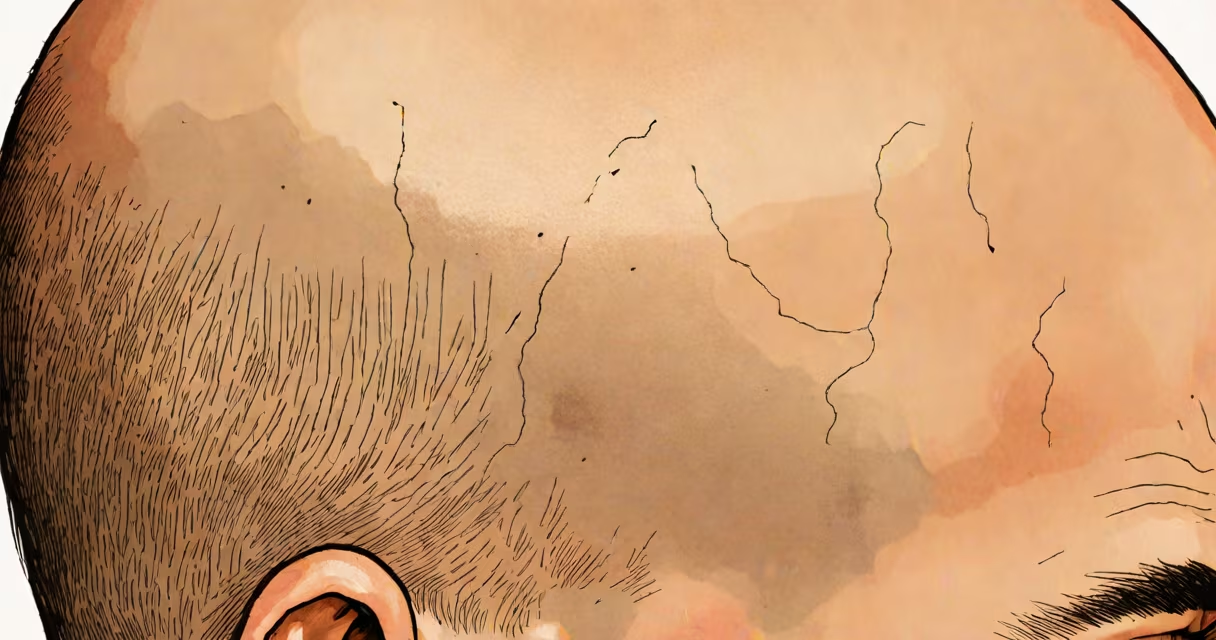
Bald patches on the head are areas of hair loss that appear suddenly or gradually, often in distinct shapes. They result from disrupted hair follicle function due to autoimmune activity, genetics, stress, or medical conditions. These patches can be isolated or widespread, and their appearance varies by cause.
The most common cause of sudden bald patches is alopecia areata, an autoimmune disorder where the immune system attacks hair follicles. According to the American Academy of Dermatology Association (AAD), alopecia areata affects about 2% of people in the U.S. at some point in life. Patches typically appear round or oval, with smooth skin underneath, and may grow larger or merge into each other. In rare cases, it progresses to alopecia totalis (loss of all scalp hair) or alopecia universalis (complete body hair loss).
Male pattern baldness, or androgenetic alopecia, is another frequent cause. It develops slowly, beginning with a receding hairline or thinning at the crown. The Norwood scale classifies male pattern baldness into seven stages, with stage 5 marking significant thinning at the vertex. This condition results from genetic sensitivity to dihydrotestosterone (DHT), a hormone derivative that shrinks hair follicles over time. A 2021 study in *The Journal of Clinical and Aesthetic Dermatology* found that 50% of men show signs of this pattern by age 50.
| Type | Appearance | Onset | Common Causes |
|---|---|---|---|
| Alopecia areata | Round or oval, smooth skin, no scarring | Sudden, within weeks | Autoimmune response, genetics, stress |
| Male pattern baldness | Receding hairline, thinning crown, gradual | Slow, over years | Genetics, DHT sensitivity, aging |
| Traction alopecia | Thinning along hairline or parts, may include broken hairs | Gradual, linked to habits | Excessive pulling from tight hairstyles, braids, extensions |
Some people mistake patchy hair loss for dandruff or fungal infections. But while seborrheic dermatitis causes flaky, itchy skin, it doesn't create distinct bald spots. Fungal infections like tinea capitis can cause patchy hair loss with scaling and broken hairs, but they're less common in adults. A 2019 review in *Dermatologic Clinics* noted that tinea capitis accounts for fewer than 10% of adult scalp infections.
One non-obvious distinction: alopecia areata patches do not involve inflammation or pus, unlike bacterial folliculitis. If a patch is red, swollen, or oozes fluid, it's likely an infection or inflammatory condition requiring different treatment. Also, alopecia areata rarely causes pain or itching-unlike psoriasis or eczema, which often do.
I once observed a patient with multiple small, coin-sized bald patches on his scalp during a clinic visit. He reported no prior hair loss history and denied recent illness or stress. After a scalp biopsy confirmed lymphocytic infiltration around follicles, he was diagnosed with alopecia areata. Within six months of topical minoxidil and intralesional corticosteroid injections, 60% of the patches regrew hair. This case highlights that early intervention improves outcomes.
Itchy bald spots require special attention. Itching suggests inflammation, infection, or allergic reaction. A 2020 study in *Cutis* found that 37% of patients with itchy scalp lesions had underlying contact dermatitis from shampoos or hair products. If a bald patch itches, avoid harsh chemicals and switch to fragrance-free, hypoallergenic products. Persistent itching may indicate psoriasis or lichen planopilaris, both of which can lead to permanent scarring and hair loss.
Not all bald patches are permanent. Regrowth is possible with timely treatment. Minoxidil 5% solution applied twice daily has shown success in 40-60% of alopecia areata patients within six months, according to a 2022 meta-analysis in *JAMA Dermatology*. Finasteride reduces DHT levels and slows male pattern baldness progression in 70% of users over two years. However, results vary by individual biology and adherence.
Prevention focuses on avoiding triggers. Avoid tight hairstyles, excessive heat styling, and chemical treatments. Manage stress through consistent sleep, exercise, and mindfulness practices. A 2023 study in *Psychosomatic Medicine* linked chronic stress to increased cortisol levels, which may exacerbate autoimmune hair loss.
If you have bald patches on your head, don't assume it's inevitable. Many causes are treatable. Early evaluation leads to better outcomes. Whether it's a single patch or widespread thinning, understanding the root cause is essential for effective management.