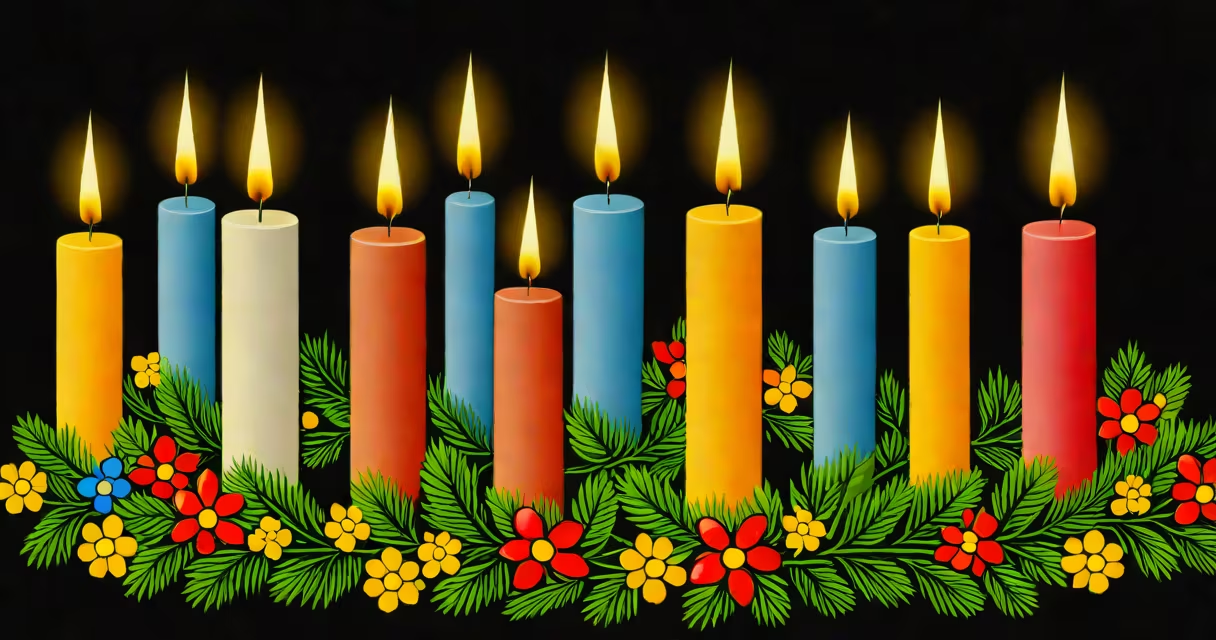
The meaning of Catholic Advent candles centers on spiritual preparation for the celebration of Christ's birth, using four colored candles-three purple and one pink-lit weekly during Advent, with a central white candle representing Christ's arrival.
Advent begins the fourth Sunday before Christmas and lasts four weeks. Each Sunday, one candle is lit, symbolizing growing anticipation. The practice originates in early Christian liturgical traditions and was formalized in the Western Church by the 6th century, though the specific use of colored candles became standardized in the 20th century.
Catholic churches and homes use the candles to mark time in a sacred way. The lighting ritual is not merely decorative-it reflects a theological concept: Christ is the light of the world, and as darkness grows in December, so too does the expectation of His coming.
Each candle represents a distinct theme tied to the Advent season. The first candle, lit on the first Sunday of Advent, symbolizes hope. The second, on the second Sunday, stands for peace. The third, on the third Sunday, embodies joy. The fourth, on the final Sunday, signifies love. These themes align with the traditional four virtues associated with preparing for Christ's birth.
The color scheme follows liturgical norms. Purple is used for penance, reflection, and royalty-signifying both reverence and anticipation. Pink, introduced on the third Sunday (Gaudete Sunday), marks a shift toward celebration. This change reflects a moment of joyful pause within the reflective season, akin to a holiday interlude.
A central white candle, known as the Christ candle, is lit on Christmas Eve or Christmas Day. Its purity and brightness represent Jesus as the "light of the world" (John 8:12). This candle is not part of the weekly sequence but serves as a climax to the four-week cycle.
Advent candles are typically made from paraffin wax, beeswax, or soy wax. Beeswax candles are preferred in some Catholic traditions due to their historical association with purity and their clean burn. They are also more expensive and less common in mass-produced sets.
Most sets include four taper candles and one central pillar candle. The tapers are usually 10-12 inches tall and ¾ inch wide. The central candle is taller-often 14 inches-and wider, designed to stand out visually and symbolically.
| Week | Candle Color | Theme | Symbolic Meaning |
|---|---|---|---|
| First | Purple | Hope | Anticipation of Christ's coming |
| Second | Purple | Peace | Preparation of heart and mind |
| Third | Pink | Rejoicing | Shift from penance to celebration |
| Fourth | Purple | Love | Devotion and readiness |
| Christmas | White | Christ | Light of the world; fulfillment of promise |
Some families use red candles instead of purple, especially in regions influenced by Eastern Catholic rites. However, the Roman Catholic Church officially uses purple and pink, as confirmed by the General Instruction of the Roman Missal (2000).
Advent candles are used in Catholic homes, parish churches, schools, and religious education programs. They serve as visual anchors during a season often overshadowed by commercial activity. The act of lighting the candles creates a daily or weekly ritual that grounds participants in spiritual reflection.
In many parishes, the priest lights the Advent wreath during Mass on the first Sunday of Advent. Families may gather around the wreath after dinner, reading scripture passages related to each week's theme. This practice fosters intergenerational connection and reinforces faith formation.
A non-obvious fact: the Advent wreath itself is not mentioned in the Bible. It is a 16th-century German Lutheran invention, later adopted by Catholics. The circular shape symbolizes eternity-the unbroken nature of God's presence. The evergreen branches represent eternal life. The fire of the candles reflects divine light overcoming darkness.
Many assume the pink candle is optional or symbolic only. In reality, it is a required liturgical color in the Catholic calendar. According to the U.S. Conference of Catholic Bishops, pink is not a substitute but a deliberate choice to mark Gaudete Sunday-a day of rejoicing.
Another misconception: that the candles are only for Christmas Eve. They are lit throughout the entire Advent season, beginning four Sundays before Christmas. Skipping a week breaks the continuity of the symbolic progression.
Some confuse the meaning of Catholic Advent candles with Hanukkah menorahs. While both involve lighting candles over eight days, the contexts differ. Hanukkah celebrates a historical miracle of oil lasting eight days. Advent candles mark a theological anticipation of Christ's incarnation, not a past event.
Consider the Martinez family in Chicago. Every Sunday evening during Advent, they gather in their living room. The father lights the first purple candle while the children read Isaiah 9:2: "The people who walked in darkness have seen a great light."
On the third Sunday, they switch to the pink candle. The youngest child, age seven, says, "Today we're happy because Jesus is coming soon." The mother explains that pink is not a mistake-it's a sign that joy is part of waiting.
On Christmas Eve, they light the white Christ candle. The family sings "O Come, O Come Emmanuel," and the child places a small figurine of the baby Jesus in a manger beside the wreath. This ritual, repeated annually, reinforces the meaning of Catholic Advent candles as more than decoration-they are acts of faith.