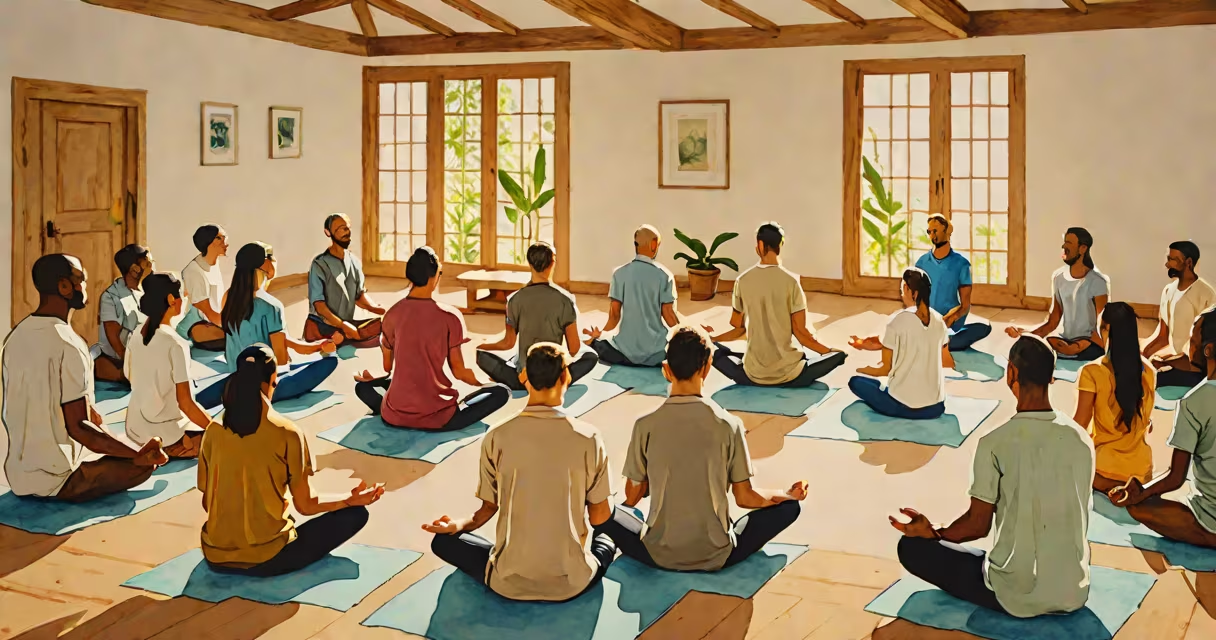
A meditation teacher course is a structured educational program that trains individuals to guide others in meditation practices, combining theory, experiential learning, and supervised teaching. These courses typically cover foundational techniques, ethical guidelines, and methods for adapting practices to diverse student needs.
Participants progress from personal practice to teaching under mentorship. Courses vary in duration, format, and focus-some emphasize mindfulness, others transcendental or vipassana traditions. Completion often includes a practicum, peer feedback, and assessment by experienced instructors.
The goal is not just skill acquisition but cultivating presence, clarity, and authenticity in delivery. A well-designed course ensures teachers understand both the science behind meditation and the nuances of human attention and emotional regulation.
Most meditation teacher courses follow a multi-phase model. Phase one focuses on personal practice-participants meditate daily for several weeks to build familiarity with the technique. This phase establishes internal reference points for guiding others.
Phase two introduces didactic content: anatomy of attention, common challenges in meditation (e.g., restlessness, boredom), and principles of non-dual awareness. For example, a course based on Mindfulness-Based Stress Reduction (MBSR) includes 8 weeks of curriculum design, lesson pacing, and group facilitation skills.
Phase three involves supervised teaching. Trainees lead small groups, receive recordings and feedback, and reflect on their delivery. One participant in a 2022 study reported that receiving video feedback reduced their reliance on scripts and improved their ability to respond to student needs in real time.
Not all meditation teacher courses are equivalent. They differ by tradition, structure, and accreditation. The table below outlines major categories:
| Type | Focus | Duration | Accreditation Source |
|---|---|---|---|
| Mindfulness-Based (MBSR) | Stress reduction, body awareness, present-moment focus | 8 weeks + 6 months mentoring | Center for Mindfulness, UMass Medical School |
| Transcendental Meditation (TM) | Mantra-based silent meditation, automatic process | 6-12 months, residential component optional | Transcendental Meditation organization |
| Vipassana (Insight Meditation) | Observing sensations, impermanence, non-attachment | 10-day retreats, multiple cycles | Spirit Rock, Insight Timer network |
| Yoga & Breath-Centered | Pranayama, asana integration, chakra awareness | 6-12 months, with yoga teacher training overlap | Yoga Alliance (not exclusive to meditation) |
Each tradition has distinct pedagogical approaches. MBSR programs emphasize evidence-based outcomes and require trainees to complete a minimum of 20 hours of personal practice before teaching. TM courses require formal initiation and adherence to specific protocols, including daily 20-minute sessions with a mantra assigned by a certified instructor.
Non-traditional programs may lack standardized curricula. A 2021 review by the National Center for Complementary and Integrative Health found that only 38% of online meditation teacher programs listed clear learning objectives or assessment criteria. Always verify program transparency before enrolling.
These courses serve multiple purposes. Individuals pursue them to launch private practices, teach in wellness centers, or integrate meditation into healthcare settings. Hospitals using MBSR report a 30% reduction in patient-reported anxiety during treatment, according to a 2020 study published in JAMA Internal Medicine.
Workplaces increasingly offer meditation teacher training to support employee mental health. Google's "Search Inside Yourself" program, developed by a former engineer, uses a modified MBSR structure and has trained over 10,000 employees since 2007. Participants who completed the course showed measurable improvements in emotional regulation and focus.
Another application is community outreach. In rural areas with limited access to mental health services, trained teachers have led weekly sessions in schools and community centers. A pilot project in Appalachia found that students attending biweekly guided meditations had 22% fewer behavioral incidents over a semester compared to control groups.
Many assume that completing a meditation teacher course qualifies someone to treat clinical conditions. That is incorrect. Teachers are not licensed therapists. They do not diagnose or treat depression, PTSD, or anxiety disorders. The American Psychological Association states that meditation should be used as a complement-not replacement-for clinical care.
Another misconception is that all courses require long-term commitment. While some programs like TM span years, others offer modular formats. For example, the University of Massachusetts' MBSR program allows participants to enroll in individual modules, though full certification requires completion of all eight.
There's also confusion between "teacher" and "facilitator." A facilitator leads a session but doesn't hold formal training. A teacher has undergone assessment, peer review, and ongoing supervision. One participant in a 2023 cohort noted that being asked to co-help a session before full certification helped them recognize gaps in their ability to manage silence and redirect distracted attention.
Consider Sarah, a nurse interested in integrating mindfulness into her work. She researches programs accredited by the Center for Mindfulness at UMass. She selects a 10-week online course with live sessions, weekly assignments, and a final teaching demonstration.
She begins with 30 minutes of daily sitting meditation. After four weeks, she joins a peer circle to discuss challenges. By week six, she leads a 15-minute guided session for a small group of colleagues, recording herself for feedback.
At the end of the course, she submits a teaching video, reflective journal, and a lesson plan. Her mentor evaluates her on presence, clarity, and ability to adapt to audience cues. She receives certification and gains access to a network of over 2,000 trained teachers.
She later applies to lead a hospital-based mindfulness group. Her training enables her to adjust pacing for patients with chronic pain and to handle moments of emotional release with sensitivity.
A meditation teacher course is not a quick certification. It demands consistent personal practice, critical reflection, and real-world teaching. Success hinges not on memorizing instructions but on embodying stillness, curiosity, and compassion.