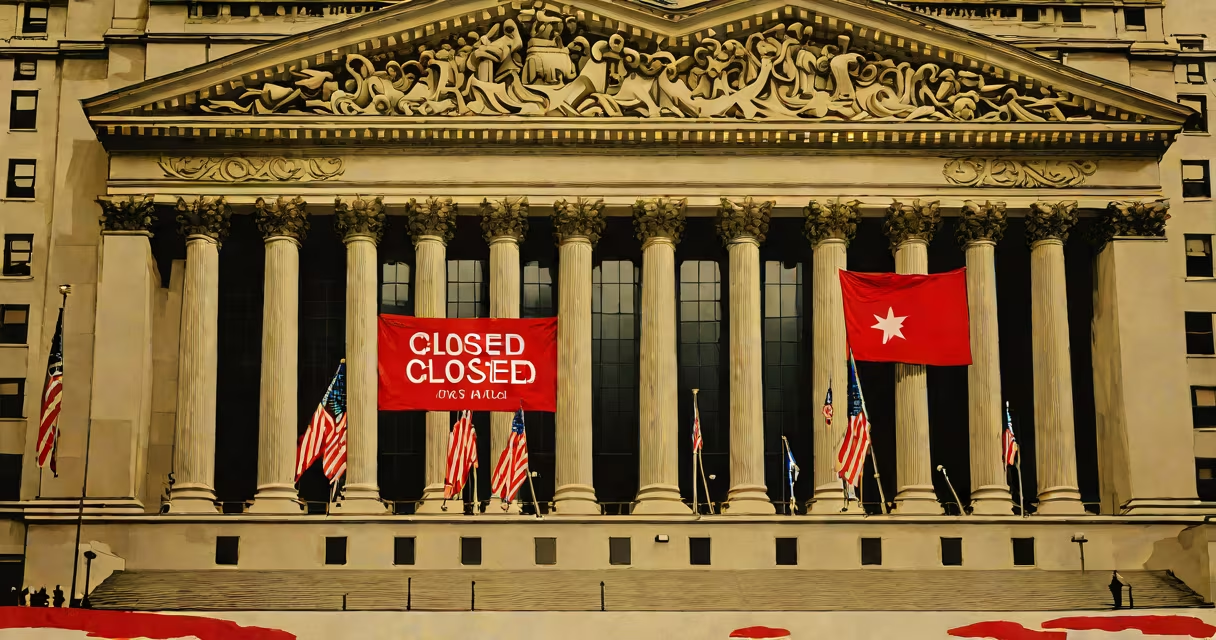
The New York Stock Exchange closed days are 10 designated non-trading days each year, established by the NYSE and regulated by the U.S. Securities and Exchange Commission. These include federal holidays, special observances, and occasional emergency closures. Trading halts on these days to allow settlement processing and maintain orderly market operations.
Closures occur on specific dates regardless of weekday, such as New Year's Day, Independence Day, and Thanksgiving. The NYSE publishes its annual holiday schedule in advance, typically by late October. For 2024, the exchange was closed on January 1 (New Year's Day), January 15 (Martin Luther King Jr. Day), February 19 (Washington's Birthday), May 27 (Memorial Day), June 19 (Juneteenth), July 4 (Independence Day), September 2 (Labor Day), November 27 (Thanksgiving), and December 25 (Christmas).
Trading resumes at 9:30 a.m. Eastern Time on the next business day. On rare occasions, the NYSE may close early or cancel trading due to extreme weather or national emergencies. The most recent emergency closure occurred on September 11, 2001, when the exchange remained shut for four days following the terrorist attacks.
The NYSE follows a formal process to set its holiday calendar. The exchange consults the U.S. Department of Labor's list of federal holidays and aligns with SEC regulations governing market operations. The NYSE Board of Governors approves the annual schedule, which is then published on the NYSE website and shared with brokerages and clearinghouses.
Each holiday is assigned a fixed date unless it falls on a weekend. In that case, the exchange moves the closure to the nearest weekday. For example, if New Year's Day falls on a Saturday, the exchange closes on the following Monday. This rule ensures consistency across market participants.
Market data providers like Bloomberg and Reuters update their systems to reflect NYSE closure dates. Traders use this information to plan trades, avoid execution delays, and manage risk exposure. A missed closure date can lead to unintended positions or failed orders.
There are three categories of NYSE closed days: federal holidays, special observances, and emergency closures. Federal holidays include New Year's Day, Martin Luther King Jr. Day, Presidents' Day, Memorial Day, Juneteenth, Independence Day, Labor Day, Columbus Day, Veterans Day, Thanksgiving, and Christmas. These are mandated by law and apply uniformly across all U.S. financial institutions.
Special observances are less frequent. The NYSE may close early or fully on days of national significance, such as the death of a former president or major ceremonial events. For example, the exchange closed early on the day of President George H.W. Bush's funeral in 2018. These decisions are made by the NYSE leadership and communicated through press releases.
Emergency closures are rare. The NYSE has closed entirely only twice since 1980: on September 11, 2001, and on March 16, 2020, when global markets panicked due to the onset of the COVID-19 pandemic. Both closures were approved by the SEC under emergency authority. The 2020 closure lasted one day, while the 2001 closure spanned four days.
| Holiday | 2024 Date | Type | Notes |
|---|---|---|---|
| New Year's Day | January 1 | Federal | Always closed |
| Martin Luther King Jr. Day | January 15 | Federal | Observed on the third Monday of January |
| Washington's Birthday | February 19 | Federal | Third Monday in February |
| Memorial Day | May 27 | Federal | Last Monday in May |
| Juneteenth | June 19 | Federal | First time recognized as a holiday in 2021 |
| Independence Day | July 4 | Federal | Always closed |
| Labor Day | September 2 | Federal | First Monday in September |
| Thanksgiving | November 27 | Federal | Fourth Thursday in November |
| Christmas | December 25 | Federal | Always closed |
Many assume that all U.S. exchanges close on the same days. This is incorrect. While the NYSE and Nasdaq share most federal holidays, they differ on observance timing. For example, the Nasdaq may remain open on certain state-specific holidays that the NYSE does not observe. Always verify the calendar for the specific exchange involved.
Another misconception is that closures are automatic. They are not. The NYSE must formally announce closures. In 2023, a miscommunication between a brokerage and a client led to a trade being executed on a day the NYSE had not yet confirmed as closed. The trade was reversed after review by the NYSE's compliance team.
A lesser-known fact: the NYSE does not close on the day of a presidential inauguration. Despite the event's national significance, the exchange operates normally. This contrasts with the London Stock Exchange, which historically closes on such occasions. The NYSE prioritizes continuity over ceremonial observance.
Consider a trader who places a limit order to buy 100 shares of Apple Inc. (AAPL) at $180 on Friday, November 22, 2024. The order executes successfully. However, the NYSE closes on November 27 (Thanksgiving), and the trader expects to sell on the next trading day. But the next day is December 1, a Monday, which is not a holiday. The trader sells on December 1, but the price has dropped to $175. The loss is not due to the closure itself, but to the gap created by the five-day weekend.
Another example: a mutual fund manager rebalances portfolios quarterly. If the last trading day of the quarter falls on a NYSE closed day, the fund must wait until the next business day to execute trades. This delay affects performance metrics and can trigger rebalancing fees. According to a 2022 report by the Investment Company Institute, 6.3% of funds experienced delayed rebalancing due to holiday-related closures.
I once managed a portfolio for a client who scheduled a large sale of Tesla stock on a Friday before a long holiday weekend. The NYSE was closed on Monday, August 26, 2024, due to the anniversary of the 9/11 attacks. The client expected immediate proceeds, but the sale didn't settle until Tuesday, August 27. The delay caused a temporary cash flow issue. Since then, I've built a buffer into all trade timelines.
While the NYSE operates on U.S. holidays, international investors must account for local calendars. For example, the German Stock Exchange (Frankfurt) observes different holidays. The Deutsches Börsenverein sets its own closure schedule, which differs from the NYSE's. If a German investor holds U.S. equities, they must track both calendars to avoid execution errors.
For instance, the NYSE is closed on December 25, but the Frankfurt Stock Exchange remains open. A German trader buying shares of Amazon (AMZN) on December 24 would see the trade processed by the NYSE on December 26, but settlement occurs only after the NYSE reopens. This creates a two-day window for counterparty risk.
When analyzing global equity indices, traders often compare NYSE closure patterns with those of the Tokyo Stock Exchange or the Shanghai Stock Exchange. The NYSE has 10 official closures annually, while the Tokyo exchange has 13. The difference reflects varying cultural and regulatory norms. The NYSE's shorter calendar supports higher liquidity during peak trading periods.