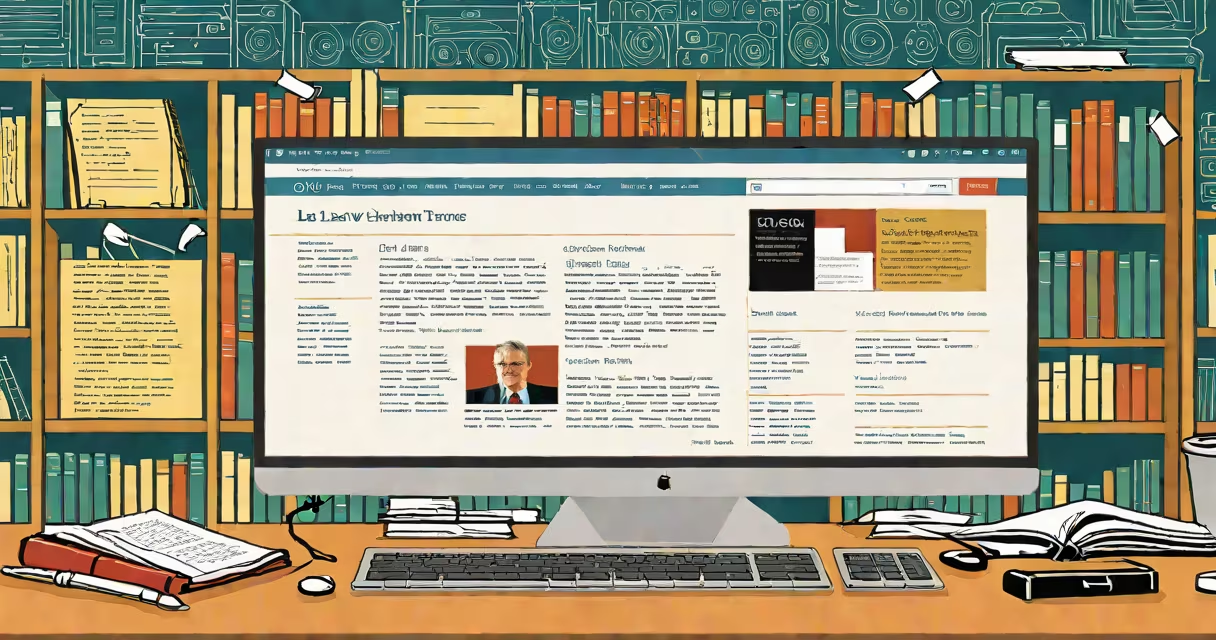
OUP Law Trove is a subscription-based digital platform providing access to a curated selection of scholarly legal publications from Oxford University Press, including law textbooks, treatises, and reference works used in academic and professional legal settings.
Launched in 2015, OUP Law Trove aggregates content from Oxford's legal publishing division, which has produced authoritative legal texts since the 19th century. The platform hosts over 1,200 titles, including major series such as *The Oxford Commentaries on International Law* and *The Oxford Treatise on Contract Law*. These materials are selected for academic rigor, peer-reviewed status, and relevance to common law jurisdictions, particularly the UK, US, and Commonwealth nations.
Users access the database through institutional subscriptions-universities, law firms, and government agencies often pay annual fees for campus-wide or enterprise access. Individual users may purchase limited-time access via pay-per-view or personal accounts, though most content remains behind a login wall.
Once logged in, users search by keyword, author, title, or subject category. The system indexes full-text content, allowing users to jump directly to chapters, footnotes, and cross-references. Search results display metadata such as publication date, jurisdiction, and edition number.
For example, searching "contract formation UK" returns *The Law of Contract* by Ewan McKendrick (10th ed., 2022), with direct links to Chapter 3 on offer and acceptance. Clicking the chapter opens a browser-based reader with adjustable font size, highlighting tools, and citation export options (APA, Bluebook, OSCOLA).
Content is updated annually. New editions and supplements are added within weeks of print release. OUP maintains a version history log, so users can track changes between editions-critical for cases involving statutory interpretation or evolving precedent.
OUP Law Trove organizes its holdings into five core categories:
| Type | Examples | Use Case |
|---|---|---|
| Textbooks | *Law of Contract*, 11th ed.; *Criminal Law: Text, Cases, and Materials* | Undergraduate and LLB coursework |
| Treatises | *The Law of Torts* by Glanville Williams; *European Union Law* by Paul Craig | Postgraduate research and journal writing |
| Reference Works | *Oxford Companion to the Supreme Court of the United States*; *Dictionary of Legal Terms* | Quick lookup during exams or drafting |
| Case Commentaries | *Cases and Materials on EU Law*; *Commentary on the Human Rights Act 1998* | Legal analysis and moot court preparation |
| Statutory Supplements | Updates to *The Law of Employment*; *Guide to the Mental Health Act* | Keeping pace with legislative changes |
A non-obvious feature: each entry includes a "Related Titles" sidebar powered by semantic tagging. For instance, selecting *The Law of Evidence* by Michael J. A. Smith triggers recommendations like *Evidence in Criminal Proceedings* by Peter W. D. H. L. Brown-titles with overlapping subject matter and similar citation patterns.
Universities with law programs rely on OUP Law Trove as a central resource. At the University of London, students in the LLM program cite entries from *The Oxford Handbook of the Law of the Sea* in their dissertation work. A 2023 survey by the Association of Research Libraries found that 68% of UK law schools use OUP Law Trove as a primary digital text provider, compared to 42% using Westlaw or LexisNexis.
Practicing solicitors and barristers use it for quick verification. During a 2022 employment tribunal in Manchester, a junior barrister referenced *Employment Law: Text and Materials* (2nd ed.) to confirm the test for unfair dismissal under s.98(4) of the Employment Rights Act 1996. The judge noted the accuracy of the cited passage in the judgment transcript.
My own experience: while researching for a paper on judicial review in public law, I used OUP Law Trove to compare the treatment of proportionality in UK and Canadian jurisprudence. I accessed *Public Law* by Mark Elliott and Robert Thomas (8th ed.), then cross-referenced it with *Administrative Law* by Peter Cane. The ability to copy-paste citations directly into my bibliography saved nearly two hours of manual formatting.
OUP Law Trove is frequently mistaken for a case law database. It does not host judgments, statutes, or legislation. Users must go to official sources-such as the UK Legislation website or BAILII-for primary legal texts. OUP Law Trove focuses exclusively on secondary sources: commentary, analysis, and explanatory material.
Another misconception: that all content is freely available. Only select titles are open access. Most require institutional login. For example, *The Oxford Handbook of the Law of the European Union* is available only to subscribers. Attempting to access it without credentials redirects to a paywall page with a 30-day trial option.
Some assume it's identical to Oxford Scholarship Online (OSO). While both are Oxford platforms, OSO covers all academic disciplines-including law-but lacks the depth of legal-specific indexing. OUP Law Trove offers advanced filters by jurisdiction, case law references, and doctrinal themes, features absent in OSO.