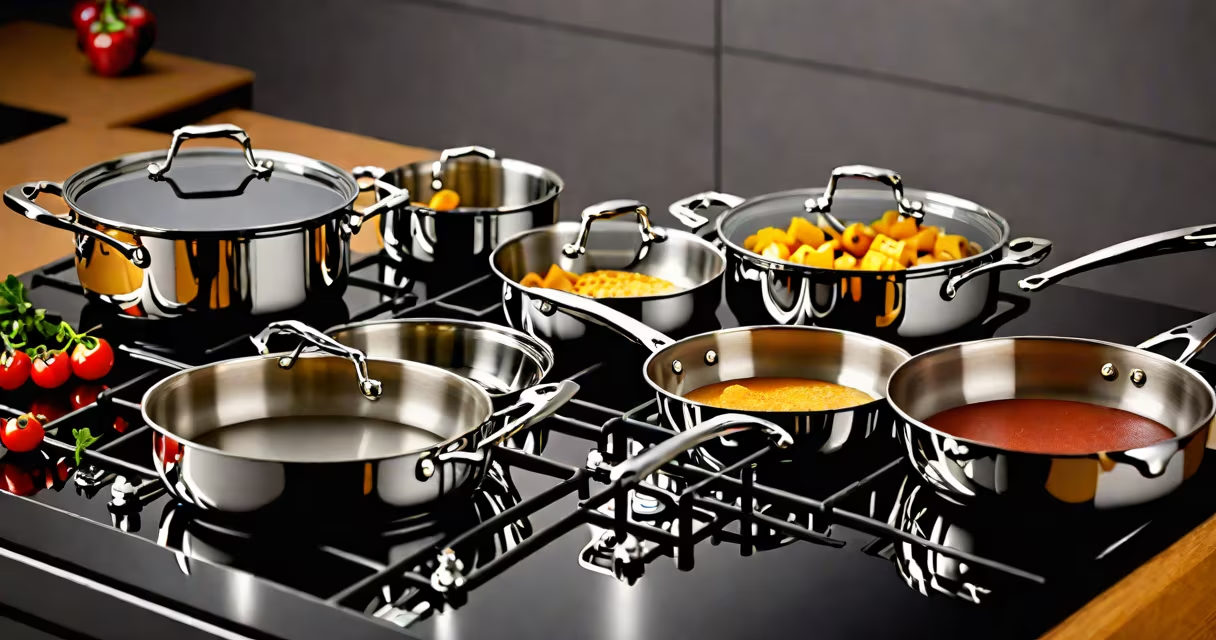
Pans to use on induction stove must have ferromagnetic bases-typically made from stainless steel, cast iron, or enameled steel-to interact with the electromagnetic field generated by the cooktop. Non-magnetic materials like aluminum, glass, or pure copper won't work unless paired with a magnetic layer.
Induction cooking relies on direct energy transfer through magnetic fields. The cooktop generates a high-frequency alternating current in a coil beneath the surface, creating a magnetic field. This field induces electrical currents (eddy currents) in the base of a pan-if the base is ferromagnetic. Those currents produce heat directly in the pan, not in the cooktop.
Only materials that respond to magnetism can be used. Aluminum and copper conduct electricity well but don't attract magnets. Without a magnetic layer, they won't activate the induction process. A pan labeled "induction-compatible" must have a base that passes the magnet test: place a fridge magnet on the bottom-it should stick firmly.
Stainless steel is the most common material for pans designed for induction. Not all stainless steel works-only those with a ferritic or martensitic composition. Austenitic stainless steel (like 304 or 316) is non-magnetic and won't work unless it includes a bonded magnetic layer.
Cast iron is inherently magnetic and performs exceptionally well on induction. Its thick base retains heat evenly and maintains temperature well during long cooking sessions. However, it's heavier and requires seasoning to prevent rust. A 12-inch cast iron skillet heats slowly but holds heat longer than most alternatives.
Enameled steel combines the benefits of cast iron with a non-reactive coating. Brands like Le Creuset and Staub use a steel core with a ceramic enamel finish. These pans are induction-safe and resist staining and corrosion. Their weight makes them stable on the cooktop, reducing the risk of tipping.
| Material | Magnetic? | Heat Distribution | Best For |
|---|---|---|---|
| Stainless steel (ferritic/martensitic) | Yes | Good (improves with aluminum/copper core) | Sautéing, searing, simmering |
| Cast iron | Yes | Excellent (slow heat-up, consistent hold) | Baking, frying, braising |
| Enameled steel | Yes | Very good (coated prevents reactivity) | Simmering sauces, delicate dishes |
| Aluminum (unbonded) | No | Excellent (but won't work) | Not suitable for induction |
| Copper (unbonded) | No | Outstanding (but won't work) | Not suitable for induction |
A non-obvious fact: many multi-layered pans use a sandwich construction-aluminum or copper core between two layers of stainless steel. These are induction-compatible because the outer layer is magnetic. The inner core improves heat conductivity, while the outer layer ensures compatibility. Always verify the base is magnetic, not just the exterior.
Many assume that any "stainless steel" pan works on induction. That's false. A pan labeled "304 stainless steel" may be non-magnetic and unusable. Check the product specifications or perform the magnet test before purchasing.
Another misconception is that all cast iron is safe. While all cast iron is magnetic, thin or warped pans may not sit flat on the cooktop. Induction surfaces require a flat base to maintain contact. Warped or uneven bottoms cause poor heat transfer and can trigger safety cut-offs.
I once tested a vintage 10-inch cast iron skillet on a new induction model. It didn't heat evenly until I adjusted the position to center the base. The cooktop's auto-detection system flagged it as unstable due to slight warping. After leveling it with a shim, it performed reliably. This shows that fit matters as much as material.
Look for the "induction-ready" symbol-a coil icon or the words "induction compatible." This mark indicates the manufacturer has verified the base responds to magnetic fields. Reputable brands like All-Clad, Calphalon, and Tramontina include this label on their induction-safe lines.
Check the base thickness. A minimum of 3mm is recommended for even heating. Thin bases heat quickly but cool rapidly, leading to temperature swings. Thicker bases distribute heat more uniformly, especially during low-temperature cooking.
For everyday use, a 10-inch stainless steel skillet with a bonded magnetic base offers balance. It heats fast, resists warping, and cleans easily. For slow-cooked meals, a 12-inch cast iron skillet delivers superior heat retention. Both are effective, but performance depends on the dish.
To demonstrate, consider making risotto. You need steady, medium-low heat to gradually release starch from Arborio rice. Using a 10-inch stainless steel pan with a 5mm magnetic base, set to 6/10 on a standard induction cooktop, achieves consistent temperature control.
Start by sautéing onions in olive oil-medium heat. Once translucent, add rice and toast for 2 minutes. Then begin adding warm broth, one ladle at a time, stirring continuously. The induction surface adjusts power instantly, preventing scorching. After 20 minutes, the rice is creamy and al dente.
Now try the same recipe in a non-magnetic aluminum pan. The induction cooktop detects no magnetic response and either refuses to turn on or shuts off after a few seconds. The dish fails before it begins.
When selecting pans to use on induction stove, prioritize magnetic base materials, flat bottoms, and manufacturer verification. Avoid relying solely on brand reputation or visual cues. Always test with a magnet.