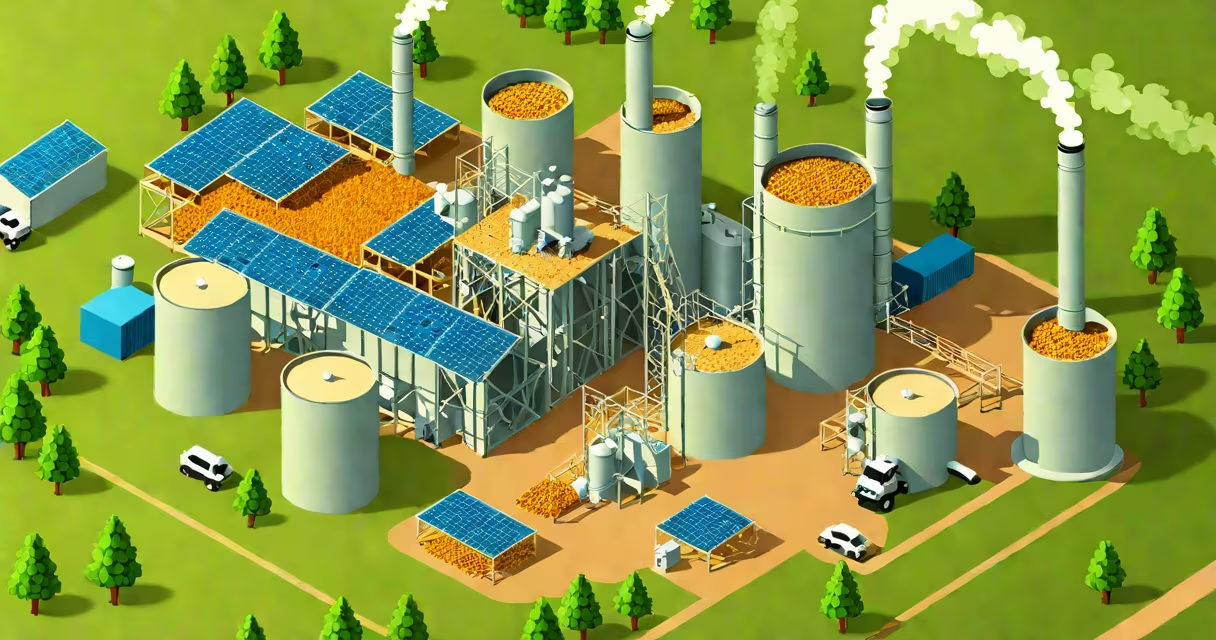
Power generation from biomass converts organic materials like wood chips, crop residues, and animal waste into electricity through combustion, gasification, or anaerobic digestion. This process captures energy stored in biological matter and transforms it into usable electrical power.
Biomass power plants burn organic feedstocks in boilers to produce steam, which drives turbines connected to generators. The most common feedstocks include forestry residues, agricultural byproducts such as corn stover, and dedicated energy crops like switchgrass. These materials are sourced locally in many cases, reducing reliance on imported fuels.
The International Energy Agency (IEA) reports that biomass accounted for 5.5% of global electricity generation in 2022, with major contributors including the United States, Brazil, and Germany. Unlike fossil fuel plants, biomass systems release carbon dioxide during combustion-but this is offset by the CO₂ absorbed during the growth of the feedstock, making the cycle nearly carbon-neutral over time.
Thermal conversion involves burning biomass in a controlled environment to generate high-pressure steam. The steam spins a turbine, which powers a generator. Modern plants use advanced combustion controls to minimize emissions and improve efficiency. For example, the Drax Power Station in North Yorkshire, UK, burns wood pellets derived from sustainably managed forests to produce 3.6 gigawatts of electricity annually-enough to power around 3 million homes.
Chemical pathways include gasification and pyrolysis. Gasification heats biomass in a low-oxygen environment to produce syngas-a mixture of hydrogen, carbon monoxide, and methane. Syngas can be burned directly in engines or cleaned and used in fuel cells. Pyrolysis heats biomass rapidly in the absence of oxygen to create bio-oil, which can be refined into transportation fuels or burned for power.
An alternative method is anaerobic digestion, where microorganisms break down wet organic matter like manure or food waste in sealed tanks. The process produces biogas rich in methane, which is burned to generate electricity. A facility in California's Central Valley uses dairy waste from 12,000 cows to produce 14 megawatts of power-enough to supply 14,000 households annually.
| Type | Process | Feedstock Examples | Efficiency Range |
|---|---|---|---|
| Direct Combustion | Burns dry biomass to make steam | Wood chips, sawdust, pellets | 25-35% |
| Gasification | Heats biomass in low-oxygen setting | Switchgrass, rice husks | 30-40% |
| Pyrolysis | Rapid heating without oxygen | Waste wood, nut shells | 20-30% |
| Anaerobic Digestion | Microbial breakdown of wet waste | Cow manure, food scraps | 35-50% |
Biomass power generation is deployed in regions with abundant organic waste streams or access to dedicated energy crops. Rural areas often adopt it to use agricultural residues that would otherwise be burned in open fields-contributing to air pollution. In Sweden, district heating networks run on biomass, reducing dependence on natural gas and lowering urban emissions.
Nations with strong forest industries, such as Finland and Canada, use logging residues and mill waste to fuel power plants. In India, small-scale biomass units provide electricity to remote villages where grid extension is cost-prohibitive. A pilot project in Tamil Nadu uses rice straw to power a 1-megawatt plant serving 10,000 rural households.
A key advantage is dispatchability: unlike solar or wind, biomass plants can operate continuously and adjust output based on demand. This makes them valuable for balancing intermittent renewables. The U.S. Department of Energy notes that integrating biomass with wind power generation improves grid stability, especially during periods of low wind.
One widespread misconception is that all biomass power is carbon-neutral. While the theoretical model assumes regrowth offsets emissions, real-world practices vary. Deforestation for energy crops or long-distance transport of feedstock can result in net carbon increases. The European Environment Agency warns that biomass from whole trees harvested in old-growth forests may emit more CO₂ per unit of energy than coal over a 20-year period.
Another error is equating biomass with "waste-to-energy." Not all biomass is waste. Dedicated energy crops require land and water, potentially competing with food production. The Food and Agriculture Organization (FAO) cautions against expanding bioenergy on arable land without strict sustainability criteria.
Biomass is often confused with biofuels like ethanol or biodiesel. While both derive from organic matter, biofuels are liquid transportation fuels, whereas power generation from biomass focuses on electricity. A single hectare of sugarcane can yield 7,000 liters of ethanol or 15,000 kilowatt-hours of electricity via combustion-different outputs, different purposes.
In Denmark, the Kalundborg industrial park operates a closed-loop system where multiple facilities exchange waste heat, steam, and byproducts. One plant burns biomass from local agriculture and forestry to generate steam. That steam powers a refinery and a pharmaceutical factory. Waste heat from the power plant warms nearby greenhouses and residential buildings. The system reduces energy consumption by 20% and cuts CO₂ emissions by 120,000 tons annually.
I visited the site in 2021 and witnessed a control room monitoring real-time energy flows. The biomass boiler ran at 92% efficiency, feeding steam to a turbine that produced 18 megawatts. The system demonstrated how localized biomass integration supports both economic and environmental goals.
When comparing biomass to other renewables, consider that wind power generation by country shows significant variation. Countries like Uruguay and Denmark generate over 40% of their electricity from wind, while others remain below 10%. Biomass complements wind by providing consistent baseload capacity, especially in regions with seasonal wind variability.
Power generation from biomass remains a viable option for decarbonizing energy systems, particularly in areas with abundant organic resources. Its success hinges on responsible sourcing, efficient conversion, and integration with other clean technologies. As climate targets tighten, properly managed biomass systems offer measurable reductions in greenhouse gas emissions.