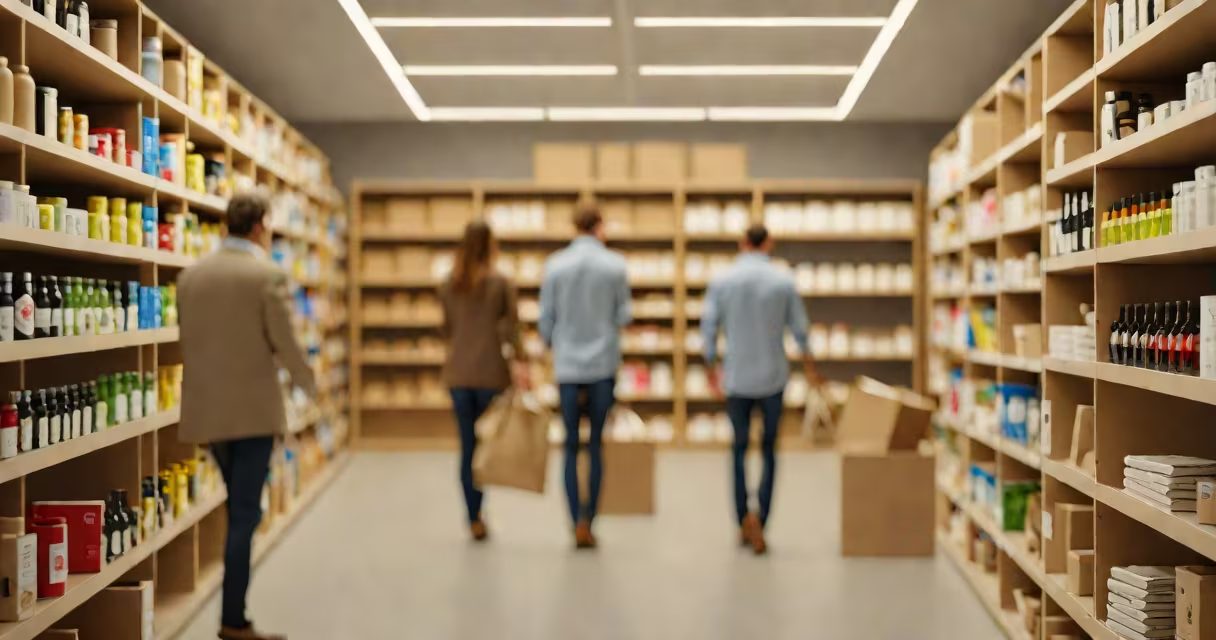
Retail meaning in business describes the direct sale of goods or services to end consumers through physical stores, online platforms, or hybrid models. It sits at the final stage of the supply chain, connecting producers with individuals who use or consume products.
Retailers buy inventory from manufacturers or distributors and sell it at a markup to make a profit. This includes everything from clothing and electronics to groceries and home goods. Unlike wholesale, which sells in bulk to other businesses, retail focuses on single-unit sales to individual buyers.
The retail sector accounts for nearly 11% of U.S. GDP, according to the U.S. Bureau of Economic Analysis (BEA), and employs over 46 million people nationwide. Major chains like Walmart, Target, and Amazon dominate the field, but independent boutiques and niche online sellers also play significant roles.
Retail operates through a series of coordinated steps: sourcing, inventory management, pricing, customer service, and sales. A retailer selects products based on market demand, secures them from suppliers, stores them in warehouses or storefronts, and presents them for purchase.
Pricing strategies vary widely. Some retailers use everyday low pricing (EDLP), maintaining consistent prices to build trust. Others use high-low pricing, offering frequent discounts to drive traffic. Amazon's changing pricing algorithm adjusts thousands of product prices daily based on demand, competitor pricing, and inventory levels.
Customer experience is central. Retailers invest in store layouts, signage, website design, and staff training to influence purchasing decisions. For example, Apple Stores use minimalist design and hands-on product access to create immersive experiences that boost conversion rates.
Retailers fall into several distinct categories based on format, product focus, and delivery method. Understanding these models reveals how different businesses meet consumer needs.
| Type | Definition | Example | Key Feature |
|---|---|---|---|
| Brick-and-Mortar | Physical stores where customers shop in person | Target, Best Buy | Immediate product access, tactile experience |
| E-Retail | Sales conducted entirely online via websites or apps | Amazon, Etsy | Global reach, 24/7 availability |
| Omni-Channel | Integration of online and physical channels | Walmart, Nordstrom | Buy online, pick up in-store (BOPIS) |
| Direct-to-Consumer (DTC) | Brands selling directly to customers without intermediaries | Warby Parker, Glossier | Higher margins, brand control |
Many modern retailers blend multiple models. For instance, Nike runs a DTC website while also operating physical stores and licensing products to department stores. This multi-channel approach maximizes customer touchpoints and revenue streams.
Retail is often confused with wholesale or distribution. Wholesale involves selling large quantities to other businesses at lower unit prices. Retail focuses on small quantities sold to individuals at higher per-unit prices. A grocery wholesaler might sell 100 cases of bottled water to a convenience store for $5 per case. That same store then sells individual bottles to customers for $1.50 each - the difference is the retail margin.
Another misconception is that retail is low-margin and unprofitable. While average gross margins in traditional retail hover around 30%, successful chains achieve profitability through volume and operational efficiency. Walmart's net profit margin was 2.5% in 2023, but its $649 billion in revenue generated $16.2 billion in net income, according to SEC filings.
A less obvious distinction: not all retail is consumer-facing. B2B retail exists - companies selling products directly to other businesses. For example, Staples sells office supplies to schools and small offices. This model retains retail characteristics (individualized sales, customer service, marketing) but targets organizational buyers rather than households.
Consider a small independent bookstore in Portland, Oregon, with 3,000 square feet of space and 12 employees. The owner sources books from publishers and distributors, paying $12 per copy for a bestseller priced at $20. The store marks up the book by $8 to cover rent, salaries, utilities, and advertising.
Inventory turnover averages 1.8 times per year. The store uses a point-of-sale system that tracks sales, alerts staff when stock runs low, and generates weekly reports. During holiday seasons, they run targeted email campaigns and host author events to increase foot traffic.
Despite rising competition from Amazon, the store maintains a loyal customer base through community engagement. In 2022, it reported $1.4 million in annual sales and $112,000 in net profit - a 8% margin. This demonstrates that retail meaning in business extends beyond scale; success depends on strategy, relationships, and adaptability.
Retail differs from acquisition meaning in business, where one company purchases another to expand capabilities or enter new markets. A retail chain buying a supplier is a vertical integration move, not a retail transaction. Similarly, affiliate business meaning refers to earning commissions by promoting others' products - a model many retailers use to supplement income, but not core to retail operations.
Brand meaning in business centers on identity, reputation, and emotional connection. A retailer may sell a branded product, but the brand itself is owned by the manufacturer. For example, Nike owns the Nike brand, while a sporting goods store retails Nike shoes under its own label. The distinction matters when analyzing customer loyalty and long-term value.
Understanding retail meaning in business requires seeing it not as a single activity, but as a complex network of processes, channels, and strategic choices. It shapes how people access goods, influences national employment, and drives innovation in logistics, payment systems, and customer experience.