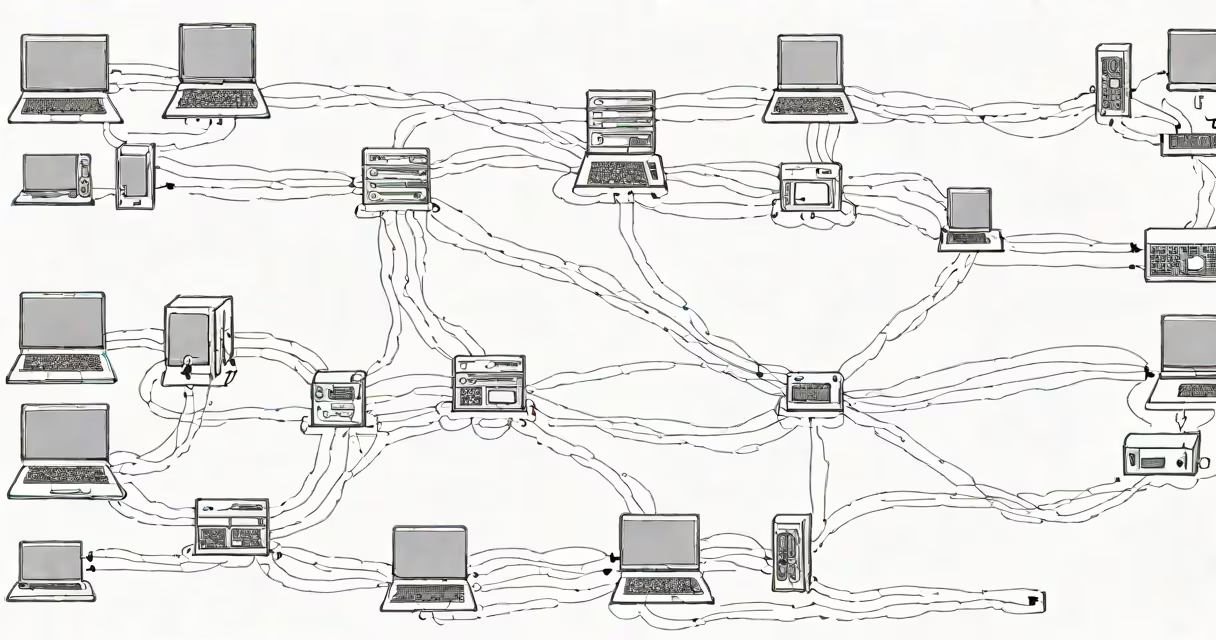
TCP, or Transmission Control Protocol, is a foundational network protocol that ensures reliable, ordered, and error-checked delivery of data between devices over IP networks. It operates at the transport layer of the TCP/IP model and is responsible for breaking data into packets, transmitting them, and reassembling them correctly at the destination.
TCP establishes a connection before data transfer begins, using a three-way handshake to confirm both ends are ready. This setup prevents lost or corrupted data by requiring acknowledgment of each packet sent. If a packet doesn't arrive within a set time, TCP resends it automatically. This reliability makes TCP essential for applications like web browsing, email, and file transfers.
Unlike UDP, which sends data without confirmation, TCP guarantees delivery. It manages flow control to prevent overwhelming the receiver and uses congestion control to avoid overloading the network. These mechanisms ensure stable performance even under heavy load.
When a device sends data via TCP, the application splits the data into smaller units called segments. Each segment includes a header with source and destination port numbers, sequence and acknowledgment numbers, flags, and checksums for error detection.
The sender transmits the first segment. The receiving device checks the checksum, verifies the sequence number, and sends back an acknowledgment (ACK) with the next expected sequence number. If the sender doesn't receive an ACK within a timeout period, it retransmits the segment. This loop continues until all data is confirmed.
Once all data is received and acknowledged, TCP closes the connection with a four-way handshake. This orderly shutdown prevents data loss during termination and ensures both sides agree the session is over.
TCP headers contain several critical fields:
These fields work together to maintain stateful communication. For example, when a browser requests a webpage, the server responds with a series of TCP segments. The client acknowledges each one, and the server only proceeds when it receives confirmation.
TCP powers most internet-based services requiring accuracy and reliability. Web traffic over HTTPS uses TCP on port 443. Email protocols like SMTP, POP3, and IMAP rely on TCP. File transfer tools such as SFTP and rsync operate over TCP connections.
Even streaming services like YouTube and Netflix use TCP for initial buffering and metadata exchange. While video playback may switch to UDP later for low-latency delivery, the setup phase depends on TCP's stability.
For example, when you load a webpage, your browser opens a TCP connection to the website's server. The server sends the HTML, CSS, and JavaScript files in segments. Your browser reassembles them in order and renders the page. If any segment is missing or damaged, TCP triggers a retransmission. Without this, websites would frequently fail to load properly.
TCP is often confused with IP, but they serve different roles. IP handles addressing and routing packets across networks. TCP manages the delivery and integrity of data. Together, they form TCP/IP-the core of internet communication.
Another misunderstanding is that TCP is slow. While it adds overhead due to handshakes and acknowledgments, this cost is necessary for reliability. In high-speed networks, TCP's adaptive algorithms minimize delays. Modern implementations like TCP Fast Open reduce handshake latency by allowing data to be sent during the initial handshake.
Some assume all internet traffic uses TCP. In reality, real-time applications like VoIP, online gaming, and live video conferencing often use UDP instead. UDP prioritizes speed over accuracy, accepting occasional packet loss to reduce lag. However, even these systems may fall back to TCP for signaling and setup.
| Feature | TCP | UDP |
|---|---|---|
| Connection Type | Connection-oriented | Connectionless |
| Data Reliability | Guaranteed delivery with retransmission | No guarantee; packets may be lost |
| Ordering | Ensures correct sequence | May arrive out of order |
| Overhead | Higher due to handshakes and ACKs | Lower, faster transmission |
| Use Cases | Web, email, file transfer | Live video, gaming, VoIP |
Understanding the difference helps explain why certain apps behave differently. A video call might drop frames occasionally (UDP), but a downloaded file will always be complete (TCP).
Suppose you're updating your operating system. The update package is 500 MB and split into 5,000 segments. Each segment is sent via TCP with a unique sequence number.
As the download progresses, your device sends an ACK for each segment received. If segment 1,247 is delayed, the system waits briefly. After the timeout, the server resends it. Once all segments are acknowledged, the OS installer verifies the checksum of the entire file. Only then does it proceed with installation.
If this were UDP, missing segments wouldn't be retransmitted. The file would be incomplete, potentially causing crashes or security issues. TCP prevents this risk.
I once monitored a network during a large software deployment. One server was misconfigured to send updates via UDP instead of TCP. Within minutes, users reported corrupted downloads and failed installations. Reverting to TCP restored reliability. The change was visible in logs: TCP showed consistent ACK rates and minimal retransmissions, while UDP had high packet loss and no recovery mechanism.
The Internet Engineering Task Force (IETF) defines TCP in RFC 793, published in 1981. This document outlines the protocol's structure, including the three-way handshake and segment format. A later revision, RFC 1323, introduced window scaling and timestamps to improve performance on high-bandwidth networks.
According to the IETF, "TCP provides a reliable, ordered, and error-checked delivery of a stream of data between applications running on hosts communicating via an IP network." This definition remains accurate decades later, underscoring TCP's enduring role in networking.