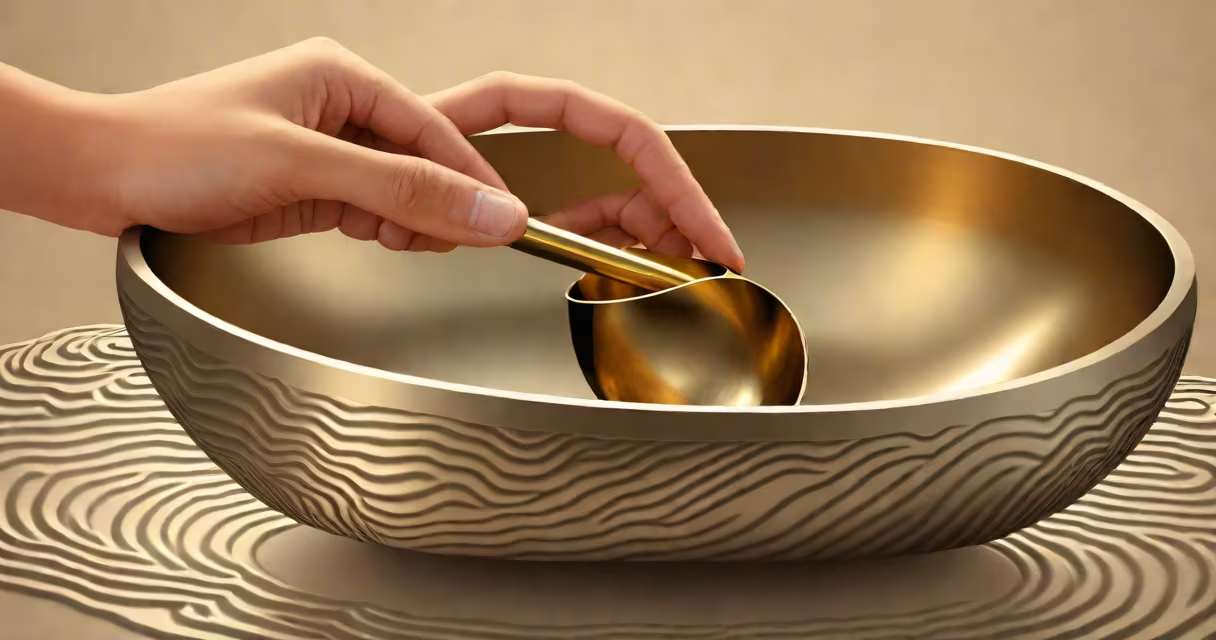
Tibetan metal singing bowls are hand-hammered, concave vessels made from a blend of metals-typically seven or more-including bronze, copper, tin, and sometimes silver or gold. When struck or rubbed with a mallet, they emit sustained, resonant tones used in meditation, sound healing, and spiritual practice.
These bowls originated in the Himalayan region, with roots in Tibetan Buddhist traditions. They were historically used in monastic rituals to mark time, signal transitions, and support mental focus during prayer and chanting. Today, they are widely adopted in wellness settings for their ability to induce deep relaxation and alter brainwave states.
The sound produced is not a single pitch but a complex mix of harmonics-overtones that vibrate at multiple frequencies simultaneously. This layered resonance is believed to interact with the body's natural rhythms, promoting balance in the nervous system and reducing stress-related tension.
When a mallet is drawn around the rim of a bowl, friction causes the metal to vibrate. These vibrations travel through the air as sound waves and are also transmitted through physical contact-such as when the bowl rests on a person's body during a session. The resulting frequency patterns can influence autonomic nervous system activity.
Research from the National Center for Complementary and Integrative Health (NCCIH) notes that sound-based interventions, including those using singing bowls, may reduce cortisol levels and improve mood in controlled trials. A 2016 study published in *The Journal of Evidence-Based Complementary & Alternative Medicine* found participants reported significant reductions in anxiety after a single 30-minute session involving Tibetan singing bowls.
Each bowl produces a unique set of overtones based on its size, thickness, alloy composition, and hammering technique. Larger bowls tend to generate lower fundamental frequencies-around 100 to 200 Hz-while smaller ones reach higher pitches. The sustained tone can last 10 to 30 seconds after a single strike, depending on the bowl's mass and damping properties.
Despite the name, not all Tibetan metal singing bowls are made in Tibet. Most are crafted in Nepal or India by skilled artisans using traditional methods passed down for generations. The materials vary, affecting both sound quality and perceived energetic properties.
| Type | Primary Metals | Sound Profile | Common Use |
|---|---|---|---|
| Traditional (High-Grade) | Bronze (copper + tin), often with silver, gold, or iron | Rich, deep overtones; long sustain | Meditation, chakra work, ritual |
| Standard (Mid-Range) | Copper and tin; minimal alloy variation | Clear fundamental with moderate harmonics | Beginner practice, group sessions |
| Modern (Mass-Produced) | Primarily brass or steel; machine-formed | Shorter sustain, less harmonic complexity | Decorative use, low-cost entry |
A non-obvious distinction: authentic hand-hammered bowls have irregular surfaces and slight imperfections. Machine-made versions are perfectly symmetrical and often lack the rich tonal depth associated with traditional craftsmanship. Some collectors and practitioners avoid mass-produced bowls entirely due to their limited vibrational range.
I once held a 12-inch traditional bowl during a workshop in Kathmandu. After striking it, the sound didn't fade-it seemed to grow louder in my chest. The vibration traveled up my arms and settled into my spine. That moment confirmed what research suggests: the physical sensation of resonance can be as impactful as the auditory experience.
Modern applications center on mental and emotional well-being. They are frequently used in yoga studios, therapy offices, and wellness retreats. Their primary function is to guide users into theta or delta brainwave states-associated with deep rest, dream sleep, and heightened intuition.
One common setup involves placing bowls on or near the body during a guided session. A practitioner might position a bowl over the solar plexus, another on the forehead, and play each one sequentially. The overlapping frequencies create a "sound bath" effect, where the listener feels enveloped by layered tones.
They are also used in energy healing practices such as Reiki and chakra balancing. Each of the seven major chakras is linked to a specific frequency. For example, the heart chakra (Anahata) is associated with the note C# or D, and a bowl tuned to that pitch may be used to stimulate or clear blockages.
Contrary to popular belief, Tibetan metal singing bowls are not exclusively spiritual tools. They are also used in clinical settings. A 2021 pilot study at the University of California, San Diego, explored their impact on chronic pain patients. Participants who received weekly 20-minute sessions reported reduced pain intensity scores on a 10-point scale, with average improvement from 7.2 to 4.1.
Many assume all singing bowls are the same. In reality, metal bowls differ sharply from crystal singing bowls-made from quartz-and serve different purposes. Crystal bowls are tuned to precise musical notes and are often used in music therapy. Metal bowls are valued for their unpredictability and organic resonance.
Another myth is that bowls must be "authentic" to be effective. While provenance matters for collectors, scientific evidence focuses on frequency and duration of exposure, not origin. A well-played modern bowl can produce measurable physiological effects, even if it lacks historical lineage.
There's also confusion between sound healing and medical treatment. Singing bowls are not a substitute for clinical care. They are adjunctive tools-used alongside therapy, medication, or lifestyle changes-not replacements.
Suppose you want to use a Tibetan metal singing bowl to reduce evening stress. Choose a medium-sized bowl (8-10 inches) with a warm, balanced tone. Find a quiet space, sit cross-legged, and place the bowl on your lap or on a cushion in front of you.
Lightly tap the side with your mallet. Listen to the initial ring. Then, slowly draw the mallet around the outer edge in a steady motion. Maintain even pressure. Let the sound fill the room. Focus on your breath-inhale for four counts, exhale for six. Continue for five minutes.
Afterward, notice any shifts: muscle tension release, mental stillness, or emotional clarity. This simple routine, backed by neurophysiological research, can lower heart rate variability and promote parasympathetic dominance-the body's rest-and-digest mode.
Tibetan metal singing bowls are more than ceremonial objects-they are functional tools for regulating internal states through intentional sound. Their enduring presence in both ancient and modern contexts speaks to their effectiveness beyond cultural narrative.