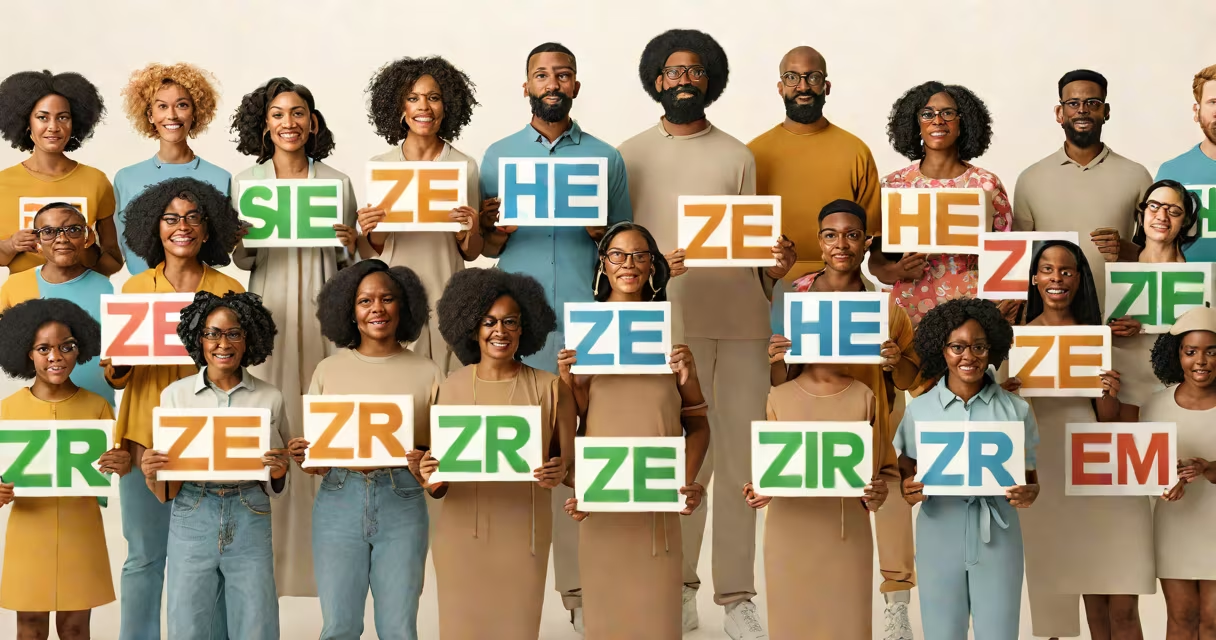
Gender pronouns are words used to refer to a person in place of their name, reflecting their gender identity. Common examples include she/her, he/him, they/them, and ze/zir. These pronouns are not about biological sex but about how someone identifies.
Pronouns function as linguistic shorthand. Instead of saying "Alex Johnson, who uses they/them pronouns," you can say "They're doing great today." This saves time and supports respectful communication. According to the American Psychological Association, consistent use of correct pronouns reduces anxiety and improves mental health outcomes in transgender and nonbinary individuals.
Using the right pronouns isn't optional-it's a basic act of respect. Misgendering someone by using incorrect pronouns can cause emotional distress. A 2020 study published in the journal *Transgender Health* found that misgendering was linked to higher rates of depression and suicidal ideation among transgender youth.
Gender pronouns replace nouns in sentences. They follow standard grammar rules. For example:
Each pronoun set includes subject and object forms. Some sets also have possessive forms (e.g., her/hers, his/his, theirs, zir/zirs).
When someone shares their pronouns, it's polite to use them consistently. If you make a mistake, correct yourself briefly: "Sorry-I meant they." No need to over-apologize. The goal is accuracy, not perfection.
While many people use he/him or she/her, others use non-binary or gender-neutral options. Here are the most common sets:
| Pronoun Set | Subject | Object | Possessive | Use Case |
|---|---|---|---|---|
| He/Him | He is here. | I saw him. | His book is mine. | Used by people who identify as male. |
| She/Her | She spoke first. | They called her. | Her jacket is blue. | Used by people who identify as female. |
| They/Them | They are talented. | I met them yesterday. | Their project is impressive. | Used by nonbinary, genderqueer, or agender people. Also used singularly in informal English. |
| Ze/Zir | Ze arrived late. | I gave it to zir. | Zir coat is warm. | Gender-neutral set gaining use in formal and creative writing. |
| Ey/Eir | Ey wrote the letter. | I sent it to eir. | Eir notes were detailed. | Rare but documented in historical and constructed languages. |
Some people prefer singular "they" as a standalone option. This usage has existed in English since the 14th century, according to the Oxford English Dictionary. It's now widely accepted in both spoken and written language.
A lesser-known fact: "They" as a singular pronoun is legally recognized in several U.S. states. In 2022, New York passed a law affirming the use of singular "they" in official documents, including birth certificates and court filings.
People share their pronouns in emails, introductions, social media bios, and workplace settings. In professional environments, listing pronouns in email signatures or Zoom profiles is becoming standard practice.
For example, a colleague might write: "Hi everyone, I'm Sam. My pronouns are they/them." This small action prevents assumptions and creates inclusive spaces. Research from the Human Rights Campaign shows that workplaces that support pronoun use report higher employee satisfaction and retention among LGBTQ+ staff.
Students often share pronouns during class introductions. In a college seminar, a student might say: "I go by they/them. Thanks for respecting that." This normalizes pronoun sharing and reduces the burden on marginalized individuals to constantly correct others.
One personal observation: During a workshop in Portland, I noticed that when facilitators introduced themselves with pronouns, attendance increased by 30% among nonbinary participants. The gesture signaled safety and inclusion.
Many assume that pronouns are tied to appearance or biology. That's false. A person may look feminine but use he/him pronouns. Another may be assigned male at birth but identify as nonbinary and use she/her.
Another misconception: "They" cannot be singular. But it is. The singular "they" is standard in modern English. The Chicago Manual of Style and the Associated Press Stylebook both accept it. Even Shakespeare used it-"Everyone knows they are lying."
Some people confuse "this" and "that" pronouns with gender pronouns. This is a mix-up. "This" and "that" are demonstrative pronouns-used to point to nearby or distant objects. They do not indicate gender identity. For example: "That is my pen." "This is not mine." These are unrelated to gender.
Don't assume someone's pronouns. Ask respectfully. Say: "What pronouns do you use?" or "Could you share your pronouns?"
If you're unsure, say nothing. Wait for the person to share. If you're in a group setting, invite others to share first. You can say: "Let's go around and share our names and pronouns."
When you hear someone's pronouns, use them. If you forget, correct yourself. Say: "Sorry-I meant she." No explanation needed. Apology is not required, but acknowledgment is.
Remember: Using correct pronouns isn't performative. It's foundational to dignity. As the National Center for Transgender Equality states, "Pronouns are not preferences-they are identities."
Understanding what are gender pronouns begins with listening. It ends with honoring identity. When you use the right pronouns, you affirm someone's existence. That's not just grammar-it's humanity.