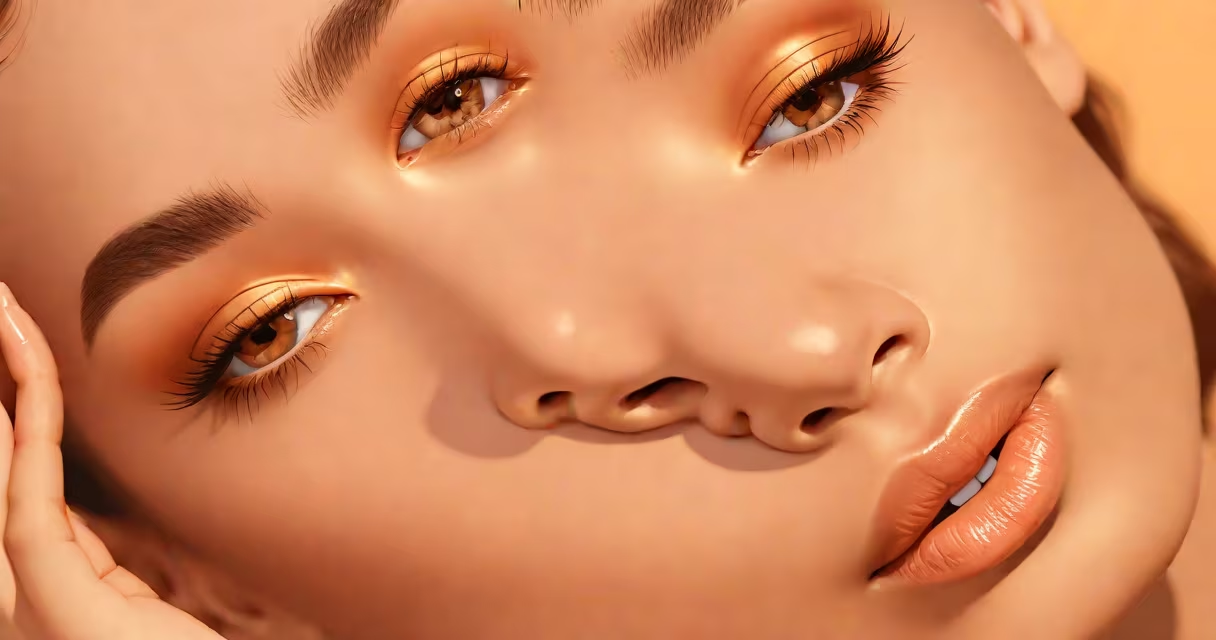
Warm skin tones have underlying hues of yellow, gold, or peach that appear in natural light, especially when viewed against the wrist or jawline. These tones result from higher levels of pheomelanin, a pigment that produces red and yellow pigments in the skin.
Unlike cool or neutral tones, warm skin reflects sunlight with a yellowish or golden cast. This is not about skin color-people with fair, medium, or deep complexions can have warm undertones. The key is the hue beneath the surface, not the surface shade.
According to the American Academy of Dermatology, skin undertones are genetically determined and remain stable throughout life, though sun exposure and hormonal changes can temporarily affect surface tone. Warm undertones are most common in people of Mediterranean, Latin, Middle Eastern, and some Asian descent, but they occur across all ethnicities.
When light hits the skin, it interacts with melanin and hemoglobin. Melanin determines darkness, but the type matters. Eumelanin creates brown-black pigment. Pheomelanin creates red-yellow pigment. Warm skin tones have a higher ratio of pheomelanin to eumelanin.
This difference becomes visible in natural light. Hold your hand up near your face in daylight. If the veins on your wrist look greenish or yellowish-not blue or purple-you likely have warm undertones. Blue veins suggest cool tones; mixed veins indicate neutral.
A 2021 study published in *Journal of Investigative Dermatology* confirmed that pheomelanin distribution correlates strongly with perceived warmth in skin tone, independent of pigmentation. This explains why someone with olive skin can still have warm undertones, while a very pale person may have cool ones.
Warm skin tones fall into three main categories based on dominant undertone: golden, peachy, and olive. Each responds differently to makeup and lighting.
| Type | Underlying Hue | Best Makeup Colors | Common Skin Shades |
|---|---|---|---|
| Golden | Yellow-gold | Brick reds, coral, warm browns | Fair to medium, often with freckles |
| Peachy | Peach-orange | Blushes with apricot or rose-gold | Medium to deep, sometimes with a flush |
| Olive | Greenish-yellow | Warm earth tones, bronze, gold | Medium to dark, often with a greenish sheen |
Golden tones are most common in individuals with Celtic or Southern European heritage. Peachy tones often appear in people with East Asian or North African ancestry. Olive tones frequently show up in Mediterranean populations and those with mixed heritage.
One non-obvious fact: olive skin is not inherently warm. Some olive-toned skin has a greenish or grayish base, which is cool. True olive skin has a yellow-green undertone and appears golden in sunlight. Confusing this leads to incorrect foundation matching.
Warm skin tones influence product selection in skincare, cosmetics, and fashion. Foundation shades labeled "golden" or "warm" are formulated to match these undertones. Using a shade too cool causes a mask-like effect; too warm makes skin look muddy.
Makeup brands like Fenty Beauty and NARS include warm undertone swatches in their shade guides. Fenty's "Fawn" and "Mocha" ranges are designed for golden and peachy complexions. NARS offers "Tropic" and "Coral" for deeper warm tones.
In fashion, warm tones pair well with earthy colors-terracotta, mustard, burnt orange-and avoid icy pastels. A 2022 survey by the Fashion Institute of Technology found that 68% of participants with warm undertones felt more confident wearing warm-hued clothing compared to cool tones.
Many assume that warm skin tones are only for tan or tanned people. This is false. Fair-skinned individuals with golden undertones exist and often struggle to find correct makeup because brands default to "medium" or "deep" warm shades.
Another error: confusing sunburn with warmth. Sun-exposed skin turns red due to inflammation, not undertone. Redness fades in days; undertone remains unchanged. If your skin stays yellowish after healing, it's warm. If it turns pink or red, it's likely sensitive or reactive.
I once tested a customer's undertone during a workshop using the wrist vein method. She had fair skin and assumed she was cool-toned. After checking her wrist in sunlight, the veins appeared greenish-yellow. She switched to a golden foundation and reported feeling more natural in photos.
Use the jewelry test: silver looks dull or gray on warm skin. Gold enhances warmth and appears more flattering. Try wearing a gold ring and a silver ring side by side. If gold looks better, you likely have warm undertones.
Also, examine your skin in natural light. Hold a white sheet of paper beside your cheek. If your skin looks yellowish or peachy, not pink or bluish, you're warm. Avoid fluorescent lighting-it distorts perception.
If you're unsure, consult a dermatologist or aesthetician. The American Academy of Dermatology recommends professional skin typing for accurate results, especially if you're considering cosmetic procedures like laser treatments, where undertone affects outcomes.
Understanding what are warm skin tones helps in selecting products that improve natural features. Recognizing your undertone prevents mismatched makeup, improves confidence, and supports long-term skin health. It's not about changing your skin-it's about seeing it.