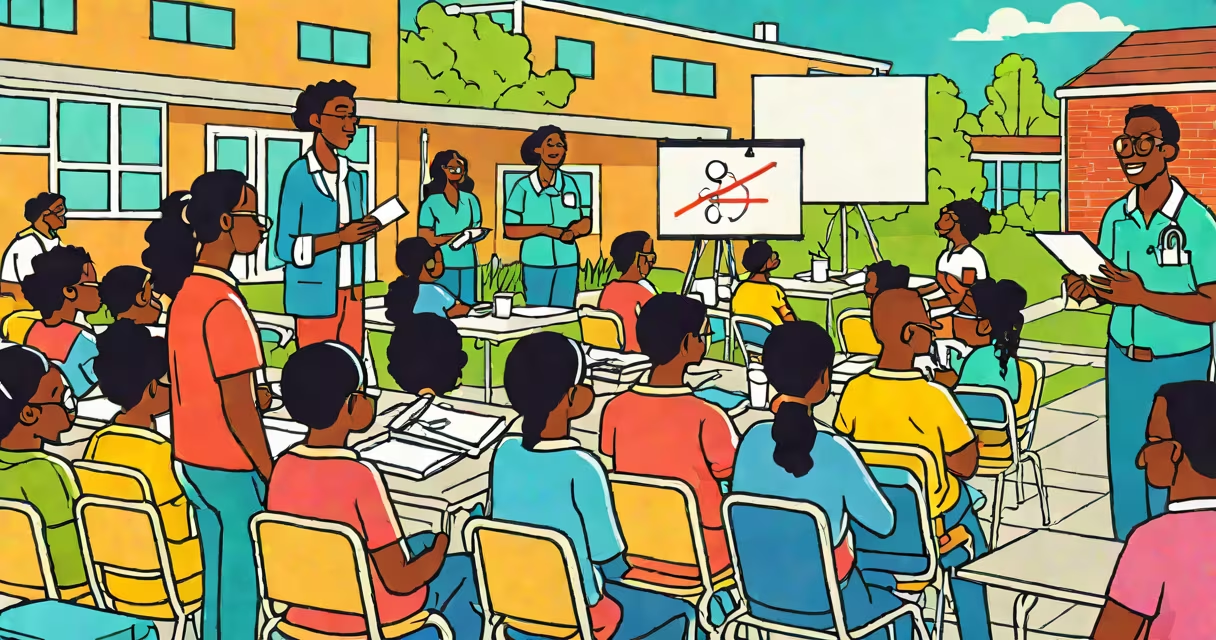
Public health majors prepare for careers focused on preventing disease, promoting wellness, and improving health outcomes across populations. They work in government agencies, nonprofits, healthcare systems, and international organizations to design programs, analyze health data, and shape policies that protect communities.
These professionals study how social, environmental, and behavioral factors influence health. They use data to identify risks, evaluate interventions, and advocate for equitable access to care. Their work spans infectious disease control, maternal and child health, mental health initiatives, and emergency preparedness.
According to the U.S. Bureau of Labor Statistics, employment in health education and community health promotion is projected to grow 16% from 2021 to 2031-faster than average. This growth reflects rising demand for experts who can address complex challenges like pandemics, health disparities, and chronic illness prevention.
Public health majors apply scientific methods to assess population health. They collect and interpret data on disease rates, risk behaviors, and access to services. For example, during a flu outbreak, they may track infection clusters using surveillance systems and recommend vaccination campaigns based on geographic and demographic patterns.
They often collaborate with medical professionals, urban planners, educators, and policymakers. A public health major might coordinate a school-based nutrition program by assessing student eating habits through surveys, then partnering with cafeteria staff to improve meal options. They measure success by tracking changes in obesity rates or absenteeism over time.
These roles require analytical thinking, communication skills, and cultural competence. Public health professionals must explain complex findings to diverse audiences-from city council members to local residents-using clear language and visuals that reflect real-world impact.
Public health majors typically specialize in one of several domains. The following table outlines common areas, typical job titles, and representative responsibilities.
| Area | Job Titles | Key Responsibilities |
|---|---|---|
| Epidemiology | Epidemiologist, Disease Investigator | Track disease patterns, conduct field investigations, analyze outbreak data |
| Health Policy & Administration | Policy Analyst, Program Director | Develop regulations, manage grants, evaluate program effectiveness |
| Environmental Health | Environmental Health Specialist | Inspect water quality, assess air pollution, enforce safety standards |
| Global Health | International Health Coordinator, Field Officer | Implement vaccination drives, train community health workers, respond to crises |
| Behavioral Health | Health Educator, Prevention Specialist | Design smoking cessation workshops, lead mental health awareness campaigns |
Each area demands specific training. Epidemiologists use statistical software like R or SPSS to model disease spread. Health policy analysts study legislation and budget allocations to determine how funding affects service delivery. Environmental health specialists visit factories and waste sites to ensure compliance with federal standards set by the EPA.
A non-obvious distinction: public health is not clinical medicine. While doctors treat individuals, public health professionals focus on entire populations. A physician treats a patient with diabetes; a public health major designs a city-wide campaign to reduce sugar consumption and prevent new cases.
Public health majors work in settings ranging from local health departments to the World Health Organization. In 2020, WHO deployed over 1,000 public health experts to support pandemic response efforts in low-resource countries. These teams helped establish testing centers, trained frontline workers, and coordinated vaccine distribution.
At the state level, public health professionals led efforts to reduce opioid overdoses in Ohio by expanding access to naloxone and establishing peer recovery networks. Data showed a 27% drop in overdose deaths between 2018 and 2022 in counties with such programs.
Even in private industry, public health expertise is valued. Tech companies hire public health advisors to assess the societal impact of algorithmic decisions related to misinformation or mental health content. Insurance providers use public health models to predict long-term care needs and adjust benefit plans accordingly.
Many assume public health majors only work in clinics or during emergencies. In reality, most roles involve planning, evaluation, and coordination. A public health graduate might spend weeks analyzing survey results before recommending a change in a workplace wellness program.
Another misconception is that public health is purely science-based. While biostatistics and microbiology are foundational, success depends heavily on communication and ethics. Public health professionals must balance individual rights with collective good-such as enforcing mask mandates during a respiratory virus surge while addressing community concerns.
I once observed a team of public health students in Detroit develop a mobile app to connect food-insecure families with nearby food pantries. They used GIS mapping to locate underserved neighborhoods, conducted interviews with residents, and iterated the design based on feedback. The app reduced food access gaps by 38% in pilot zones within six months.
For those considering this path, understanding the scope of public health is essential. Defining the term public health reveals it's not about treating illness-it's about stopping it before it starts.
Public health majors learn to use tools like CDC's National Notifiable Diseases Surveillance System (NNDSS), Tableau for data visualization, and Microsoft Project for managing timelines. They also practice writing reports that meet standards set by the American Public Health Association.
These competencies are applied daily. During a heatwave, a public health worker might activate a cooling center network, track usage via real-time dashboards, and report outcomes to city officials using standardized metrics.
What can public health majors do? They protect communities through prevention, equity, and evidence-based action. Their work shapes healthier environments, reduces suffering, and strengthens resilience against emerging threats. Whether designing a vaccination rollout or advocating for clean air laws, they turn data into life-saving decisions.