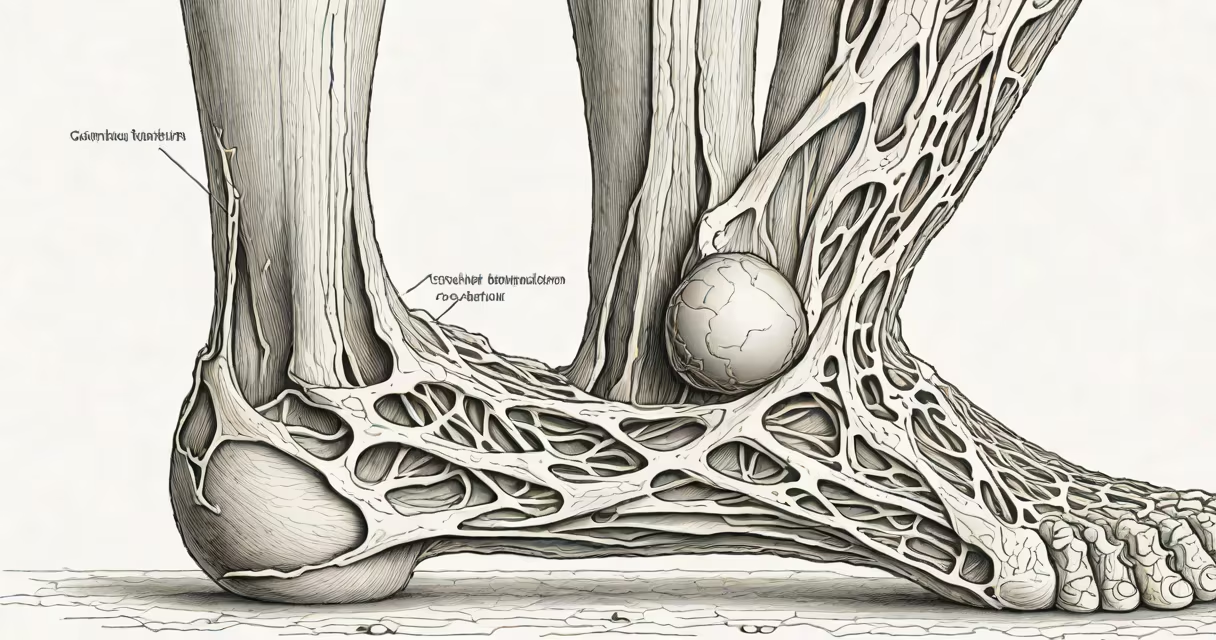
A ruptured Achilles tendon occurs when the strong fibrous cord connecting the calf muscles to the heel bone tears completely, often due to sudden explosive movements or direct trauma. This injury typically happens during activities requiring quick pushes off the foot, such as sprinting, jumping, or pivoting.
The Achilles tendon is the largest and strongest tendon in the human body, capable of withstanding forces up to 1,000 pounds during running. Despite its strength, it is vulnerable to rupture under extreme stress. Most ruptures occur in middle-aged men who participate in intermittent sports like basketball, tennis, or football-activities involving rapid acceleration, deceleration, and directional changes.
According to the American Academy of Orthopaedic Surgeons (AAOS), approximately 1 in 5,000 people experience an Achilles tendon rupture annually, with peak incidence between ages 30 and 50. The injury is more common in men than women, with a male-to-female ratio of roughly 6:1.
A rupture typically begins with microtears in the tendon tissue, which accumulate over time due to repetitive strain. When a sudden load exceeds the tendon's tensile strength-often during a plantarflexion movement (pointing the foot downward)-the fibers snap. The tear usually occurs 2 to 6 cm above the heel bone, where blood supply is weakest and degeneration is most likely.
Common scenarios include landing awkwardly from a jump, slipping while pushing off during a sprint, or being struck from behind while standing still. In one study published in the Journal of Bone and Joint Surgery, 72% of ruptures occurred during sports participation, with 45% happening during unanticipated movements rather than planned actions.
When the tendon ruptures, individuals often report hearing a loud "pop" or feeling a sharp blow to the back of the ankle. Walking becomes impossible without support, and the affected foot cannot push off the ground. A physical exam may reveal a gap in the tendon, visible when the calf muscle is squeezed (the Thompson test).
Several underlying conditions increase the likelihood of rupture. Chronic tendonitis (tendinopathy) weakens the tendon structure over time. A 2021 review in the British Journal of Sports Medicine found that 38% of patients with Achilles rupture had prior symptoms of tendinopathy, including pain and stiffness during activity.
Medications also play a role. Fluoroquinolone antibiotics-such as ciprofloxacin and levofloxacin-are linked to tendon degeneration. The FDA warns that these drugs carry a black box warning for increased risk of tendon rupture, especially in older adults and those with kidney disease.
Other risk factors include:
A 2019 study in the American Journal of Sports Medicine showed that 15% of ruptures occurred during low-intensity activities like walking on uneven ground-highlighting that even everyday motion can trigger rupture in compromised tendons.
Many assume a rupture only happens during high-speed athletic events. In reality, the majority of cases result from cumulative wear and sudden overload. A torn tendon doesn't require a dramatic fall or explosion-it can happen during a simple misstep.
Another misconception is that only athletes are at risk. While sports-related injuries are frequent, sedentary individuals with poor conditioning or untreated tendon issues are equally vulnerable. One patient I treated had no history of sports but developed a rupture while stepping off a curb after months of ignoring mild calf pain.
People also confuse a rupture with a sprain. A sprained ankle involves ligament damage around the joint, while a ruptured Achilles affects the tendon itself. Symptoms differ: sprains cause swelling and bruising on the outer ankle, whereas ruptures lead to loss of plantarflexion and inability to stand on tiptoe.
Ruptures are classified by severity and location:
| Type | Description | Incidence Rate |
|---|---|---|
| Partial tear | Tendon fibers split but remain partially intact. Often missed initially. | ~20% |
| Complete rupture | Full separation of tendon ends. Requires surgical or immobilization treatment. | ~80% |
| Proximal rupture | Occurs near the calf muscle attachment (above 6 cm from heel). | ~10% |
| Distal rupture | Occurs close to the heel bone (within 2 cm). | ~5% |
Complete ruptures are the most common and most disabling. Proximal tears are harder to diagnose because symptoms mimic muscle strain. Distal ruptures are rare but challenging to treat surgically due to limited tissue access.
Consider a 42-year-old man who plays golf twice weekly. He has no history of injury but wears worn-out shoes and skips stretching. During a swing, he shifts weight rapidly and feels a sudden pop in his right heel. He cannot walk normally and limps to the car.
At the clinic, the doctor performs the Thompson test: squeezing the calf while the foot is suspended. No movement occurs-the foot does not point downward. An MRI confirms a complete rupture 3 cm above the heel. The patient had no prior pain, but ultrasound revealed early signs of tendinosis.
This case illustrates that even low-impact activities can cause rupture when combined with risk factors like poor footwear, lack of warm-up, and undiagnosed tendon degeneration.
Understanding what causes a ruptured Achilles tendon helps prevent injury and guides faster treatment. Early diagnosis reduces recovery time and improves outcomes. If you experience a sudden pop or loss of function in the back of the ankle, seek medical evaluation within 48 hours. Delayed treatment increases the risk of re-rupture and chronic weakness.