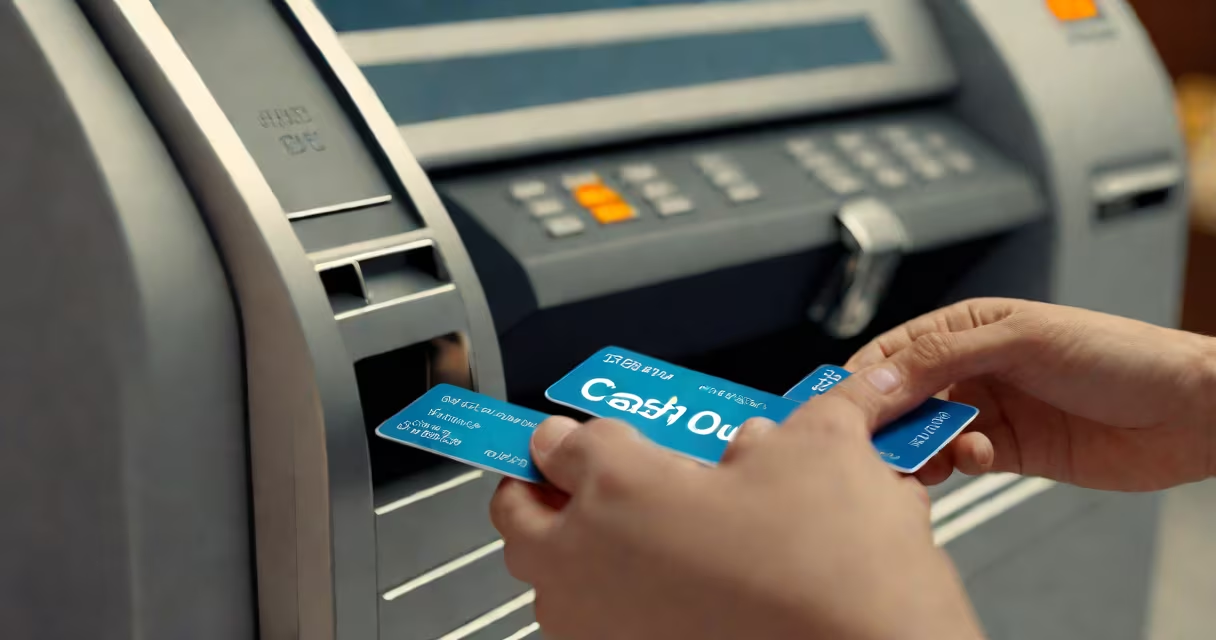
Cash out means withdrawing money from an account, investment, or platform and receiving it in physical form or as a direct deposit. This action turns assets into spendable funds, often after selling or redeeming them.
The term applies across finance, investing, and online platforms. On a brokerage account, cashing out means selling stocks and getting the proceeds in your bank. On a credit card, it means withdrawing cash using the card's credit limit. On a sports betting app, it means withdrawing winnings.
When you cash out, you're converting value into liquid cash. This differs from leaving funds invested or pending. The process may involve fees, taxes, or time delays depending on the context.
In investing, cashing out involves selling securities like stocks or mutual funds. You place a sell order through your broker. Once the trade executes, the proceeds settle in your account. You then initiate a withdrawal to your bank. This can take 1-3 business days.
On a credit card, cash out means using the card to withdraw cash from an ATM. The transaction appears as a cash advance. Interest begins immediately, often at a higher rate than purchases. Fees typically apply-1.5% to 3% of the amount withdrawn.
Online marketplaces like eBay or PayPal allow users to cash out earnings. After a sale, funds sit in a holding period (usually 21 days). Once cleared, you can transfer to a bank. Some platforms charge a fee per withdrawal-$0.25 to $2.50.
There are three common forms: direct withdrawal, cash advance, and platform payout.
| Type | How It Works | Typical Fees | Interest/Time |
|---|---|---|---|
| Direct Withdrawal | Selling assets, transferring funds to bank | $0-$25 (varies by broker) | 1-3 days; no interest |
| Cash Advance | Using credit card at ATM | 1.5%-3% of amount | APR 20%-25%; interest starts immediately |
| Platform Payout | Withdrawing from apps like Venmo, PayPal, or Robinhood | $0.25-$2.50 per transfer | Same-day or next-day; no interest |
A key distinction: cash out doesn't always mean immediate access. For example, Robinhood allows instant withdrawals up to $1,000 per day, but larger amounts require 1-2 business days. This delay protects against fraud and ensures settlement.
Some people confuse cash out with "withdrawal" in general. But not all withdrawals are cash outs. A transfer between accounts isn't a cash out unless it results in physical or bank-deposited money. A balance transfer to another credit card isn't cash out-it's debt shifting.
Many assume cash out is free. That's false. Brokers charge fees for selling and withdrawing. Credit card cash advances carry high interest-often 25% APR. The average fee for a $500 cash advance is $15.
Another mistake: thinking cash out avoids taxes. In reality, selling investments triggers capital gains tax. If you held a stock for less than a year, short-term capital gains apply-taxed at your income rate. For longer holdings, long-term rates apply (0%, 15%, or 20%).
For example: You bought 100 shares of Apple at $100 each. Five years later, they're worth $150. You cash out for $15,000. Your gain is $5,000. If you're in the 22% tax bracket, you owe $1,100 in federal taxes.
Even platforms like PayPal don't offer instant cash out for large sums. A $5,000 withdrawal may take 3-5 business days. Rush transfers cost extra-up to $10 for same-day delivery.
Let's walk through a real case. Jane owns 200 shares of Tesla, bought at $200 per share. She sells them at $250 each. Total proceeds: $50,000.
She logs into her brokerage account. Selects "Sell," enters 200 shares at market price. The trade settles in two days. Her account shows $50,000 in available funds.
She clicks "Withdraw." Chooses direct deposit to her checking account. The bank processes the transfer in two business days. She receives $50,000 minus a $10 withdrawal fee.
Her total net: $49,990. She didn't pay capital gains because she sold at a profit-but she'll report the $10,000 gain on her tax return. The IRS requires reporting capital gains from sales above $10,000.
This example shows that cash out isn't just moving money-it involves timing, fees, and tax obligations.
Cash out is useful when you need money for emergencies, large purchases, or debt repayment. It's also essential during retirement planning-many retirees cash out portions of their 401(k) or IRA to cover living expenses.
But timing matters. Selling during a market downturn locks in losses. Waiting until prices rise increases returns. According to Morningstar, investors who cash out during bear markets lose an average of 15% more than those who hold.
Also, cash out isn't always the best move. If you're in a low-tax bracket and expect higher future returns, holding may be better. For example, if you expect a stock to grow 10% annually, cashing out now means missing out on that growth.
Cash out means converting assets into spendable cash. It's not automatic-it involves steps, timing, and potential costs. Always review fees, taxes, and settlement times before acting.
Understanding what cash out means prevents costly mistakes. withdrawing from an app, the process varies. Know the rules of your provider.