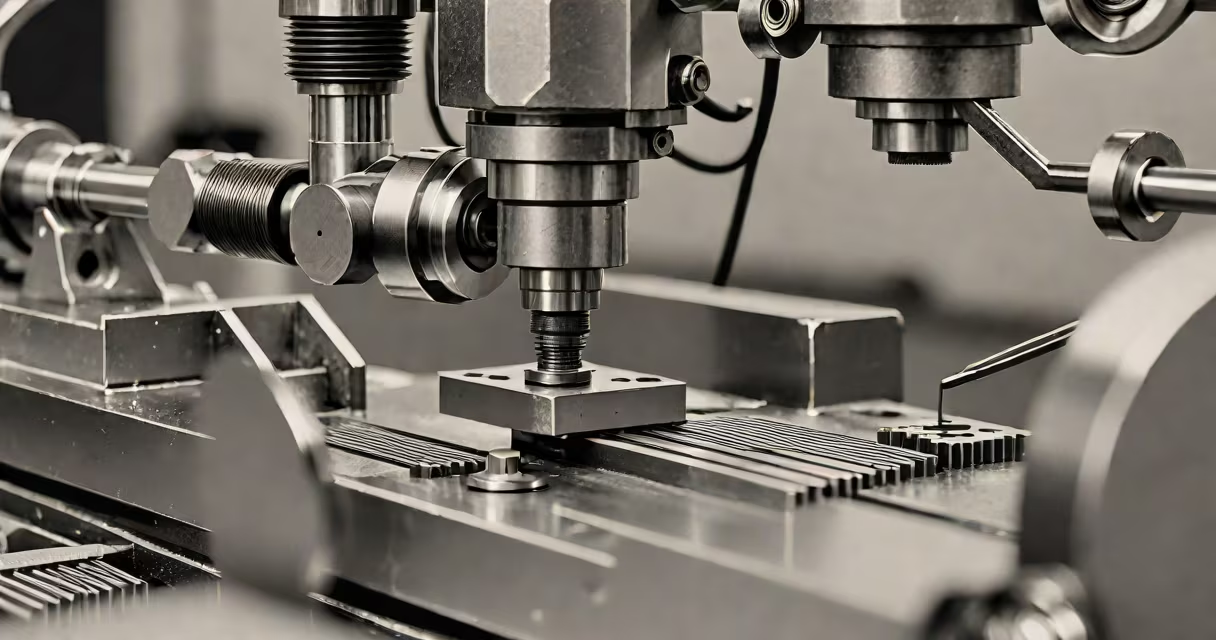
A CNC machinist is a skilled tradesperson who programs, sets up, and operates computer-controlled machine tools to cut, shape, and finish metal, plastic, or composite materials with high accuracy. These professionals interpret engineering drawings and convert them into digital toolpaths using CAD/CAM software, then oversee the execution of those programs on machines like lathes, mills, and grinders.
CNC stands for Computer Numerical Control. This system uses coded instructions-typically G-code-to direct machine movements along multiple axes. A machinist doesn't just press start; they verify tool lengths, set work offsets, monitor feeds and speeds, and inspect parts for dimensional compliance. Their work ensures components meet tolerances within ±0.001 inches, critical in aerospace, medical devices, and automotive systems.
The role demands both technical knowledge and hands-on dexterity. According to the U.S. Bureau of Labor Statistics, CNC machinists earn a median annual wage of $56,000, with higher pay in industries requiring tight tolerances. Entry-level positions often require a certificate or associate degree in machining technology, while advanced roles may demand certification from the National Institute for Metalworking Skills (NIMS).
CNC machinists begin by reviewing blueprints or 3D models created by engineers or designers. They select appropriate cutting tools based on material hardness, desired surface finish, and complexity of geometry. For example, machining a titanium aircraft bracket requires carbide end mills and coolant to prevent tool wear and thermal deformation.
Next, they load the G-code program into the machine's controller. Before running the full cycle, they perform a dry run or simulation to detect collisions or incorrect tool paths. Once verified, they secure the raw material-called a billet-into a vise or fixture, then calibrate the tool zero point using a probe or edge finder.
During production, the machinist monitors spindle speed, feed rate, and chip formation. If chips clog the cutter or vibration increases, they pause the job to adjust parameters or replace worn tools. After completion, they measure features with calipers, micrometers, or coordinate measuring machines (CMMs) to confirm adherence to specifications.
CNC machinists rely on a set of tools and software. Common machines include vertical milling centers (VMCs), horizontal boring mills, and CNC lathes. These operate on 3-axis (X, Y, Z) or 5-axis configurations, allowing complex contours to be machined in a single setup.
Software such as Mastercam, Fusion 360, and SolidWorks CAM generates toolpaths from CAD models. The machinist imports these files, applies cutting strategies (like pocketing or contouring), and simulates the process to avoid crashes. Some shops use post-processors to convert generic toolpaths into machine-specific code.
| Type of Machine | Common Use Cases | Typical Tolerance Range |
|---|---|---|
| CNC Lathe | Shafts, bearings, threaded parts | ±0.0005 in |
| Vertical Milling Center | Engine blocks, molds, brackets | ±0.001 in |
| 5-Axis Machining Center | Turbine blades, prosthetics, aerospace components | ±0.0002 in |
Modern CNC setups often integrate sensors and feedback loops. For instance, a laser interferometer can track axis position in real time, correcting drift during long operations. This level of automation reduces human error but still requires the machinist to validate results and troubleshoot anomalies.
CNC machinists are essential in industries where reliability and repeatability matter. In the medical field, they produce surgical instruments and implants with biocompatible materials like cobalt-chrome or titanium. A hip implant must fit precisely to avoid loosening over time-tolerances below 0.0005 inches ensure longevity and patient safety.
In automotive manufacturing, CNC machinists produce engine cylinder heads, transmission cases, and brake rotors. A single misaligned bore can cause engine failure. High-volume production lines depend on consistent output, which CNC machines deliver faster than manual methods.
Even in consumer goods, CNC machining shapes components for electronics. Apple's iPhone enclosures are milled from solid aluminum blocks, achieving smooth finishes and structural integrity. Each unit takes 15-20 minutes to machine, with automated inspection ensuring uniformity across millions of units.
Many assume CNC machinists merely push buttons. In reality, they make real-time decisions based on material behavior, tool wear, and environmental factors. A single mistake in setting the Z-axis zero can result in a $500 tool breakage or a scrapped billet.
Another misconception is that CNC eliminates the need for skill. On the contrary, programming complex geometries-such as undercuts or internal radii-requires deep understanding of tool dynamics and material properties. A machinist must anticipate how heat builds during cutting and adjust coolant flow accordingly.
There's also confusion between CNC machinists and CNC operators. While both work with machines, a machinist typically handles setup, programming, and quality control. An operator may run pre-approved jobs but lacks authority to modify toolpaths or fix errors. According to NIMS, only 35% of certified CNC machinists hold dual qualifications in both programming and operation.
Consider a custom valve body for a hydraulic system used in construction equipment. The design calls for six internal passages, three threaded holes, and a 1.2-inch diameter bore with a 0.0008-inch tolerance.
The CNC machinist starts by importing the 3D model into Fusion 360. They choose a 0.25-inch end mill for roughing and a 0.125-inch ball nose for finishing curved surfaces. The toolpath includes plunge cuts for deep pockets and helical interpolation for threading.
After generating the G-code, they simulate the toolpath in the software. The simulation reveals a potential collision between the tool holder and a support bracket. They revise the tool path by increasing clearance height and rerun the simulation. Once validated, they transfer the file to the machine's controller.
At the shop floor, they clamp the steel billet, touch off the tool using a probe, and run a test cut on scrap material. After confirming dimensions, they initiate the full cycle. During the run, they pause to check chip color-dark gray indicates proper cutting temperature; red suggests overheating and risk of tool failure.
Post-production, they measure the bore with a bore gauge and find it at 1.2003 inches. They adjust the tool offset by -0.0003 inches and re-run the final pass. The part passes inspection and moves to assembly.
This workflow demonstrates that a CNC machinist is not a passive observer but an active problem solver. Their decisions impact cost, lead time, and product performance.
I once watched a CNC machinist correct a recurring chatter mark on a brass housing. The initial program used a standard feed rate, but vibration caused surface defects. By reducing the feed rate by 20% and switching to a variable pitch cutter, the machinist eliminated the chatter in under 15 minutes. The part passed inspection on the first try-proof that expertise matters more than automation alone.
These codes form the foundation of machine communication. Without mastering them, even the most advanced software cannot produce accurate parts.
Being a CNC machinist means blending craftsmanship with digital precision. It's a career rooted in physical skill, mathematical reasoning, and continuous learning. As manufacturing shifts toward smart factories and Industry 4.0 integration, the demand for skilled machinists remains strong-especially those who understand both the machine and the material.