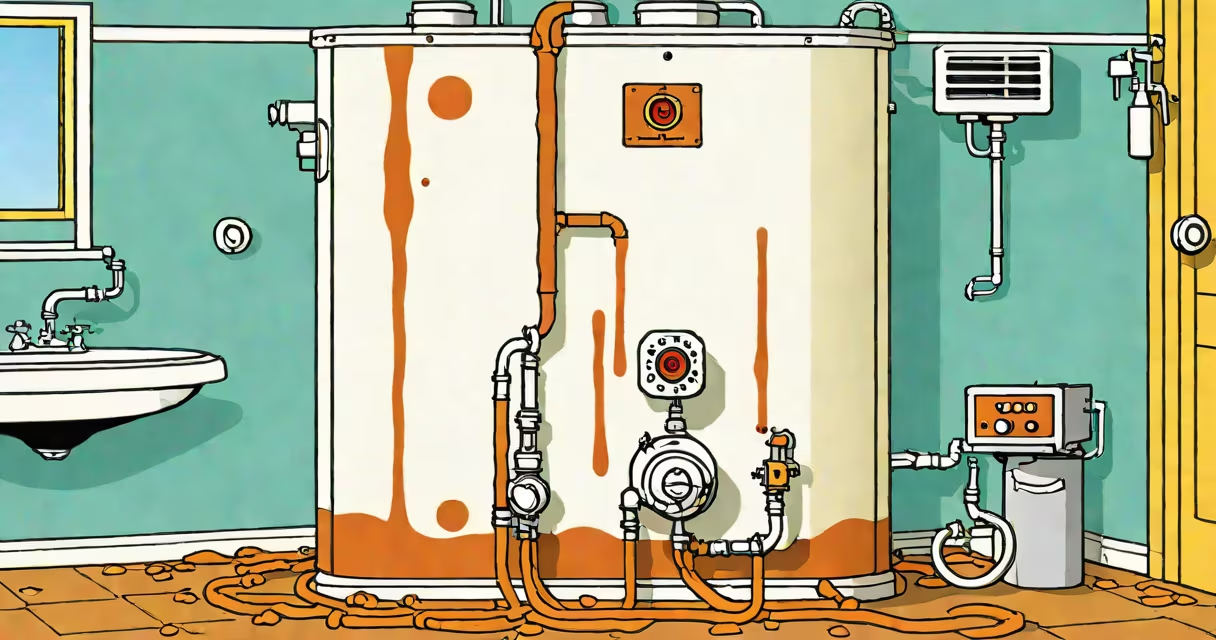
A leaking water heater indicates a loss of containment in the tank or connected components, often signaling internal corrosion, excessive pressure, or faulty fittings. This condition requires prompt attention to prevent property damage, mold growth, or complete system failure.
Water heaters store and heat water under pressure. When they leak, the source may be the tank itself, the drain valve, temperature and pressure relief (TPR) valve, or connecting pipes. A small drip might be manageable; a steady stream suggests urgent action is needed.
According to the American Society of Plumbing Engineers (ASPE), 60% of residential water heater failures stem from internal tank degradation due to prolonged exposure to dissolved oxygen and minerals. Most units last 8-12 years, and leaks often appear toward the end of their lifespan.
Water heaters operate under pressure, typically between 40 and 80 psi. The tank is lined with glass or enamel to resist corrosion. Over time, microscopic cracks form in the lining, allowing water to contact the steel shell. Once the metal corrodes through, a leak develops.
The TPR valve aims to release excess pressure. If the water temperature exceeds 210°F or pressure rises above safe limits, the valve opens. A slow drip from this valve may indicate overheating or high municipal water pressure. Continuous dripping means the valve is failing or improperly installed.
Leakage can also originate from loose connections, degraded rubber washers, or damaged PVC pipes. A single drip from a joint may be normal during thermal expansion cycles, but persistent wetness points to a developing issue.
Not all leaks are equal. Identifying the location helps determine severity and required action.
| Leak Location | Most Likely Cause | Urgency Level |
|---|---|---|
| Bottom of tank | Tank corrosion, sediment buildup, or failed anode rod | High - replacement likely needed |
| Drain valve | Worn washer, improper installation, or mineral clogging | Medium - replace valve or washer |
| TPR valve outlet | Overheating, high pressure, or worn valve | High - verify thermostat setting and pressure |
| Pipes or joints | Loose fittings, pipe stress, or freezing conditions | Low to medium - tighten or replace parts |
For example, a homeowner in Phoenix reported a steady drip from the TPR valve. After checking the thermostat, they found it set to 160°F-above the recommended 120°F. Lowering the setting stopped the leak. This aligns with ASPE guidelines recommending 120°F as the standard for safety and energy efficiency.
Another case involved a 10-year-old electric water heater with a rusted base. The tank had developed a hole, causing water to pool under the unit. Replacing the tank was necessary-repairing the tank was not feasible.
Leaking water heaters are often mistaken for condensation from nearby HVAC systems or plumbing vents. Condensation forms on cold surfaces when warm, humid air contacts cooler metal. It appears as droplets on pipes or walls, not pooled water at the base of the heater.
True leaks involve continuous flow or accumulation. Condensation evaporates quickly and doesn't leave standing water. If water pools at the heater's base, especially with a damp floor, it's a leak-not condensation.
Also, some assume a small drip is harmless. But even a 1/4-inch hole can release 10 gallons per hour. That's enough to flood a basement in under 30 minutes, according to the National Fire Protection Association (NFPA).
Turn off the power and water supply immediately. For gas models, shut off the gas valve. For electric, switch off the circuit breaker. Close the cold water inlet valve to stop water flow into the tank.
Place a bucket under the leak to catch remaining water. If the leak is from the TPR valve, check the temperature setting. If it's above 120°F, reduce it. If the leak persists, the valve may need replacing.
I once replaced a drain valve on a 15-year-old water heater. The washer was brittle and cracked. After installing a new brass valve and tightening the connection, the drip stopped. The process took less than 20 minutes and cost $15 in parts.
If the tank is leaking, turn off the water and power, then call a licensed plumber. Do not attempt to patch a corroded tank-it will fail again. The U.S. Department of Energy states that repairing a tank beyond minor fittings is unsafe and not recommended.
Leakage from the tank's base, sides, or seams requires professional assessment. These signs suggest structural failure. Attempting repairs yourself risks injury or further damage.
Even if the leak stops temporarily, continued operation increases the risk of a sudden rupture. The NFPA reports that 12% of home water heater incidents result in structural damage or fire due to unattended leaks.
If you're unsure whether the leak is from the tank or a component, inspect the area carefully. Look for wet spots around the drain valve, TPR valve, or piping. Check the floor beneath the unit for moisture.
Ignoring a leak leads to higher utility bills, water waste, and eventual system collapse. Addressing it early prevents larger repairs and protects your home's integrity.