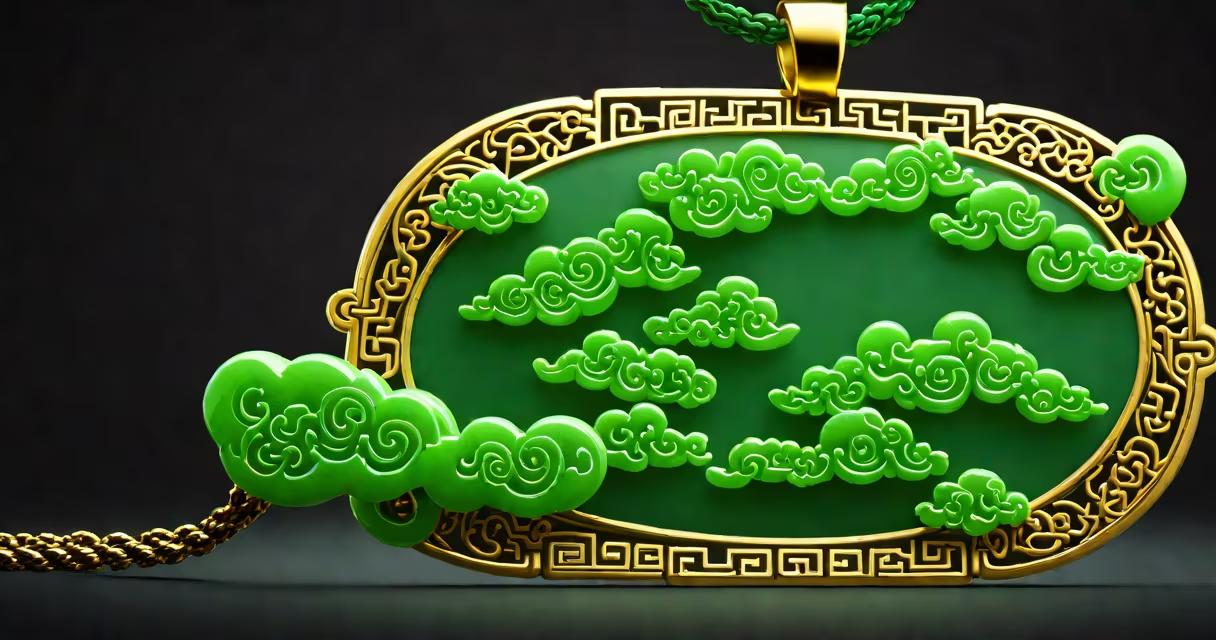
Jade symbolizes moral integrity, purity, and enduring virtue in Chinese culture, serving as a sacred material in ritual, art, and personal adornment for over 5,000 years. Its value stems from Confucian ideals that equate its qualities-durability, luster, and inner beauty-with noble character.
Jade's role in Chinese tradition begins in the Neolithic period, with artifacts from the Liangzhu culture (c. 3300-2300 BCE) showing complex carvings of animals and human figures. These were not decorative but held spiritual significance, often buried with elites as offerings to ancestors or deities. The earliest known jade ritual objects include bi disks and cong tubes-circular and square-shaped pieces representing heaven and earth, respectively.
Confucius elevated jade to philosophical status. In the Analects, he stated that "The wise man sees in jade the virtues of benevolence, wisdom, justice, and courage." This metaphorical association linked jade's physical properties-its toughness, smoothness, and translucent glow-to ethical behavior. A person of high moral standing was likened to jade: unyielding under pressure, yet gentle in appearance.
Modern Chinese society continues to associate jade with luck, health, and social status. It remains central in weddings, where couples may exchange jade bracelets or pendants as symbols of lasting commitment. Families pass down jade pieces through generations, treating them as heirlooms rather than mere jewelry.
In feng shui, jade is believed to absorb negative energy and promote balance. A small jade pendant worn around the neck is thought to protect the wearer from harm. Businesses sometimes place jade statues in offices to attract prosperity. The practice is widespread enough that in 2023, China's jade market was valued at $6.2 billion, according to the China Gemstone Association.
A common misconception is that all green jade is authentic. In reality, jade exists in multiple forms-nephrite and jadeite-and color varies widely. White, lavender, and even black jade are used in traditional crafts. Nephrite, the more common form in ancient China, is softer and more workable than jadeite, which became popular only after trade routes opened during the Han Dynasty.
| Type | Mineral Composition | Historical Use | Common Color |
|---|---|---|---|
| Nephrite | Calcium magnesium silicate | Neolithic to Qing Dynasty | White, green, gray |
| Jadeite | Sodium aluminum silicate | Qing Dynasty onward | Emerald green, lavender, white |
Western media often portrays jade as a generic "Chinese stone" with mystical powers. This oversimplifies its role. Jade is not a talisman in the magical sense-it is a cultural artifact tied to identity, ethics, and lineage. Its power lies in meaning, not in supernatural properties.
Another error is assuming jade is exclusively green. While green jadeite is iconic, ancient Chinese artisans favored white nephrite for its subtle sheen and ease of carving. The famous "Heirloom Jade Seal" of the Qin Dynasty was carved from white jade, not green. The seal bore the inscription "Emperor of All Under Heaven," and its use marked the legitimacy of rule.
I once handled a 1,200-year-old nephrite bracelet from a Tang Dynasty tomb during a museum conservation project. The surface showed wear patterns consistent with daily use-polished smooth by decades of contact with skin. The craftsmanship was precise, yet the design avoided symmetry, reflecting Daoist principles of natural flow over rigid order. That piece wasn't just jewelry-it was a living record of belief.
Jade is not synonymous with "precious stone" in Chinese tradition. While it holds high value, it is not ranked above gold or pearls in classical texts. The hierarchy of precious materials in ancient China placed gold first, then pearls, then jade. Yet jade's moral weight surpassed its economic value.
Some assume jade is only for the elite. In fact, common people wore simple jade beads or amulets. During the Ming Dynasty, the government issued jade pendants to civil servants as badges of office. These were not ornamental-they carried rank and responsibility.
Contrary to popular belief, jade does not bring wealth directly. Instead, it symbolizes stability and long-term success. A family might gift a jade carving to a child upon graduation-not because it increases income, but because it represents endurance and steady progress.
Jade represents enduring virtue, ancestral connection, and cultural continuity in Chinese society. Its meaning is grounded in philosophy, not superstition. From Confucian teachings to imperial seals, jade has served as a physical manifestation of ideal conduct. Understanding what jade represents requires looking beyond its beauty to its role in shaping values.