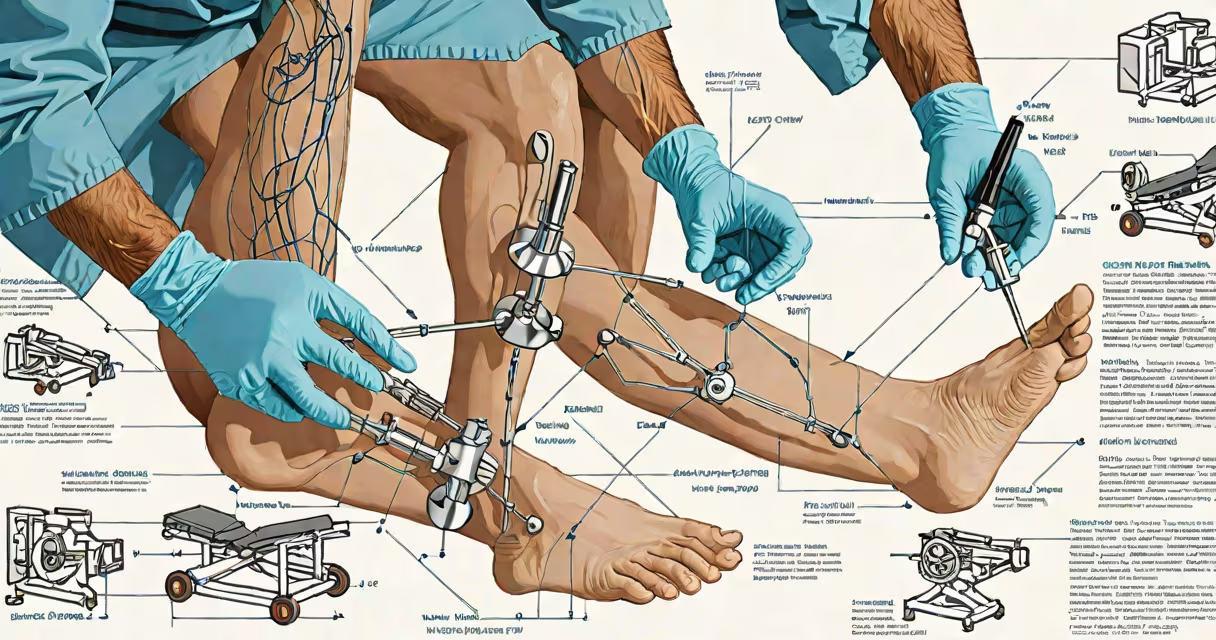
The term "orthopedic" derives from the Greek words *orthos* (meaning "straight") and *paidos* (meaning "child"), originally referring to the correction of childhood skeletal deformities. Today, it describes medical care focused on the diagnosis, treatment, and prevention of conditions affecting bones, joints, ligaments, tendons, and muscles.
Orthopedic medicine evolved from early practices in Europe during the 18th century. French physician Nicholas Andry coined the term in 1741 in his book *L'Orthopédie*, which detailed methods to correct spinal curvature in children using braces and posture training. The field expanded rapidly in the 19th and 20th centuries with advances in surgery, imaging, and biomechanics.
Modern orthopedic specialists treat injuries such as fractures, joint replacements, sports-related trauma, and degenerative diseases like osteoarthritis. They may perform surgeries, prescribe rehabilitation plans, or recommend conservative treatments. The specialty includes subspecialties like pediatric orthopedics, spine surgery, and hand surgery.
Orthopedic evaluation begins with a physical exam and diagnostic imaging. X-rays, MRI scans, and CT scans help identify structural issues. A patient with chronic knee pain might undergo an MRI to detect meniscus tears or cartilage loss. Based on findings, the orthopedist determines whether conservative therapy-such as physical therapy, medications, or injections-is sufficient or if surgery is needed.
Surgical interventions include arthroscopy (minimally invasive joint repair), total joint replacement (e.g., hip or knee), and fracture fixation using plates, screws, or rods. Recovery often involves structured rehabilitation programs designed to restore strength and mobility. For example, a patient recovering from ACL reconstruction typically follows a 6-month rehab plan involving progressive exercises and gait training.
Non-surgical management remains central to orthopedic practice. Conditions like tendonitis or low back pain may respond well to rest, anti-inflammatory drugs, and targeted exercises. The American Academy of Orthopaedic Surgeons (AAOS) reports that over 70% of musculoskeletal conditions are managed without surgery initially.
Orthopedic care covers multiple areas, each with distinct focus and training requirements. The following table outlines major subspecialties:
| Type | Focus Area | Common Procedures |
|---|---|---|
| Pediatric Orthopedics | Children's musculoskeletal development | Correcting clubfoot, scoliosis bracing, limb lengthening |
| Spine Surgery | Vertebral column disorders | Laminectomy, spinal fusion, disc replacement |
| Joint Reconstruction | Arthritis and joint damage | Total knee replacement, shoulder arthroplasty |
| Hand and Upper Extremity | Wrist, hand, and forearm injuries | Carpal tunnel release, tendon repair |
| Foot and Ankle | Structural foot problems | Bunion correction, Achilles tendon repair |
Each subspecialty requires additional fellowship training beyond general orthopedic residency. For example, a spine surgeon completes a one-year fellowship after their five-year orthopedic residency program.
Many people assume "orthopedic" applies only to surgery or injury treatment. This is incorrect. The field includes preventive care, chronic disease management, and non-invasive therapies. A patient with early-stage osteoporosis may receive medication and lifestyle counseling rather than surgery.
Another misconception is that orthopedic care is limited to adults. Pediatric orthopedics treats congenital conditions like developmental dysplasia of the hip (DDH), which affects approximately 1 in 1,000 newborns. Early detection and intervention prevent long-term disability.
A lesser-known fact: the term "orthopedic" was once used broadly in education and design. In the 19th century, "orthopedic chairs" were marketed to improve posture in schoolchildren. These devices had no medical basis and were later discredited. The modern medical use of the term is strictly clinical.
Consider a 52-year-old office worker who experiences persistent shoulder pain while lifting objects. After a physical exam and MRI, the orthopedist diagnoses a partial-thickness tear in the supraspinatus tendon. The patient's job requires frequent overhead motion, worsening symptoms.
Initial treatment includes a 6-week course of physical therapy focusing on rotator cuff strengthening and scapular stabilization. Corticosteroid injections are administered at weeks 2 and 4 to reduce inflammation. If pain persists beyond 12 weeks and function remains impaired, arthroscopic repair may be recommended.
Post-surgery, the patient wears a sling for four weeks and begins passive range-of-motion exercises. By week 12, active motion resumes. Full recovery takes 6-9 months. The entire process reflects the multidisciplinary nature of orthopedic care: diagnosis, conservative management, and surgical intervention when necessary.
Orthopedic is sometimes confused with "orthopaedic," a British spelling variant. Both spellings are correct, but "orthopedic" is standard in U.S. medical contexts. The term is not interchangeable with "neurological" or "rheumatological," which address nervous system and autoimmune conditions respectively.
For example, sciatica-caused by nerve compression-falls under neurology or spine surgery, not general orthopedics. However, if the underlying cause is a herniated disc compressing a spinal nerve root, an orthopedic surgeon may perform the decompression surgery.
When considering a career path, understanding the difference between orthopedic surgeons and physical therapists is critical. While both treat musculoskeletal issues, orthopedic surgeons perform operations; physical therapists focus on movement restoration through exercise and manual techniques. A patient with a torn ACL may see both-a surgeon for repair and a therapist for recovery.
I once observed a team meeting at a Level I trauma center where an orthopedic resident presented a case of a complex pelvic fracture. The discussion included imaging interpretation, surgical planning, and coordination with rehabilitation teams. That experience clarified how orthopedic care integrates across specialties to ensure optimal outcomes.
Understanding what "orthopedic" stands for reveals a field grounded in science, history, and patient-centered treatment. It is not merely about fixing broken bones-it is about restoring function, improving quality of life, and preventing future disability.