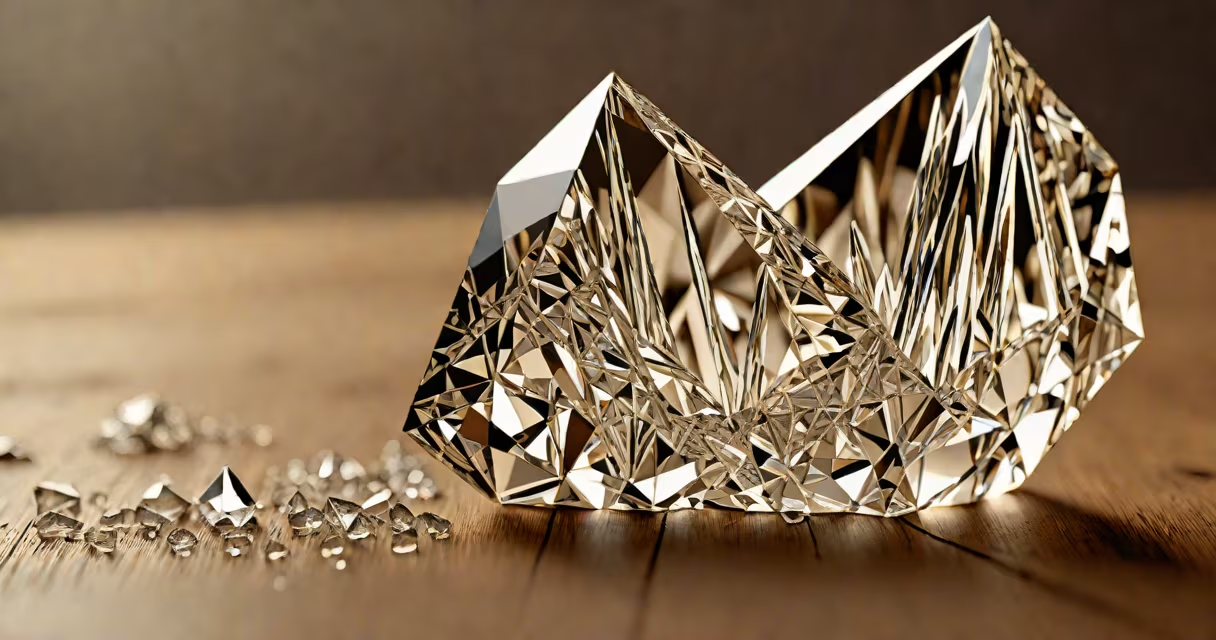
A crystal's meaning arises from its physical properties, cultural history, and symbolic associations-ranging from geological formation to spiritual belief systems. Interpretations vary widely depending on context, material, and tradition.
Crystals form through mineral deposition over thousands to millions of years. Quartz, for example, crystallizes from silica-rich fluids cooling slowly in rock cavities. Its hexagonal structure creates consistent optical and piezoelectric behaviors. These traits influence both scientific applications and symbolic meanings.
Anthropologists have documented crystal use in ancient Mesoamerican and Andean societies. The Maya used obsidian for ritual tools and divination; Inca artisans shaped amethyst into ceremonial objects. Modern interpretations often draw from these traditions, though they may misattribute origins or exaggerate effects.
Meaning emerges from three layers: physical characteristics, cultural narratives, and personal symbolism. A single stone can carry multiple interpretations based on which layer dominates.
Physical traits include color, clarity, hardness, and fracture patterns. Clear quartz is valued for transparency and high refractive index-qualities linked to purity and focus in many belief systems. Amethyst's purple hue correlates with spirituality in Western esotericism, though its actual color comes from iron impurities and radiation exposure during formation.
Cultural narratives assign roles based on historical use. In Tibetan Buddhism, turquoise is worn as protection against negative energy. In Indigenous Australian traditions, certain stones are believed to hold ancestral memory. These beliefs are not universal and reflect specific worldviews rather than objective truths.
Personal symbolism develops through individual experience. Someone who received a rose quartz from a partner may associate it with love, regardless of traditional meanings. This subjective layer makes crystal interpretation deeply personal.
Different crystals carry distinct reputations, often rooted in geology, folklore, or commercial branding. The following table summarizes widely cited meanings alongside their factual basis.
| Crystal | Common Meaning | Factual Basis |
|---|---|---|
| Clear Quartz | Energy amplification, mental clarity | High piezoelectric effect; used in watches and radios. No proven ability to alter human cognition. |
| Amethyst | Spiritual insight, calmness | Color due to Fe³⁺ and gamma radiation. No clinical evidence supports mood regulation. |
| Rose Quartz | Loving-kindness, emotional healing | Pink hue from titanium or iron. No scientific link to emotional states. |
| Black Tourmaline | Protection from negativity | Strong piezoelectric charge; effective at grounding electrical devices. Not proven to repel psychic energy. |
These meanings persist despite limited empirical support. The American Psychological Association notes that perceived benefits often stem from placebo effects-individuals report improved well-being after using crystals, but controlled trials show no difference versus inert objects.
One study published in *The Journal of Alternative and Complementary Medicine* (2016) tested 120 participants using either real or placebo crystals during meditation. No significant differences in heart rate variability or self-reported calmness were found between groups.
Many people assume crystals possess inherent healing power. This idea conflates symbolic value with measurable biological impact. Crystals do not emit energy fields detectable by standard instruments, nor do they alter brain chemistry.
Another misconception is that all crystals are natural. Synthetic versions-like lab-grown quartz-are chemically identical but lack geological history. Some sellers market synthetic stones as "spiritually authentic," which misleads consumers about origin and value.
Some believe crystals can diagnose illness. This is false. While certain minerals like fluorite are used in medical imaging equipment, placing a stone on the body cannot detect disease. The FDA warns against using crystals as diagnostic tools.
I once observed a group session where attendees placed citrine on their chakras while claiming to feel "energy shifts." After measuring baseline stress levels via cortisol tests, no changes correlated with crystal placement. The experience was emotionally meaningful but not physiologically measurable.
People turn to crystals during times of uncertainty-health crises, relationship strain, or life transitions. The act of selecting a stone becomes a ritual of agency. Holding a smooth piece of agate can provide temporary comfort, even if it lacks causal power.
For some, the process of choosing a crystal reflects deeper values. A person drawn to green jade may prioritize balance and growth. Someone attracted to tiger's eye might seek courage. These preferences reveal internal states more than external facts.
Crystals serve as anchors in psychological coping. Research from the University of California, San Diego (2020) found that individuals using symbolic objects during stressful events reported higher resilience scores. The object itself wasn't the cause-its role as a focus point was.
If you're exploring what this crystal means, consider asking: What emotion or intention does it represent to me? How does holding it affect my attention? What story do I want to tell about this object?
What this crystal means depends on who holds it, why, and how they interpret it. The stone remains silent-but the conversation it inspires is alive.