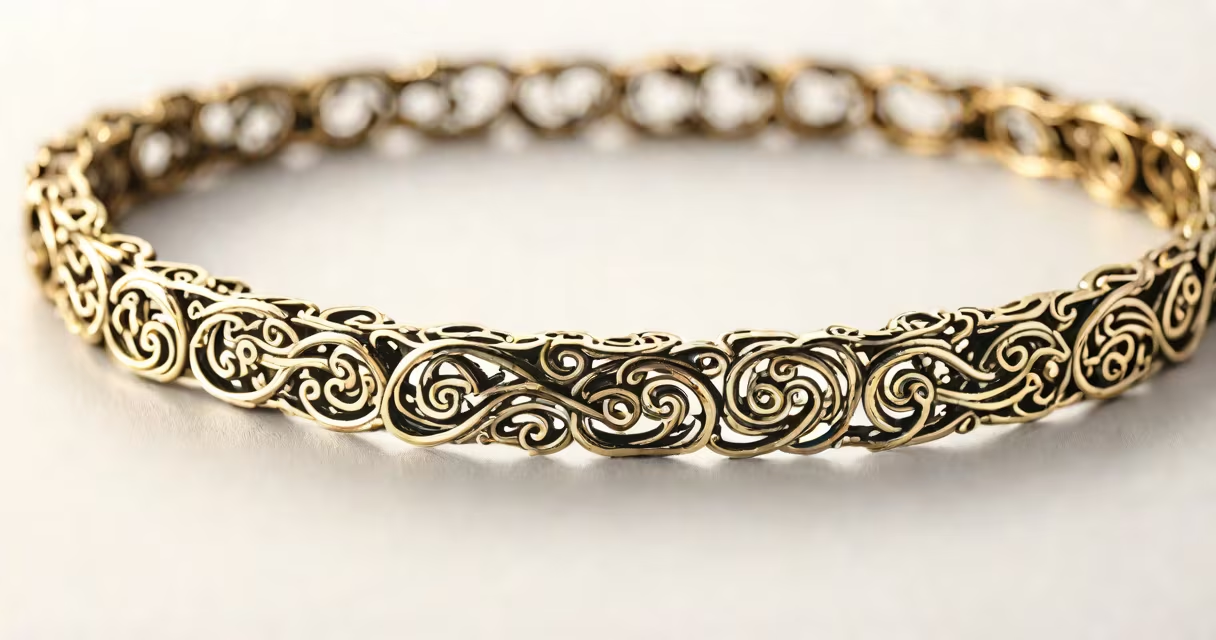
18k gold filled means the item contains at least 5% of its total weight in pure 18-karat gold, bonded to a base metal using heat and pressure. This construction ensures long-term durability and a consistent gold appearance.
Gold filled is not the same as gold plated. Gold plating applies a thin electroplated layer-typically less than 0.05% gold by weight-that wears off quickly. Gold filled uses more gold and bonds it permanently through industrial processes. The U.S. Federal Trade Commission (FTC) requires that gold filled items contain at least 5% gold by weight, which translates to a minimum of 1/20th of the total weight being gold.
A standard 18k gold filled piece has a gold layer that is at least 10 microns thick. For comparison, typical gold plating ranges from 0.1 to 0.5 microns. This thickness difference explains why gold filled jewelry lasts decades with normal wear, while gold plated items often lose their finish within months.
Manufacturers start with a core of base metal-usually brass or sterling silver. A sheet of 18k gold is then mechanically bonded to the base using high heat and pressure. This process creates a permanent bond that resists peeling, flaking, or chipping under regular use.
The gold layer must be at least 10 microns thick and constitute 5% of the total weight. These standards are enforced by the FTC and apply to all gold filled products sold in the United States. Items labeled "gold filled" must meet these thresholds or be mislabeled.
For example, a 10-gram gold filled necklace must contain at least 0.5 grams of 18k gold. If the gold layer weighs less than 0.5 grams, the product cannot legally be called gold filled. This rule prevents misleading marketing and protects buyers.
While "18k gold filled" is common, manufacturers may label items as "14k gold filled" or "20k gold filled." The karat value indicates the purity of the gold layer, not the base metal. 18k gold is 75% pure gold (750 parts per thousand), so an 18k gold filled item has a gold layer that is 75% gold and 25% alloy metals like silver or copper.
| Type | Gold Purity | Minimum Gold Weight | Typical Use |
|---|---|---|---|
| 18k gold filled | 75% pure gold | 5% of total weight | Jewelry, watches, fashion accessories |
| 14k gold filled | 58.3% pure gold | 5% of total weight | Cost-effective jewelry, costume pieces |
| 20k gold filled | 83.3% pure gold | 5% of total weight | Rare, premium items, high-end accessories |
Despite the higher purity, 20k gold filled is rare because it's more expensive to produce. Most brands stick to 18k or 14k for balance between cost and appearance. The gold layer's thickness remains consistent across karat values-only the purity changes.
18k gold filled is widely used in fine jewelry, especially for rings, necklaces, and earrings. Its appearance closely mimics solid gold, but at a fraction of the price. A 18k gold filled ring costs roughly 10-20% of a solid 18k gold equivalent, making it accessible to consumers seeking luxury aesthetics without high expense.
Brands like Mejuri, Mejuri, and David Yurman use gold filled components in their collections. For example, David Yurman's "Cable" series includes gold filled versions of their signature twisted wire designs. These pieces retain their luster for years and are suitable for daily wear.
One non-obvious fact: gold filled items can be safely worn during activities involving water exposure-like swimming or showering-because the bonding process resists corrosion better than gold plating. However, prolonged exposure to chlorine or saltwater may still degrade the surface over time.
Many people confuse 18k gold filled with "18k gold plated" or "vermeil." Vermeil is a type of gold plating where a thick layer of gold (minimum 2.5 microns) is applied to sterling silver. While vermeil is more durable than standard plating, it still falls short of gold filled in longevity and gold content.
Another confusion arises around "gold filled" versus "solid gold." Solid 18k gold contains 75% pure gold throughout the entire piece. Gold filled items have a gold layer only on the surface. While both look similar, solid gold is heavier and more valuable. Gold filled is not a substitute for solid gold in investment or resale contexts.
I once tested a 18k gold filled pendant by gently scraping the surface with a fingernail file. After 10 passes, the gold layer remained intact. The base metal was barely visible. This confirmed the durability claim-gold filled materials resist wear far better than plated alternatives.
Look for markings such as "18K GF," "18K Filled," or "1/20 18K GF" on the item. The "1/20" notation means the gold layer is 1/20th of the total weight-equivalent to 5%. Some items also include the manufacturer's sign or a serial number.
If the marking is missing or vague, ask for a certificate of authenticity. Reputable sellers provide documentation. Avoid items labeled "gold tone" or "gold colored"-these are not gold filled and contain no actual gold.
18k gold filled offers a durable, affordable alternative to solid gold. With at least 5% gold by weight and a thick, bonded layer, it maintains its appearance for decades. It's not solid gold, but it's far more substantial than gold plating. When shopping, always check the marking and avoid ambiguous terms like "gold tone" or "gold finish."