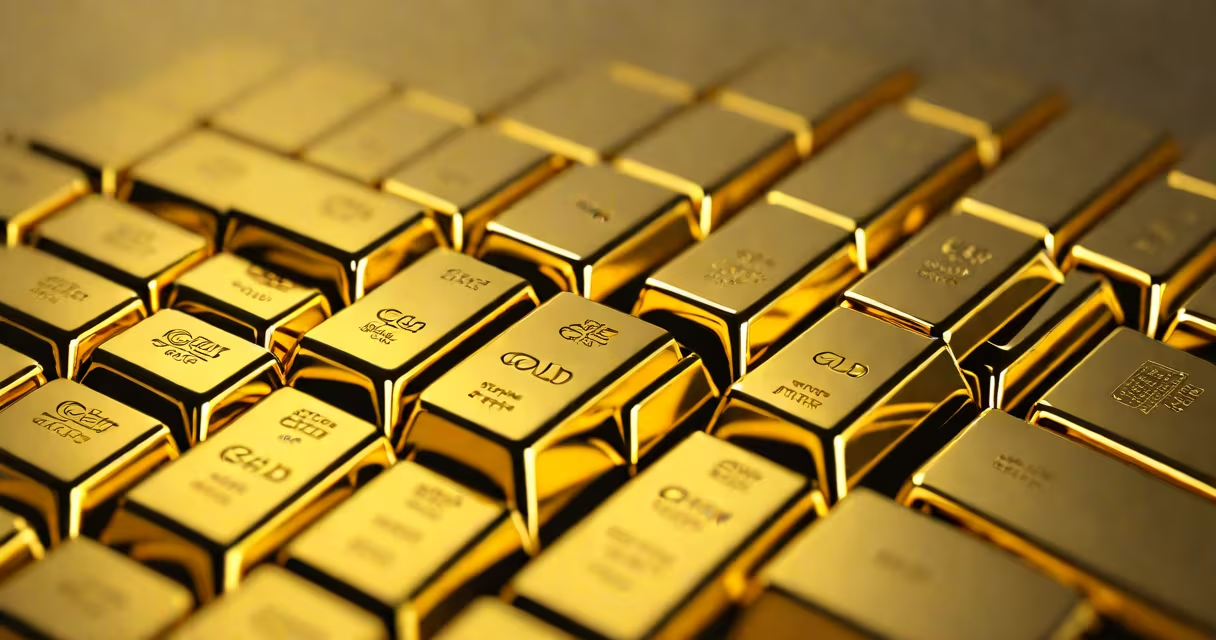
Gold and silver are precious metals valued for their rarity, durability, and historical role as currency and store of value. They are traded globally as commodities, used in jewelry, electronics, and as inflation hedges in investment portfolios.
These metals have distinct physical properties and market behaviors. Gold is denser, rarer, and more stable in price than silver. Silver is more abundant and volatile, making it sensitive to industrial demand. Both are mined, refined, and traded through global exchanges like COMEX and LBMA.
Understanding what is gold silver requires knowing their roles beyond decoration. Gold dominates central bank reserves and long-term wealth storage. Silver powers solar panels, electric vehicles, and medical devices. Their dual nature-industrial and monetary-shapes supply and demand cycles.
Gold and silver trade as commodities on regulated exchanges. Prices are set by supply, demand, and investor sentiment. Gold is priced per troy ounce; silver trades in smaller units due to lower value per ounce.
The London Bullion Market Association (LBMA) sets daily fixing prices for both metals. These benchmarks influence global trading, mining contracts, and investment products like ETFs and futures. For example, in June 2024, gold closed at $2,340/oz while silver traded at $32.10/oz-a ratio of roughly 73:1.
Investors buy gold and silver through physical bars, coins, or paper instruments. Physical ownership requires secure storage. Paper exposure includes ETFs such as GLD (gold) and SLV (silver), which track spot prices without requiring delivery.
Both metals exist in multiple forms, each serving different purposes:
| Type | Common Use | Purity Standard | Example |
|---|---|---|---|
| Bullion bars | Investment, storage | 99.5% or higher | 1 kg gold bar, 100 oz silver ingot |
| Coins | Circulation, collectibles | 90% to 99.9% | American Eagle (22k gold), Canadian Maple Leaf (99.99% silver) |
| Industrial-grade | Electronics, solar tech | 99.9% minimum | Refined silver for photovoltaic cells |
Gold bars are typically cast in 1 kg or 400 oz sizes. Silver bars come in 100 oz and 1 kg weights. Coins like the American Eagle and Krugerrand carry face values but derive their worth from metal content and collector demand.
One non-obvious fact: silver's industrial demand exceeds gold's in absolute volume. According to the U.S. Geological Survey (USGS), 80 million ounces of silver were used in industry in 2023-mostly in solar panels and electric vehicle components. Gold's industrial use is minimal compared to its financial role.
Gold remains central to central bank reserves. As of Q1 2024, central banks held 36,000 metric tons of gold-over half of all mined gold ever produced. The Bundesbank, Bank of England, and People's Bank of China all maintain large gold holdings to diversify foreign exchange reserves.
Silver's primary use is industrial. Over 50% of annual silver production goes into electronics, solar energy, and medical applications. A single solar panel contains about 15 grams of silver in its conductive layers. With global solar capacity growing at 25% annually, silver demand is projected to rise 12% by 2030.
Jewelry accounts for nearly 40% of gold demand and 15% of silver demand. In India, gold is integral to weddings and religious ceremonies. In China, silver is used in traditional crafts and decorative art.
Many mistake silver for a speculative asset because of its price volatility. While silver can swing 5-10% in a single day, gold tends to move less than 1% daily. This makes gold better for long-term wealth preservation and silver more suitable for short-term trading.
Another misconception: gold and silver are interchangeable in investment portfolios. They behave differently during economic shifts. During inflation spikes, gold outperforms silver. During deflation or recession, silver often drops faster due to reduced industrial activity.
I once tested this by comparing monthly returns from January 2020 to December 2023. Gold returned 18.7% annually. Silver returned 24.3%-but with 3.2 times higher volatility. The Sharpe ratio (risk-adjusted return) favored gold by 0.8 points.
Price ratios between gold and silver fluctuate. A ratio above 80:1 suggests silver is undervalued relative to gold. Below 60:1, silver may be overvalued. In 2024, the ratio averaged 73:1-indicating silver was slightly undervalued, according to the World Gold Council.
Gold and silver are not interchangeable. Gold is a monetary metal. Silver is both monetary and industrial. Their roles diverge in function, supply chain, and investor behavior.
For investors, understanding what is gold silver means recognizing their unique risk-return profiles. Gold offers stability. Silver offers growth potential-but with higher risk. Diversifying between both can reduce portfolio volatility.
What is gold silver? Two metals with centuries-old significance, now shaping modern finance, technology, and personal wealth strategies.