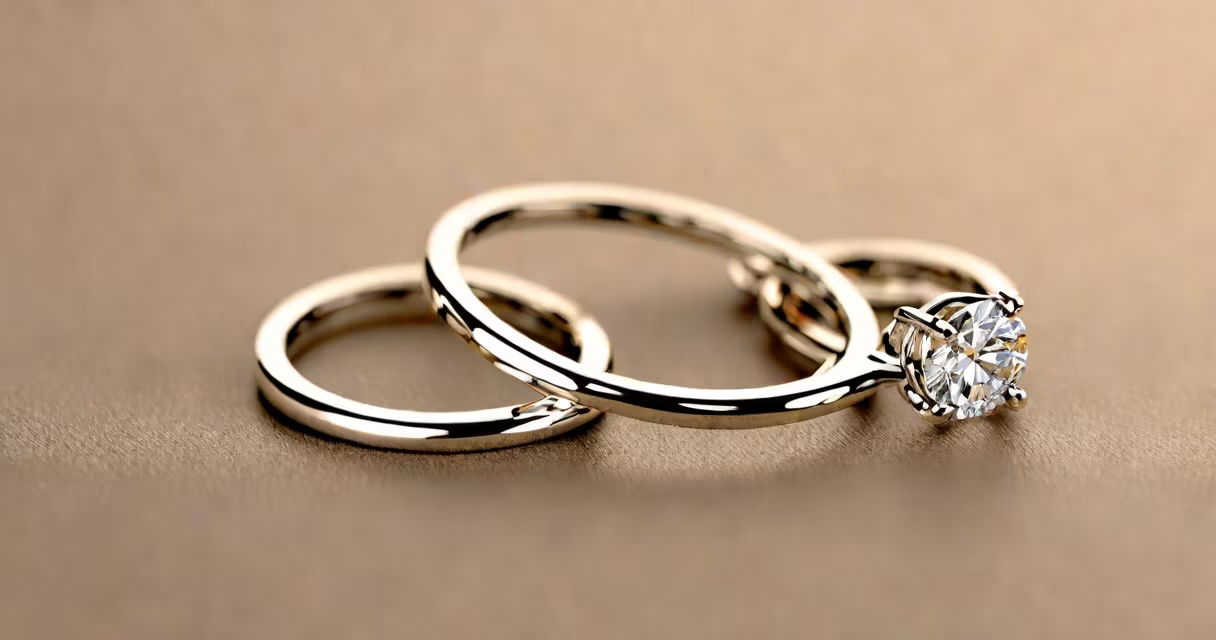
A promise ring is a piece of jewelry worn to symbolize a commitment between two people, typically indicating a vow to remain faithful, pursue a future together, or honor a personal promise. Unlike an engagement ring, it does not signify formal betrothal but conveys emotional intent and mutual dedication.
Promises expressed through the ring may include fidelity during a long-distance relationship, a pledge to work toward marriage, or a vow to stay together despite challenges. The gesture is often made by one partner to the other as a sign of sincerity and intentionality, especially in relationships still developing.
According to the Gemological Institute of America (GIA), the tradition of exchanging symbolic rings dates back to ancient Rome, where lovers exchanged iron bands to represent enduring bonds. Today's promise rings often feature diamonds, birthstones, or engraved messages, but their core purpose remains rooted in emotional significance rather than legal or social obligation.
The ring functions as a visible token of a verbal or unspoken agreement. Wearing it signals to others-and to oneself-that the wearer is emotionally invested in a relationship and committed to its growth. It's not a contract, but a public declaration of intent.
Unlike wedding or engagement rings, which are tied to formal milestones, a promise ring can be given at any stage. It may appear early in a relationship as a gesture of reassurance, or later as a step toward deeper commitment. The timing depends on context, cultural norms, and individual values.
For example, a couple dating for six months might exchange promise rings after discussing future goals. One partner wears the ring on the left hand, while the other may wear it on the right, depending on personal preference or cultural background. This flexibility allows the ring to adapt to diverse expressions of love and trust.
Promise rings come in several styles, each carrying distinct meanings based on design and materials:
| Type | Meaning | Example Use Case |
|---|---|---|
| Simple Band | Symbolizes unity and continuity; minimal design emphasizes the promise itself. | Given during a milestone anniversary to reaffirm ongoing commitment. |
| Engraved Ring | Personalized with names, dates, or a short phrase like "Always." | Used in long-distance relationships to maintain emotional connection. |
| Birthstone Ring | Features a stone representing one partner's birth month; adds personal touch. | Presented during a significant life event such as graduation or a career change. |
| Diamond Accent | Represents lasting value and resilience; small diamonds suggest enduring love. | Given as a precursor to an engagement ring, signaling progression. |
Some rings incorporate symbols like infinity loops, interlocking circles, or heart motifs. These designs reinforce themes of eternal connection and mutual support. A 2021 survey by the National Association of Jewelry Appraisers found that 68% of respondents associated promise rings with long-term intentions, even when not yet engaged.
Traditionally, promise rings are worn on the ring finger of the left hand, mirroring the placement of engagement and wedding rings. However, many individuals choose the right hand to distinguish the ring's meaning from formal commitments.
Wearing it on the right hand can signal that the relationship is still evolving. It avoids assumptions of marriage while still communicating seriousness. For example, a person in a long-distance relationship might wear the ring on the right hand to indicate they're waiting for a reunion, not a proposal.
Some cultures have specific customs. In parts of Eastern Europe, promise rings are exchanged during courtship rituals, often accompanied by a written vow. In Japan, couples sometimes gift matching rings during New Year celebrations as a symbol of renewed hope for the year ahead.
One widespread misunderstanding is that a promise ring automatically leads to engagement. That's not true. The ring is a gesture of intent, not a binding promise. It doesn't carry legal weight or social expectations beyond those the individuals agree upon.
Another error is assuming all promise rings are romantic. While most are, some people give them to friends or family members as tokens of loyalty or gratitude. A high school student might receive a promise ring from a mentor who vows to support their education. In such cases, the ring represents trust and guidance, not romance.
The ring's value isn't measured by price. A $20 band with a handwritten note holds equal symbolic weight to a $500 diamond ring. The GIA notes that "meaning is derived from context, not cost."
I once met a couple who had been together for two years. They were both in graduate school and facing uncertain job markets. After a difficult semester, the man gave his partner a simple gold band with the word "steady" engraved inside. He said, "I'm not asking you to marry me yet, but I'm not letting go either."
She wore it on her left ring finger. Over the next year, the ring became a quiet anchor during stressful times. When she received a job offer abroad, he supported her decision. She kept the ring as a reminder of their shared resolve. They eventually married-but not until three years later, after both had established careers.
This example shows how a promise ring functions not as a deadline, but as a compass. It marks a moment of clarity, not a final destination.
While both are worn on the hand and signify commitment, they differ in formality, expectation, and symbolism:
These differences matter. Confusing the two can lead to miscommunication. One study published in the Journal of Social Psychology (2022) found that 43% of participants misinterpreted a promise ring as an engagement ring when shown images without context.
The meaning behind a promise ring lies in its role as a personal covenant-a silent vow etched in metal. It's not a legal document, nor a substitute for conversation. Its power comes from the understanding between two people who choose to honor their bond with a tangible symbol.
If you're considering giving or receiving one, reflect on what the gesture means to you. Is it a promise of faithfulness? A commitment to grow together? Or simply a way to say, "I see us."