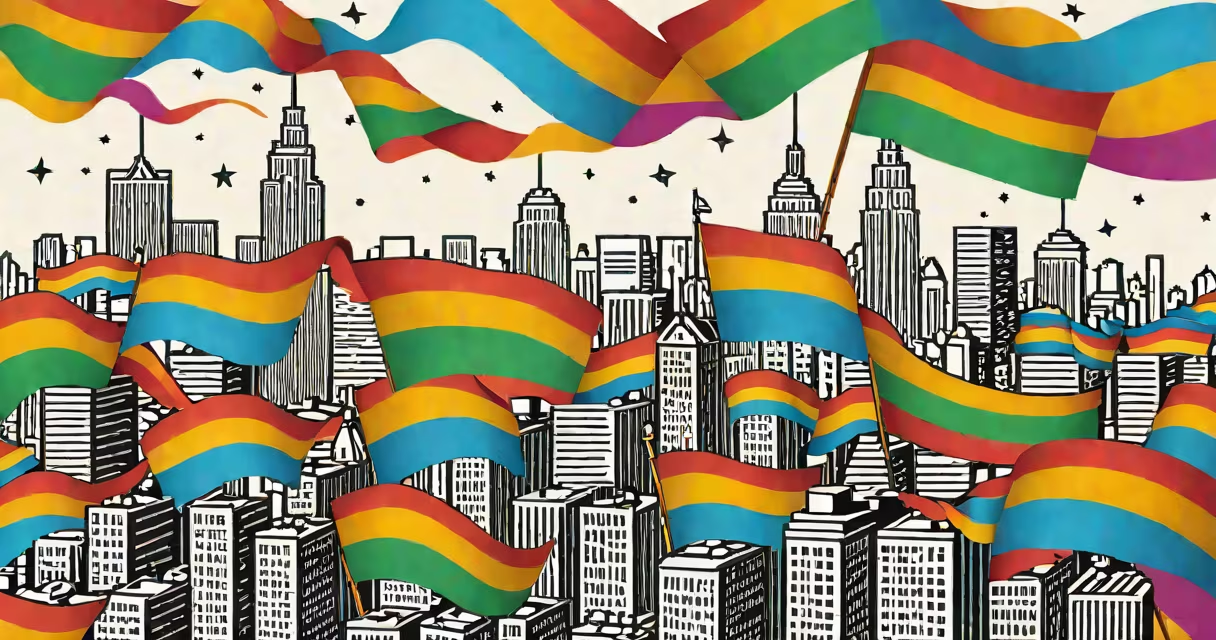
Pride Month, observed annually in June, honors the LGBTQ+ community's history, celebrates identities, and advances civil rights. It commemorates the 1969 Stonewall Uprising and serves as a platform for visibility, activism, and solidarity worldwide.
The purpose of Pride Month extends beyond celebration. It is a time to confront ongoing discrimination, advocate for legal protections, and affirm the dignity of LGBTQ+ people. Events include parades, educational programs, art exhibitions, and public speeches. These gatherings reinforce community bonds and educate allies.
While Pride began as a protest, it now includes both commemorative and forward-looking elements. The movement continues to push for equality in healthcare, employment, housing, and anti-discrimination laws. According to the Human Rights Campaign, over 300 U.S. cities host official Pride events each year, demonstrating sustained civic engagement.
Pride Month originated as a response to state violence and systemic oppression. On June 28, 1969, patrons at the Stonewall Inn in New York City resisted a police raid, sparking days of resistance. This event became a catalyst for organized LGBTQ+ advocacy.
Organizers chose June because it marks the anniversary of the Stonewall Uprising. The first Pride march occurred in 1970, led by activists like Brenda Howard, who helped formalize the concept of a "Pride" event. Since then, the date has been adopted globally.
Modern Pride events blend remembrance with celebration. Cities like San Francisco, Toronto, and Berlin host large-scale marches with thousands attending. In 2023, London's Pride attracted over 2 million visitors, according to official city reports. These numbers reflect growing public recognition and participation.
Pride Month features distinct visual and cultural markers. The rainbow flag, designed by Gilbert Baker in 1978, remains the most recognized symbol. Each color represents a value: red for life, orange for healing, yellow for sunlight, green for nature, blue for harmony, and violet for spirit.
Events vary by region. In the U.S., Pride Month often includes corporate sponsorships, school workshops, and local theater performances. In countries like Argentina and Canada, Pride is integrated into national holidays. In contrast, nations such as Russia and Uganda ban Pride events under anti-LGBTQ+ laws.
A lesser-known fact: Not all Pride events are joyful. Some serve as memorials. For example, the AIDS Memorial Quilt, displayed during Pride in several U.S. cities, contains over 48,000 panels honoring lives lost to HIV/AIDS. This element underscores Pride's role in mourning and resilience.
| Type of Event | Location Example | Key Purpose |
|---|---|---|
| Parade | New York City | Public visibility and celebration |
| Memorial Service | San Francisco | Honoring victims of hate crimes and HIV/AIDS |
| Workshop Series | Toronto | Educating youth on gender identity and consent |
| Corporate Partnership | Seattle | Supporting LGBTQ+ employee resource groups |
Pride Month is observed in over 100 countries. In Europe, cities like Berlin and Amsterdam hold annual Pride festivals with government backing. In Asia, Pride events exist in Japan, South Korea, and India, though they face greater legal and social risks.
In 2022, the United Nations issued a statement calling for the protection of LGBTQ+ rights during Pride Month, citing rising global hostility. The UN noted that 69 countries still criminalize same-sex relations, making Pride a form of quiet resistance in those regions.
One personal observation: During a visit to Barcelona in 2023, I attended a neighborhood Pride event where elders marched alongside teenagers. A 78-year-old woman told me she'd been arrested in 1975 for wearing a shirt with a rainbow pin. Her presence was not just commemoration-it was defiance.
Pride Month is not solely a party. While festivities draw crowds, the core purpose is political and social justice. The idea that Pride is "just a festival" overlooks decades of struggle and loss.
Another misconception: Pride is exclusively for gay men. In reality, it includes bisexual, transgender, queer, intersex, and asexual individuals. The term "LGBTQ+" explicitly includes diverse identities. According to GLAAD, 54% of U.S. adults now recognize that Pride supports more than just gay rights.
Some assume Pride is a Western invention. But Indigenous cultures have long held ceremonies honoring gender diversity. The Two-Spirit tradition among Native American tribes predates colonialism. Modern Pride incorporates these histories through inclusive programming.
Pride Month is not a call for assimilation. It does not ask LGBTQ+ people to conform to heterosexual norms. Instead, it demands that society accept difference as valid. This distinction matters-Pride challenges norms, rather than adopting them.
It is also not a replacement for policy change. While Pride raises awareness, lasting progress requires legislation. In 2021, the U.S. Senate failed to pass the Equality Act, which would have protected LGBTQ+ people from discrimination. Pride events continue to pressure lawmakers to act.
Finally, Pride is not a monolith. There is no single correct way to participate. Some attend parades; others volunteer at shelters or donate to crisis centers. The movement thrives on diversity of expression.
Pride Month is not a seasonal event. It is a continuous demand for justice, visibility, and belonging. Its purpose remains clear: to affirm that LGBTQ+ lives matter, today and every day.