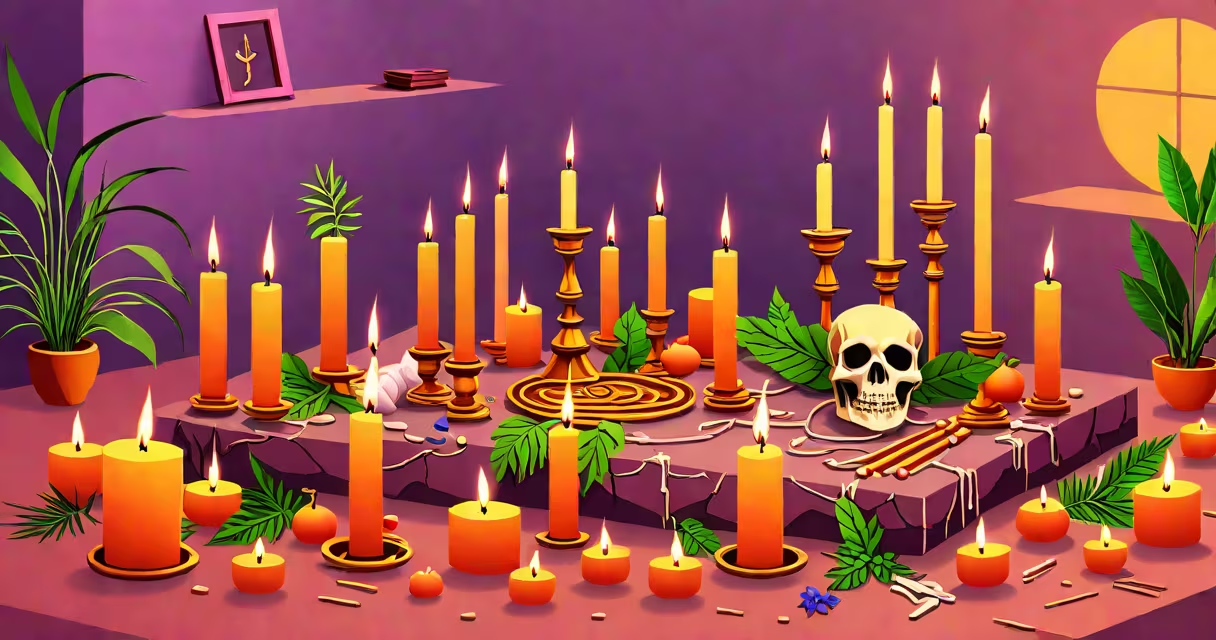
Voodoo is a syncretic spiritual tradition originating in West Africa and evolving through the transatlantic slave trade into the Caribbean and parts of North America. It blends African cosmologies, Christian symbolism, and local beliefs, forming distinct regional expressions such as Haitian Vodou and Louisiana Voodoo. The term "voodoo" is often misused to describe fear-based magic, but authentic practice centers on ritual, community, and connection to ancestral spirits.
At its core, voodoo is not a single religion but a family of related belief systems. In Haiti, it is known as Vodou, a structured system with deities called loa who mediate between humans and the divine. In New Orleans, it developed into a unique blend of African, French, Spanish, and Native American influences. These traditions share common elements: ancestor veneration, sacred objects, ritual drumming, and spirit possession during ceremonies.
Despite widespread media portrayals linking voodoo to zombies, dolls, and curses, actual practice focuses on healing, protection, and maintaining balance within communities. The misconception arises from colonial-era propaganda and sensationalist storytelling. Modern anthropologists emphasize that voodoo is a legitimate religious system with ethical frameworks, not supernatural manipulation.
Voodoo operates through ritual interaction with spiritual forces believed to influence daily life. Practitioners engage with loa-spiritual intermediaries-through prayer, offerings, dance, and possession. During ceremonies, individuals may enter altered states where a loa takes temporary control of their body, delivering guidance or healing.
Offerings are central. Each loa has preferred items: rum for Damballah Wedo, red beads for Erzulie Freda. These are placed on altars or burned during rituals. Drumming patterns correspond to specific loa, helping summon their presence. A ceremony might last several hours, beginning with invocation and ending with communal meal sharing.
Healing is a primary function. If someone falls ill, a practitioner (called a houngan in Haiti or a marabout in West Africa) may perform a divination using cowrie shells or a pendulum. Based on results, they recommend herbal remedies, fasting, or a ritual to restore spiritual equilibrium. This process treats illness as both physical and metaphysical.
Voodoo manifests differently across regions due to historical migration and cultural blending. The most recognized forms are Haitian Vodou and Louisiana Voodoo, though smaller variants exist in Cuba, Brazil, and the Dominican Republic.
| Region | Local Name | Key Deities (Loa) | Distinguishing Features |
|---|---|---|---|
| Haiti | Vodou | Damballah Wedo, Erzulie Freda, Ogoun | Structured pantheon; formalized priesthood; annual Gede festival |
| Louisiana (USA) | Louisiana Voodoo | Marie Laveau, Bon Temps, Papa Legba | Blend of African, French, and Native American elements; urban roots in New Orleans |
| Cuba | Santería | Changó, Ochún, Babalú Ayé | Yoruba-derived; uses oracles and animal sacrifice; linked to Catholic saints |
| Brazil | Candomblé | Exu, Iemanjá, Oxalá | Orisha worship; public festivals; initiation rites |
Each form reflects local history. For example, Marie Laveau-a 19th-century New Orleans healer-became a legendary figure in Louisiana Voodoo, though her actual practices were likely grounded in folk medicine and community support, not dark magic.
The term "voodoo" is frequently misapplied to any act perceived as occult or manipulative. Media depictions often equate it with mind control, zombie creation, or curse casting. These portrayals stem from 19th-century European colonial narratives that framed African spiritual systems as primitive or dangerous.
Historical records show that the idea of "zombies" in voodoo stems from a 1937 book by Zora Neale Hurston, who documented a case of a man allegedly turned into a zombie using a tetrodotoxin-based potion. However, modern science confirms that such substances can induce catatonic states, not literal resurrection. The myth persists because it fits Western horror tropes, not religious reality.
A key distinction lies in intent. Voodoo rituals aim to restore harmony, not harm. A practitioner might create a protective charm for a sick child, not to punish enemies. The use of dolls in some traditions is symbolic-representing intentions or energy-but not magical weapons. As scholar David M. Gordon notes in *The Oxford Handbook of Religion and the Arts* (2016), "Voodoo is not about power over others-it's about alignment with unseen forces."
I once attended a small Vodou ceremony in Port-au-Prince, Haiti, where a houngan led a group in rhythmic chanting. After hours, a woman began speaking in a different voice-her eyes rolled back, and she delivered messages about family health and crop yields. The room remained silent, respectful. No one laughed. The atmosphere was solemn, not theatrical. That moment clarified something essential: voodoo is not performance. It's lived faith.
Voodoo continues to serve as a cultural anchor for millions. In Haiti, Vodou is practiced openly, with state recognition since 2003. In the U.S., practitioners maintain active communities in New Orleans, Chicago, and Miami. Legal protections exist under the First Amendment, allowing religious expression despite stigma.
Modern scholarship emphasizes voodoo's role in resistance and identity formation. As historian Sylviane Diouf explains in *Servants of Allah: African Muslims Enslaved in the Americas* (1998), "Spiritual traditions like Vodou preserved African worldviews under slavery, offering psychological survival." These systems were not passive-they helped enslaved people resist dehumanization by affirming dignity and connection to ancestors.
Understanding what is voodoo requires separating myth from practice. It is not a tool for domination. It is not inherently evil. It is a living tradition with moral codes, community obligations, and centuries of adaptation. To reduce it to "black magic" is to ignore its complexity and resilience.