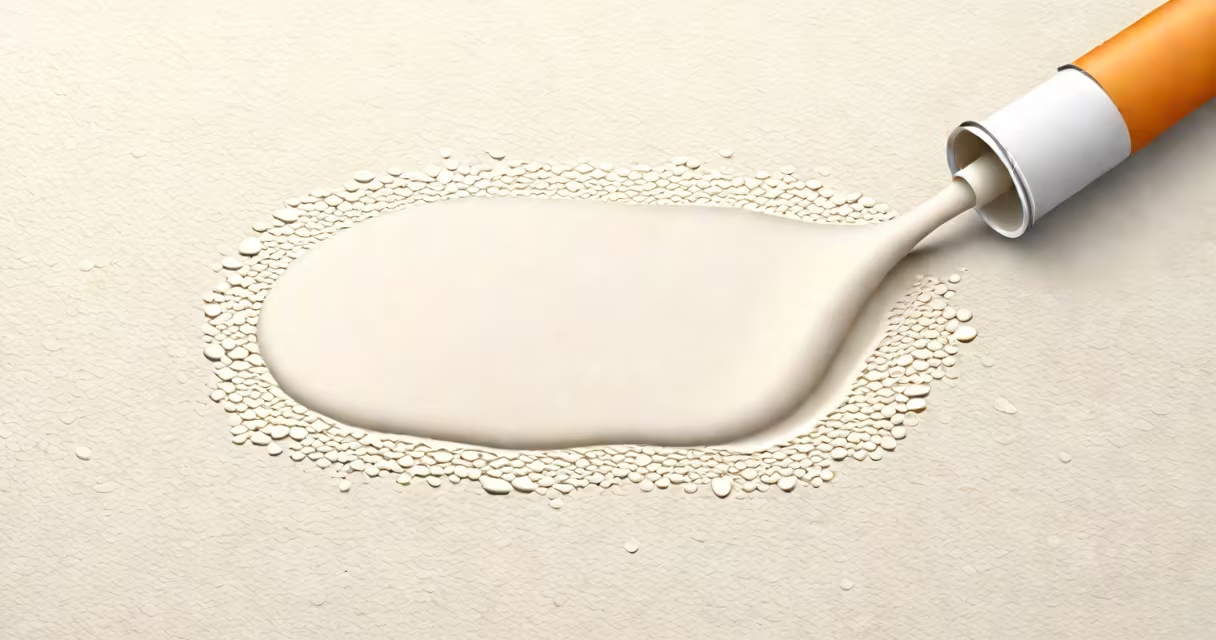
White emulsion paint is a water-based interior coating formulated with acrylic or vinyl resins suspended in water, designed to provide a flat or low-sheen finish on walls and ceilings. It dries to a matte surface that hides minor imperfections and reflects light softly, making rooms feel brighter without glare.
Formulated for indoor use, white emulsion paint contains pigments-typically titanium dioxide-for opacity, binders to adhere to surfaces, and additives to control drying time, flow, and resistance to mildew. Unlike oil-based paints, it emits minimal odor during application and cleans up easily with water. Its low VOC (volatile organic compound) levels make it safer for indoor air quality compared to older solvent-based alternatives.
The paint's performance depends on proper surface preparation. Walls must be clean, dry, and free of dust, grease, or flaking material. A primer is recommended on porous surfaces like plaster or newly installed drywall to ensure even coverage and prevent absorption. Applying two thin coats, rather than one thick one, ensures consistent color and reduces the risk of cracking or peeling.
When applied, water evaporates from the paint film, leaving behind a solid layer of pigment and binder. The binder forms a continuous matrix that adheres to the substrate and holds the pigment in place. As the paint cures over 24 to 72 hours, the film hardens and develops resistance to scuffing and moisture.
Emulsion paints are engineered to withstand typical household conditions-temperature fluctuations, humidity changes, and light cleaning with a damp cloth. They resist yellowing better than older alkyd-based paints and maintain their white appearance longer under normal lighting. However, they are not suitable for high-moisture areas like bathrooms unless labeled as "mildew-resistant" or "bathroom-grade."
A common mistake is applying paint too quickly without allowing adequate drying between coats. This leads to uneven sheen, streaking, and poor adhesion. Always follow the manufacturer's recommended recoat times-usually 2 to 4 hours-to achieve optimal results.
White emulsion paint comes in several grades tailored to different environments and durability needs:
| Type | Finish | Best For | Key Feature |
|---|---|---|---|
| Standard interior | Matte | Bedrooms, living rooms | Low cost, easy cleanup |
| Washable | Satin (low sheen) | Kitchens, hallways | Resists scrubbing; handles spills |
| Bathroom-grade | Matte to satin | Bathrooms, laundry rooms | Mildew-resistant; moisture tolerance |
| High-durability | Semi-gloss | Entryways, doors | Scratch and stain resistance |
Standard interior white emulsion is most widely used due to its affordability and ease of application. Washable versions include added polymers to improve resilience against cleaning agents. Bathroom-grade variants contain biocides to inhibit mold growth in humid conditions. High-durability options often have higher binder content, increasing their resistance to wear and tear.
Some brands offer "zero-VOC" formulations, which meet strict environmental standards set by the U.S. Environmental Protection Agency (EPA) and the California Air Resources Board (CARB). These paints reduce indoor air pollution and are recommended for homes with children or individuals with respiratory sensitivities.
Many assume that white emulsion paint is interchangeable with other white coatings like chalk paint or latex paint. Chalk paint has a textured, matte finish and requires sealing; it is not designed for large wall applications. Latex paint is a broader category that includes both water-based and oil-based formulations-white emulsion specifically refers to water-based interior paint with a flat or low-sheen finish.
A frequent error is using a roller with a long nap on a smooth wall. Long-nap rollers leave visible texture and trap excess paint, leading to uneven coverage. For smooth surfaces like drywall or painted plaster, a 3/8-inch nap roller is optimal. For textured walls, a 1-inch nap may be necessary-but it will show more texture in the finished coat.
Another misconception is that white emulsion paint doesn't require priming. While some brands claim "no-primer needed," this applies only to existing, sound, and properly prepared surfaces. Painting over old, stained, or patched drywall without primer risks bleed-through, especially if the underlying surface was previously painted with dark colors or has water damage.
Consider a 12 ft × 14 ft bedroom with 8 ft high walls and one door (3 ft wide). Total wall area: 2 × (12 + 14) × 8 = 416 sq ft. Subtract door area: 3 × 7 = 21 sq ft. Net area: 395 sq ft.
One gallon of standard white emulsion covers approximately 400 sq ft per coat. Two coats are recommended for full opacity. Therefore, one gallon is sufficient. Using a 3/8-inch nap roller and a 9-inch angled brush for edges, apply the first coat with even pressure. Allow 4 hours drying time. Apply the second coat within 6 hours to avoid lap marks.
After drying, inspect for missed spots. Touch up with a small brush. Clean tools immediately with soap and water. The result is a uniform, bright white finish that enhances room brightness and complements most decor styles.
During a recent home renovation, I repainted four bedrooms using a premium washable white emulsion. After two coats, the walls resisted scuffing from kids' toys and cleaned easily with a damp cloth. The finish remained intact after six months of daily use-proof that proper selection and technique deliver lasting results.
White emulsion paint remains a staple in residential and commercial interiors due to its balance of performance, safety, and affordability. It provides a reliable base for design while meeting modern standards for indoor air quality and sustainability.